
A kitchen renovation becomes much easier to manage when you know what should happen first, what can happen at the same time, and what should wait until the site is ready. Without a clear sequence, small decisions can create big delays. A cabinet measurement missed before fabrication, an appliance chosen too late, or a plumbing change made after tiling can quickly affect the whole schedule.
The good news is that most successful kitchen projects follow a predictable flow. The exact details depend on your property, whether you live in an apartment or villa, your building rules, and the level of customization involved. Still, the kitchen renovation steps in order below will help you plan a smoother project, avoid rework, and communicate clearly with your renovation team.
Why the renovation order matters
A kitchen is not just a room with cabinets. It brings together plumbing, electrical work, ventilation, lighting, flooring, surfaces, appliances, storage, and daily movement. If one part is handled out of sequence, the next trade may be forced to pause or redo completed work.
In Dubai homes, the order can be even more important because many projects involve building management approvals, service elevator bookings, working-hour rules, waste removal arrangements, and material lead times. Villas may offer more flexibility, while apartments often require tighter coordination around access, noise, and shared services.
Before you begin, it helps to understand the most common planning pitfalls. If you are still shaping your brief, review these kitchen renovation mistakes to avoid before you start so your step-by-step plan is built on realistic expectations.
Kitchen renovation steps in order: the quick roadmap
Use this table as a high-level sequence. Some stages may overlap, but the main decisions should usually follow this order.
| Order | Renovation stage | Main outcome |
|---|---|---|
| 1 | Define goals and lifestyle needs | Clear purpose for the remodel |
| 2 | Set scope and budget | Realistic limits and priorities |
| 3 | Survey the existing kitchen | Accurate measurements and constraints |
| 4 | Choose your renovation partner | A team to coordinate design and execution |
| 5 | Finalize layout and workflow | Confirmed plan for cooking, storage, and movement |
| 6 | Select appliances, fixtures, and finishes | Specifications needed before technical work |
| 7 | Confirm approvals and building rules | Permission to start without interruptions |
| 8 | Plan procurement and temporary kitchen setup | Materials, access, and daily living organized |
| 9 | Protect the site and begin demolition | Safe removal of old elements |
| 10 | Complete plumbing and electrical rough-ins | Hidden services placed correctly |
| 11 | Prepare walls, floors, and ceiling | Level surfaces ready for finishes |
| 12 | Install cabinets and custom joinery | Storage structure fitted in place |
| 13 | Template and install countertops | Surfaces measured and installed accurately |
| 14 | Fit backsplash, fixtures, appliances, and lighting | Functional kitchen elements completed |
| 15 | Test, snag, clean, and hand over | Final quality checks before use |
Step 1: Define what you want the kitchen to do better
Start with the real reason for renovating. Is the kitchen too small for family cooking? Are the cabinets worn out? Is the layout awkward? Do you want an open-plan look, better lighting, more storage, premium finishes, or an easier-to-clean space?
This stage should focus less on Pinterest images and more on daily habits. Think about how many people cook at once, where groceries are stored, how often you entertain, whether you need a breakfast counter, and which appliances you use every day. A beautiful kitchen that ignores your routine can still feel frustrating after installation.
A strong brief makes every later decision easier. It tells your designer, contractor, or renovation company what matters most, and it helps prevent unnecessary upgrades that do not support your lifestyle.
Step 2: Set the scope and budget before design details
Once your goals are clear, define the scale of the project. A kitchen refresh might keep the existing layout and focus on cabinet fronts, countertops, wall finishes, lighting, and hardware. A full renovation may include demolition, plumbing relocation, electrical upgrades, custom joinery, flooring, ceiling changes, and new appliances.
Budget should be discussed early because it affects design choices, material selection, and procurement. It is also wise to keep a contingency allowance for hidden issues, especially in older properties where plumbing, wiring, or uneven surfaces may only become visible after demolition.
A practical budget should separate essentials from upgrades. Essentials include safe electrical work, reliable plumbing, proper ventilation, durable cabinet construction, and functional lighting. Upgrades might include premium stone, integrated appliances, special finishes, or highly customized storage.
Step 3: Measure and inspect the existing kitchen
Before layout decisions are finalized, the existing space needs a careful survey. This includes wall dimensions, ceiling height, window and door positions, current plumbing points, drainage, electrical outlets, exhaust routes, AC locations, and any structural limitations.
This step is especially important if you want to move the sink, add an island, install built-in appliances, or change the ceiling. Not every idea is practical in every property. For example, drainage gradients, slab restrictions, ventilation routes, and building rules can limit where certain items can be moved.
A proper site survey reduces guesswork. It also helps your renovation team identify what can stay, what must be upgraded, and what needs approval before work begins.
Step 4: Choose the right renovation partner
The best time to choose your renovation team is before the final design is locked, not after. A good renovation partner can help you assess feasibility, coordinate trades, refine material choices, and spot technical issues before they become expensive.
Look for a team that understands kitchen layout, plumbing, electrical coordination, custom carpentry, wall finishing, and project management. You should also expect clear communication about scope, timelines, exclusions, site access, and how changes will be handled.
If you are comparing companies, use a structured approach rather than relying only on the lowest quote. This guide on how to choose a trusted kitchen renovation company explains what to check before committing.
Step 5: Finalize the layout and kitchen workflow
The layout is the foundation of the renovation. At this point, you should decide where the main zones will sit: cooking, washing, preparation, storage, and serving. The goal is to reduce unnecessary movement while keeping enough clearance for doors, drawers, appliances, and people.
Classic kitchen planning often refers to the relationship between the sink, cooktop, and refrigerator. That idea is still useful, but modern kitchens need more than a simple triangle. You also need landing space beside appliances, easy access to bins, practical pantry storage, safe clearances around hot surfaces, and comfortable pathways.
Do not rush this step. Once plumbing, electrical points, cabinets, and countertops are built around a layout, changing it later can be costly.
Step 6: Select appliances, fixtures, and key finishes early
Appliances should be selected before cabinets are manufactured. You do not always need to buy them immediately, but you do need accurate specifications. Built-in ovens, hobs, fridges, dishwashers, extractor hoods, washing machines, and microwaves all affect cabinet dimensions, ventilation, power requirements, and installation details.
Fixtures also matter at this stage. Sink size, tap type, water filter requirements, waste disposal units, gas or electric cooking preferences, and under-cabinet lighting all influence technical planning.
Finish selections should be narrowed down before procurement starts. Cabinet material, countertop type, backsplash finish, flooring, handles, paint, and wall finishes should work together as one design. Delaying these choices can slow ordering and cause mismatches later.
Step 7: Confirm approvals, access rules, and building requirements
Before physical work starts, check what permissions are needed. Requirements vary depending on the property type, community, building management, and scope of work. Some projects may need approvals for noisy work, waste removal, plumbing changes, electrical updates, or delivery access.
For apartment projects, confirm service elevator availability, permitted working hours, parking arrangements, and protection requirements for common areas. For villas, check community rules, waste collection, exterior access, and any restrictions that could affect delivery or construction timing.
Skipping this step can delay the project after materials and trades are already scheduled. It is much smoother to confirm requirements before demolition begins.
Step 8: Plan procurement and your temporary kitchen setup
Once the design, specifications, and approvals are clear, procurement can begin. Custom cabinets, countertops, imported finishes, and special appliances often have lead times. Ordering too late can leave a completed site waiting for one missing item.
You should also plan how your household will function during the renovation. Set up a temporary area for coffee, basic meals, drinking water, and essential utensils. If you live in the home during the work, dust control, noise expectations, and safe pathways should be discussed in advance.
Renovation also affects day-to-day movement. If the project overlaps with airport pickups, corporate visitors, weddings, or a family event, booking reliable airport, corporate, or event transportation can keep important trips running on schedule while your home routine is temporarily disrupted.
Step 9: Protect the site and begin demolition
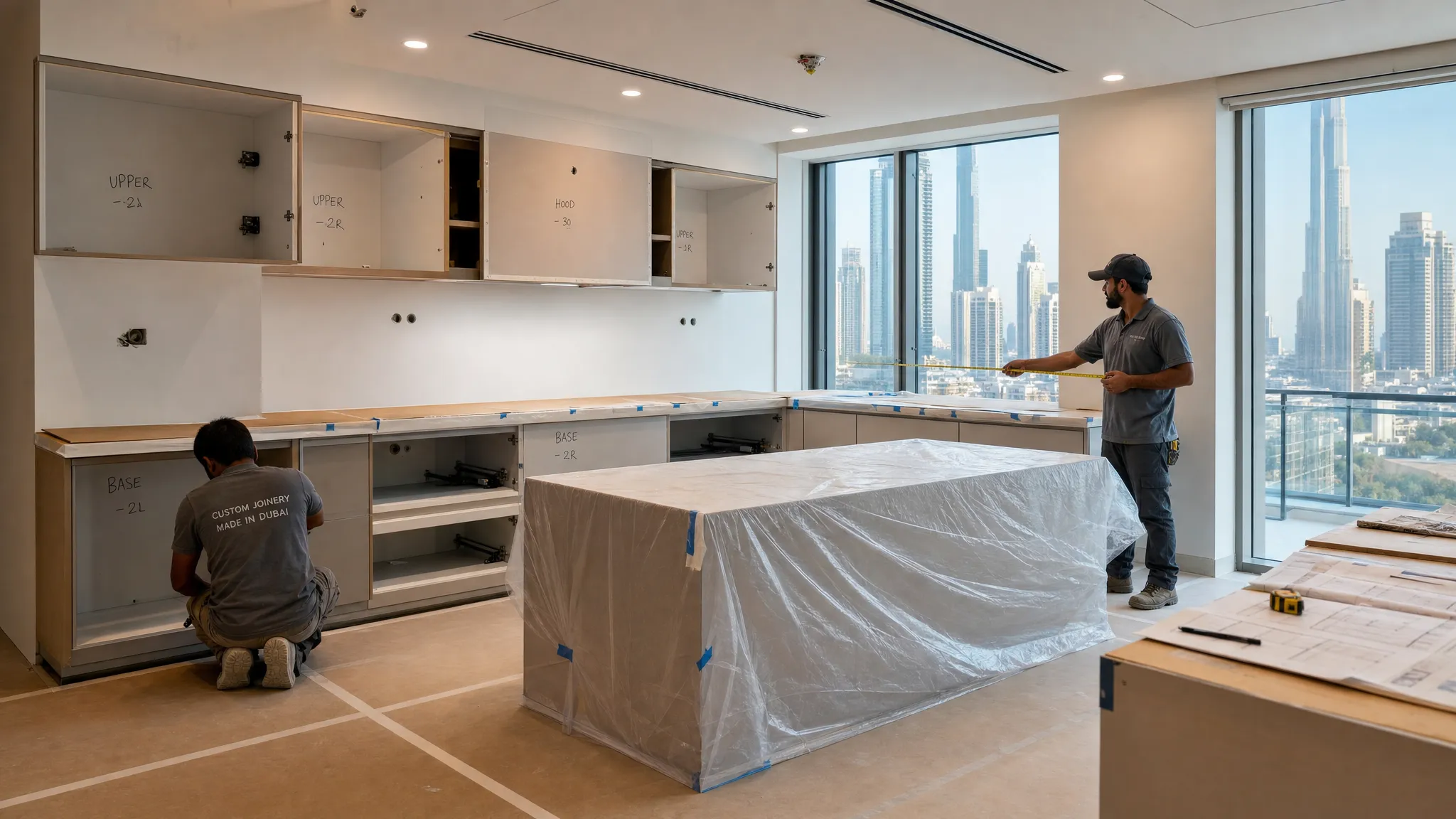
Before demolition, the work area should be protected. This may include covering floors, sealing nearby rooms, protecting elevators or corridors where required, and confirming safe access for workers and material removal.
Demolition typically involves removing old cabinets, countertops, appliances, wall finishes, flooring, and sometimes ceiling elements. Utilities should be safely disconnected before removal begins. This is not the stage for shortcuts. Careful demolition helps avoid unnecessary damage to plumbing lines, electrical wiring, walls, and floors.
After demolition, the team can see the real condition of the space. Hidden leaks, weak substrate, uneven walls, old wiring, or damaged drainage may appear. Any necessary corrections should be addressed before new finishes are installed.
Step 10: Complete plumbing, electrical, and ventilation rough-ins
Rough-in work means installing or relocating the hidden systems before walls, cabinets, and finishes close them up. In a kitchen, this usually includes water supply, drainage, power outlets, appliance circuits, lighting points, switches, exhaust routing, and sometimes gas lines if applicable.
This stage must follow the approved layout and appliance specifications. If the dishwasher moves, the drainage must suit it. If the oven is built in, the correct electrical provision must be available. If under-cabinet lighting is planned, wiring should be placed before cabinets and wall finishes make access difficult.
Testing is important before the next stage begins. Water lines should be checked for leaks, drainage should be reviewed, and electrical provisions should match the design. Fixing problems now is far easier than fixing them after cabinets and tiles are installed.
Step 11: Prepare walls, floors, and ceiling surfaces
After rough-ins, the kitchen shell is prepared for finishes. Walls may need patching, plastering, moisture-resistant treatment in key areas, or leveling. Floors may need screeding or surface correction before tiles, vinyl, stone, or other finishes are installed. Ceilings may be adjusted for lighting, ventilation, or design features.
The correct order of flooring and cabinet installation can vary depending on the material and design. In many projects, flooring is installed before cabinets for a cleaner finish and easier future changes. In other cases, heavy custom joinery may be installed first, with flooring finished around it. Your renovation team should recommend the right sequence based on your materials and site conditions.
This preparation stage is not always visually exciting, but it has a major impact on the final look. Uneven walls, poor leveling, and rushed surface preparation can make even premium finishes look imperfect.
Step 12: Install cabinets and custom joinery
Cabinet installation is when the new kitchen finally starts to take shape. Base cabinets, wall cabinets, tall units, pantry storage, island structures, and custom joinery are positioned, leveled, and fixed.
Accuracy matters. Cabinets must align with appliance openings, plumbing points, electrical provisions, and countertop plans. Small errors can affect drawer operation, door alignment, worktop overhangs, and the final appearance.
This is also when storage details become real. Pull-out units, corner solutions, drawer organizers, concealed bins, appliance garages, and pantry systems should be checked against the approved design before everything is finalized.
Step 13: Template, fabricate, and install countertops
Countertops are usually measured after base cabinets are installed because the fabricator needs exact site dimensions. This process is known as templating. It accounts for wall variations, sink cutouts, hob cutouts, overhangs, joints, and edge details.
After templating, the countertop is fabricated and then installed. The timing depends on the material and supplier. Quartz, porcelain, granite, marble, solid surface, and compact surfaces each have different fabrication and handling requirements.
Avoid installing backsplash finishes too early if they depend on the countertop height or edge detail. In most cases, the backsplash is completed after the countertop is in place so the transition looks clean.
Step 14: Fit backsplash, fixtures, appliances, and lighting
With countertops installed, the finishing stage can begin. Backsplash tiles or wall panels are fitted, the sink and tap are installed, appliances are placed, lighting is connected, and final electrical accessories are completed.
This stage brings together design and function. The cooktop should sit correctly in the countertop, the sink should be sealed properly, cabinet lighting should work as planned, appliances should open without obstruction, and outlets should be located conveniently.
Final painting and touch-ups often happen near the end to avoid damage during heavy installation. Handles, trims, silicone joints, and small alignment adjustments also belong in this stage.
Step 15: Test, snag, clean, and hand over
The final step is quality control. Every drawer, cabinet door, appliance, switch, outlet, tap, drain, and light should be tested. Surfaces should be inspected for scratches, chips, stains, uneven joints, or poor sealing. This process is often called snagging.
A good handover should also explain how to care for your finishes. Countertop maintenance, cabinet cleaning, hinge adjustments, grout care, and ventilation use can all affect how well the kitchen performs over time.
Do not treat this stage as a formality. A kitchen renovation is only complete when the space works properly, looks finished, and is ready for daily use.
What can safely overlap during a kitchen renovation?
Not every task has to wait for the previous one to finish. While demolition cannot happen before approvals, and countertops cannot be templated before cabinets, several activities can run in parallel.
Material procurement can begin while approvals are being finalized, as long as the design is stable. Cabinet fabrication can proceed while site preparation and rough-ins are underway. Appliance purchasing can happen before installation, provided delivery timing is managed carefully. Paint samples, handle options, and final styling choices can also be confirmed while technical work continues.
The key is coordination. Overlap saves time only when decisions are already approved and measurements are accurate. If the design is still changing, overlapping too much can create mistakes.
Common sequence errors that cause delays
One of the most common errors is choosing appliances after cabinet fabrication has started. Even a small difference in appliance dimensions can affect ventilation gaps, door swings, and panel alignment.
Another mistake is moving plumbing or electrical points without updating the cabinet design. The result may be drawers blocked by pipes, outlets hidden behind appliances, or lighting placed in the wrong zone.
A third issue is ordering finishes before confirming site conditions. If walls are uneven, floors need leveling, or ceiling heights differ from the initial assumption, quantities and installation details may change.
Finally, many homeowners underestimate the handover stage. A rushed final inspection can leave small issues unresolved, and those issues become more annoying once the kitchen is in daily use.
Frequently Asked Questions
What is the first step in a kitchen renovation? The first step is defining your goals and lifestyle needs. Before discussing finishes or demolition, clarify what the kitchen must improve, such as storage, workflow, lighting, maintenance, or resale appeal.
Should cabinets or flooring be installed first? It depends on the flooring material, cabinet design, and site conditions. Many projects install flooring before cabinets for a cleaner finish, but some custom kitchens require a different sequence. Your renovation team should confirm the best order for your space.
When should I choose kitchen appliances? Choose appliances before cabinet fabrication and technical rough-ins. Exact model specifications help plan cabinet dimensions, power requirements, ventilation, plumbing, and installation clearances.
Do Dubai kitchen renovations require approvals? Some projects may require building management, community, or authority approvals depending on the property and scope. Always confirm requirements before demolition, especially if plumbing, electrical work, access, or noisy activities are involved.
What is the final step before using the new kitchen? The final step is snagging and handover. This includes testing fixtures, appliances, lighting, drainage, cabinet alignment, surface finishes, and safety details before the kitchen is considered complete.
Plan your kitchen renovation with a clearer sequence
A smoother kitchen project starts with the right order, but it also depends on clear communication, accurate measurements, skilled trades, and careful project management. Revo Craft Renovations provides bespoke renovation and interior transformation services for Dubai homes and businesses, including kitchen remodeling, interior design and styling, wall finishing, electrical and plumbing upgrades, custom carpentry, and project coordination.
If you want a kitchen that feels better to cook in, easier to maintain, and more aligned with your home, start with a structured plan. Visit Revo Craft Renovations to discuss a personalized design consultation and turn your renovation sequence into a well-managed project.