
Living through a kitchen renovation can feel like trying to run a normal household inside a construction zone. Meals, school runs, work calls and evening routines all compete with dust sheets, tradespeople and missing appliances. The goal is not to pretend nothing has changed. The goal is to build a temporary routine that is simple enough to follow, flexible enough to survive delays and clear enough for everyone in the home to understand.
For Dubai homeowners, the challenge is often intensified by apartment access rules, building management schedules, summer heat and the reality that many families rely on the kitchen as the center of daily life. A good renovation plan should therefore cover more than cabinets, countertops and finishes. It should explain how you will eat, clean, move around and communicate while the work is happening.
Make a survival plan before living through a kitchen renovation
Before the first cabinet is removed, ask your renovation team for a realistic sequence of work and identify the days that will affect your routine most. Demolition, plumbing changes, electrical upgrades, floor work and countertop installation usually create the most disruption because they can limit access, water, power or walking routes.
This is where early planning saves stress. If you are still shaping the scope, use a detailed guide like planning a kitchen renovation without costly mistakes to think through budget, approvals, layout decisions and appliance requirements before your home is disturbed.
Decide what your household must keep running
Every home has a few non-negotiables. For one family, it might be fresh coffee, packed lunches and a quiet homework table. For another, it might be baby bottles, pet feeding, medication storage or a reliable place to join video calls.
When you are living through a kitchen renovation, write these needs down and share them with your contractor before work begins. A renovation schedule that looks fine on paper can become frustrating if it blocks the only route to the laundry area or cuts off access to the fridge during school mornings.
Good non-negotiables to clarify include:
- Where you will prepare simple meals
- Where drinking water, snacks and daily medicines will be stored
- What time children, pets or elderly family members need quiet
- Which bathroom or utility sink can be used for washing up
- Which parking, lift or service access rules affect deliveries
Create a room-by-room protection plan
A kitchen project rarely stays perfectly inside the kitchen. Dust travels through gaps, workers need pathways and materials must be stored somewhere safe. Before work starts, decide which rooms are off-limits, where tools can be kept and how floors will be protected from the entrance to the work area.
If you live in an apartment, confirm service lift timing, corridor protection and working hours with building management. If you live in a villa, think about driveway access, outdoor storage and how workers will enter without disturbing the rest of the home.
Build a temporary kitchen that actually works
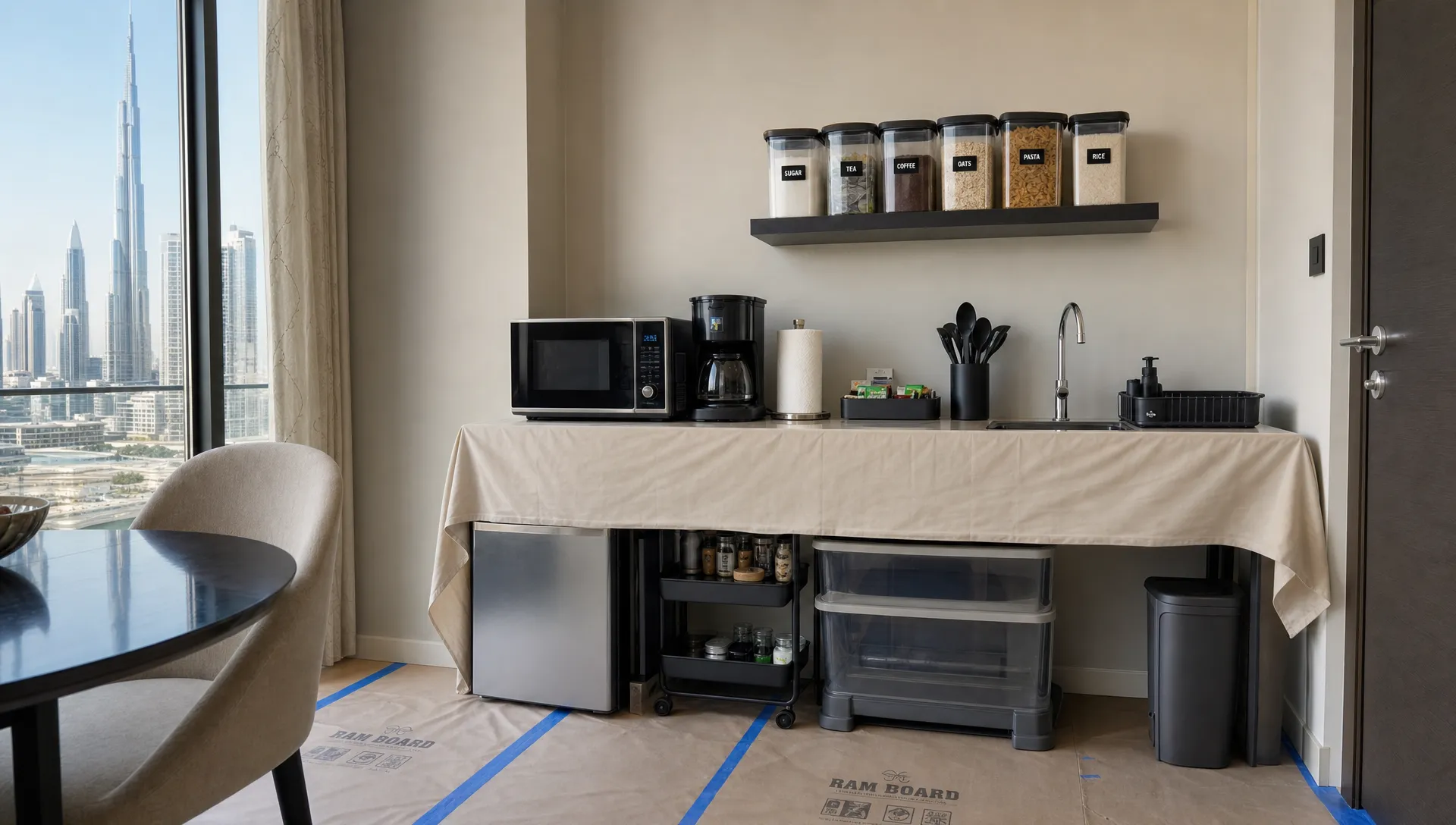
A temporary kitchen does not need to be beautiful. It needs to be safe, easy to clean and placed away from heavy dust. Dining rooms, laundry areas, spare rooms and shaded outdoor spaces can all work depending on your layout.
The practical heart of living through a kitchen renovation is a small setup that lets you prepare breakfast, reheat meals and store essentials without opening boxes all day. Keep it compact. If the temporary zone becomes too crowded, it will quickly become another source of stress.
| Temporary kitchen item | Why it helps | Practical note |
|---|---|---|
| Microwave or air fryer | Handles quick meals with minimal cleanup | Use only where ventilation and power are safe |
| Kettle or coffee maker | Keeps morning routines familiar | Place near bottled water or a water dispenser |
| Mini fridge or cooler | Stores milk, snacks and leftovers | Keep temperature-sensitive food limited |
| Sealed storage boxes | Protects dry goods from dust | Label boxes for breakfast, snacks and utensils |
| Folding table | Creates a prep and serving surface | Choose a wipeable surface if possible |
If your renovation includes major electrical work, ask your contractor which sockets are safe to use during each phase. Do not overload extension leads with several heat-producing appliances at once.
Pack the old kitchen like you are moving, not tidying
Most people underestimate how much they own in the kitchen. Instead of packing randomly, separate items into three groups: daily essentials, occasional items and long-term storage. Daily essentials should fit into one or two boxes and stay near the temporary kitchen.
Keep only what you will genuinely use during the project. Two mugs per adult, a small set of plates, a chopping board, a knife, a pan, food containers and basic cleaning supplies are usually enough. Specialty cookware, extra glassware and entertaining pieces can be wrapped and stored until handover.
Protect your routine from dust, noise and lost access
Dust and noise are not just annoyances. They change how your home feels at the end of a long day. Ask your renovation team how they will contain dust, seal nearby openings and clean the work path before leaving each day. A few minutes of end-of-day housekeeping can make the difference between a manageable project and a home that feels chaotic.
Dust control matters because living through a kitchen renovation is easier when the rest of the home still feels usable. Close bedroom doors, cover soft furnishings near the work zone and consider moving rugs away from the route used for materials. If someone in the home has asthma, allergies or respiratory sensitivity, raise this before demolition begins.
Plan around the loudest work
Not every day will be equally disruptive. Demolition, tile cutting, drilling and some carpentry work are louder than painting, fitting handles or final adjustments. Ask for advance notice before noisy work so you can schedule calls, naps or study time elsewhere.
For families working from home, a realistic schedule might include using a bedroom as a temporary office on light workdays and working from a coworking space or relative’s home during demolition. The point is not to escape the project completely. It is to avoid expecting normal focus during the loudest phases.
Keep meals simple without relying only on delivery
Food delivery is convenient in Dubai, but using it for every meal can become expensive and tiring. Before construction begins, prepare a short menu of low-effort meals your family already likes. This is not the time to experiment with complicated recipes or appliances you rarely use.
The goal when living through a kitchen renovation is to reduce decisions. Choose breakfast options that do not require cooking, lunch items that can be assembled quickly and dinners that use one appliance. Rotisserie chicken, pre-washed salad, wraps, rice bowls, soups, frozen vegetables and marinated proteins can help you avoid daily restaurant spending.
Make cleanup part of the meal plan
A temporary kitchen often fails because there is nowhere comfortable to wash dishes. If your kitchen sink is disconnected, agree on an alternative washing point before the project starts. A laundry sink, bathroom basin or outdoor tap may work for light washing if it is hygienic and convenient.
Use fewer dishes, not necessarily disposable plates for every meal. A small dish tub, sponge, drying mat and mild cleaner can keep the temporary setup under control. If you do use disposable items during the messiest phase, choose them for a short period rather than the whole renovation.
Communicate like the project affects your daily life, because it does
Clear communication is one of the most underrated survival tools during a renovation. A contractor may be focused on sequencing trades and solving site issues, while you are thinking about whether the fridge will be reachable before dinner. Both views matter.
Communication is what keeps living through a kitchen renovation from becoming a series of surprises. Agree on one main contact, one preferred communication channel and a simple rhythm for updates. For example, a short end-of-day message can confirm what was completed, who is coming tomorrow and whether any access, water or power disruption is expected.
Keep decisions from piling up
Kitchen renovations involve many small choices: grout color, handle position, socket height, shelf spacing, lighting temperature and more. If decisions are delayed, the project can slow down or require rushed approvals.
Create a shared decision log with your contractor. It can be as simple as a spreadsheet or notes app. For commercial spaces, offices with pantry upgrades or regulated businesses, renovation documentation may also need to support internal approval processes. Teams that already manage formal obligations may benefit from tools such as AI compliance workflow automation from Naltilia to organize policies, evidence and remediation tasks beyond the renovation itself.
Plan for children, pets and shared buildings
Children and pets add another layer of planning because renovation zones are full of hazards: sharp tools, exposed edges, adhesives, dust and loose materials. Even if the kitchen is blocked off, assume curiosity will win unless barriers are clear.
If you have young children, explain the project in simple terms and set firm rules about where they can go. For pets, create a separate calm area with food, water and familiar bedding. Loud drilling or unfamiliar workers can make even relaxed animals anxious.
For apartments, shared building etiquette also matters. Notify neighbors if your project includes noisy demolition or material deliveries. Respecting working hours, lift protection and corridor cleanliness helps avoid complaints that can interrupt progress. If you want the renovation itself to improve daily function once complete, Revo Craft’s article on kitchen renovation services for busy homes gives useful context on layout, storage and workflow choices.
Use a handover checklist to get back to normal faster
The final days can feel exciting, but do not rush back into the kitchen before checks are complete. Test drawers, cabinet doors, sockets, taps, lighting, appliance connections and ventilation. Look for scratches, uneven gaps, water leaks and paint touch-ups while the team is still available.
At the end, living through a kitchen renovation gets easier if unpacking follows a system. Do not simply put everything back where it was. Use the new layout properly. Store everyday items close to where they are used, place heavy items at comfortable heights and keep countertop space clear for actual prep.
A structured project sequence also makes the final stage less chaotic. If you want to understand how each phase should flow, from demolition to inspection, review these kitchen renovation steps in order before or during your project.
What to check before signing off
A good handover is practical, not ceremonial. Walk through the space with your contractor and test the kitchen as if you are cooking a normal meal.
Check the following before final acceptance:
- Cabinet doors and drawers open smoothly without rubbing
- Taps, drains and visible plumbing connections show no leaks
- Sockets, switches and appliance points work as intended
- Lights match the agreed placement and brightness
- Countertops, backsplash and wall finishes are clean and complete
- Appliance manuals, warranties and care instructions are handed over
Frequently Asked Questions
How long does a kitchen renovation usually disrupt daily routine? The most disruptive period is often demolition, rough plumbing, electrical work and countertop installation. The exact duration depends on the size of the kitchen, material lead times, approvals and how much layout change is involved.
Can I stay at home during a kitchen renovation? Yes, many homeowners stay at home, especially if they set up a temporary kitchen and the work area can be safely contained. If the project affects water, power, flooring across the home or major structural work, staying elsewhere for a few days may be more comfortable.
What should I cook during a kitchen renovation? Choose meals that use one appliance and create minimal washing up. Wraps, salads, rice bowls, soups, reheated batch meals, air fryer dishes and simple breakfasts are usually easier than meals that need several pots and pans.
How do I reduce stress during a kitchen renovation? Get a clear schedule, pack only daily essentials for temporary use, agree on communication rules and protect the rooms you need for rest. Stress usually rises when access, noise or decisions are unpredictable.
Make your kitchen renovation easier to live with
A beautiful kitchen matters, but so does the experience of getting there. With the right temporary setup, realistic schedule and clear communication, your household can keep its core routine intact while the work is underway.
Revo Craft Renovations provides kitchen remodeling, home renovation, interior upgrades, custom carpentry, wall finishing, electrical and plumbing coordination and project management for Dubai homes and businesses. If you are planning a kitchen transformation and want a smoother process from consultation to completion, visit Revo Craft Renovations to discuss a tailored renovation plan.