
A bathroom renovation can completely change how a home feels. It can make mornings smoother, improve storage, fix old plumbing problems, and turn a dated space into a clean, modern room that matches the rest of your interior. But because bathrooms combine water, electricity, drainage, ventilation, tiling, cabinetry, and daily use, they need more planning than many homeowners expect.
Professional bathroom renovation services are not just about choosing attractive tiles and installing a new vanity. A well-managed renovation should guide you from the first design conversation to the final inspection, while protecting your home, coordinating skilled trades, and making sure hidden systems are handled correctly.
If you are planning a bathroom upgrade in Dubai, here is what to expect at each stage and how to recognize a contractor who can deliver a durable, stylish result.
Why Bathroom Renovations Need a Clear Process
Bathrooms are small spaces with high technical demands. Every decision affects something else. Moving a shower may require drainage adjustments. Changing a vanity can affect plumbing points and wall finishes. Adding lighting near wet zones needs safe electrical planning. Even a beautiful tile choice can create problems if the surface, slope, or waterproofing is not prepared properly.
This is why experienced renovation teams start with a structured process. They look at design goals, existing conditions, water exposure, building requirements, material compatibility, and the way your household uses the space. The result should be a bathroom that looks refined, functions well, and stands up to Dubai’s climate and everyday wear.
In apartments, renovation work may also involve building management approvals, service lift access, working-hour restrictions, and rules for noise or debris removal. In villas, contractors may need to consider larger plumbing routes, structural limitations, outdoor service areas, or the design continuity between bedrooms, walk-in closets, and ensuite bathrooms.
What Bathroom Renovation Services Usually Include
The exact scope depends on whether you want a cosmetic refresh or a complete rebuild. A basic upgrade may focus on fixtures, paint, lighting, and vanity replacement. A full renovation may involve demolition, plumbing upgrades, waterproofing, new tiling, custom carpentry, electrical work, glass partitions, sanitaryware, and final styling.
Here is a practical overview of what you can expect from a professional bathroom renovation package:
| Service area | What it usually involves | Why it matters |
|---|---|---|
| Design consultation | Layout ideas, style direction, storage planning, material guidance | Helps align the bathroom with your lifestyle and interior theme |
| Site survey | Measurements, plumbing checks, drainage review, wall and floor assessment | Identifies technical issues before work begins |
| Demolition and preparation | Removing old tiles, fixtures, cabinetry, and damaged surfaces | Creates a clean base for new installations |
| Plumbing and electrical upgrades | Water lines, drainage, switches, sockets, lighting, exhaust points | Improves safety, performance, and long-term reliability |
| Waterproofing | Applying moisture barriers in wet zones and testing where needed | Protects walls, floors, and neighboring areas from leaks |
| Tiling and wall finishing | Floor and wall tiles, feature walls, grout, trims, paint or microcement finishes | Defines the final look and affects maintenance |
| Carpentry and joinery | Vanities, mirror cabinets, shelving, storage niches | Maximizes usable space, especially in compact bathrooms |
| Fixture installation | WC, basin, shower, bathtub, mixers, glass screens, accessories | Completes the functional elements of the room |
| Final inspection | Cleaning, snagging, sealant checks, alignment, handover | Ensures the finished bathroom is ready for use |
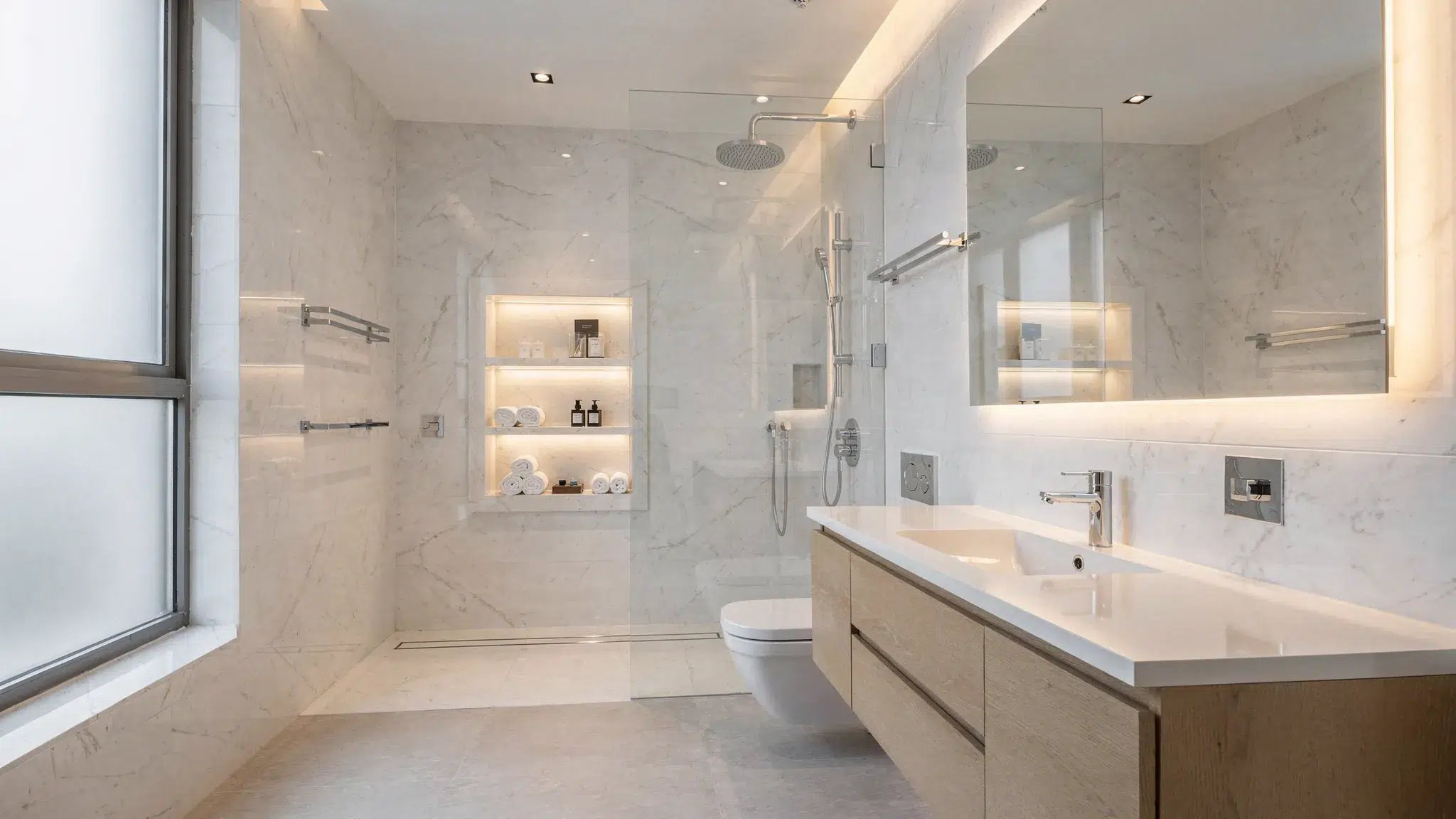
The First Consultation: Goals, Budget, and Style
Your renovation normally begins with a consultation. This is where you discuss what is not working in the current bathroom and what you want to improve. Common goals include better storage, a larger shower area, improved lighting, a more luxurious finish, easier cleaning, or a complete style transformation.
A good contractor will ask how the bathroom is used. Is it a guest powder room, a family bathroom, a master ensuite, or a staff bathroom? Do you need child-friendly fittings, accessible features, hotel-style finishes, or low-maintenance surfaces? These answers help shape the layout and material choices.
Budget should also be discussed early. Instead of pushing you toward the most expensive options, a reliable renovation company should help you prioritize. For example, waterproofing, plumbing, and electrical work should never be treated as afterthoughts. Decorative finishes can be adjusted to suit the budget, but technical quality is what protects the renovation over time.
Site Survey and Technical Assessment
After the initial discussion, the renovation team should inspect the bathroom. This stage is essential because it reveals what is possible within the existing structure. Measurements are taken, drainage locations are reviewed, water pressure may be assessed, and the team checks whether walls or floors show signs of moisture damage.
In Dubai homes, contractors also need to think about ventilation and humidity. Poor airflow can lead to condensation, odors, peeling paint, and mold growth. The U.S. Environmental Protection Agency notes that controlling moisture is one of the most important ways to prevent mold indoors. In a bathroom, that means proper exhaust, suitable surface finishes, and careful sealing around wet areas.
The site survey is also when practical constraints become clear. A wall-mounted toilet may require a concealed cistern and adequate wall depth. A walk-in shower needs correct floor slope. A freestanding bathtub needs enough clearance for cleaning and maintenance. These details affect the design long before construction starts.
Design, Layout, and Material Selection
Once the technical assessment is complete, the contractor can help refine the design. This may include choosing a layout, selecting tiles, deciding on sanitaryware, planning lighting, and reviewing storage options. The best bathroom designs balance beauty with daily usability.
For example, large-format tiles can create a seamless modern look, but they need skilled installation and level surfaces. Matte tiles may reduce slipping on floors, while glossy tiles can brighten walls. Floating vanities can make a bathroom feel more spacious, but they require secure wall fixing and well-planned plumbing.
Lighting deserves special attention. A single ceiling light rarely does enough. Most modern bathrooms benefit from layered lighting, such as ceiling lights for general visibility, mirror lighting for grooming, and accent lighting for niches or feature walls. Electrical planning must consider wet-zone safety and applicable local requirements.
This is also where custom carpentry can make a major difference. In Dubai apartments and villas, bathrooms often need storage that looks clean but handles real household needs. A tailored vanity, recessed medicine cabinet, or built-in shelving can keep the room organized without making it feel crowded.
Quotation, Scope, and Project Schedule
Before work starts, you should receive a clear scope of work. This should explain what is included, what materials are being used, who is responsible for supply and installation, and how the project will be managed. A vague quote can lead to confusion later, especially when multiple trades are involved.
Professional bathroom renovation services should also provide a realistic schedule. Some delays can happen because of material availability, building approvals, hidden damage, or changes requested during the project. Still, a renovation team should communicate timelines clearly and keep you updated as the work progresses.
A complete quote is not only about the final number. It should help you understand where the investment is going. Plumbing, waterproofing, tile preparation, carpentry, glass work, fixtures, and finishing details all affect the final result.
Demolition and Home Protection
Demolition is often the messiest stage. Old tiles, fixtures, shower screens, vanities, and damaged surfaces are removed. In apartments, debris removal must usually be coordinated carefully with building management. In villas, contractors may need to protect corridors, staircases, and nearby rooms.
A professional team should take steps to reduce disruption. This may include covering floors, isolating work areas, organizing debris removal, and maintaining safe access through the home. Noise and dust are unavoidable during demolition, but good planning keeps them under control.
This stage may also reveal hidden issues. Common discoveries include water-damaged plaster, poor previous waterproofing, corroded pipes, uneven floors, or inadequate drainage slopes. When this happens, your contractor should explain the issue, provide options, and get approval before changing the scope.
Plumbing, Electrical, and Waterproofing Work
The technical stage is where long-term performance is built. Plumbing lines may be adjusted for a new vanity, shower, bathtub, or WC. Electrical points may be repositioned for lighting, mirrors, ventilation, or shaver sockets. All of this should be done by qualified professionals and in line with applicable safety standards.
Waterproofing is one of the most important parts of a bathroom renovation. It is also one of the easiest to overlook because it disappears behind tiles and finishes. Wet areas such as shower floors, walls, corners, pipe penetrations, and floor junctions need careful preparation.
A rushed waterproofing job can lead to leaks, staining, swelling cabinetry, mold, and damage to neighboring rooms or apartments. A quality contractor will allow proper curing time and will not cover waterproofed surfaces before they are ready.
For Dubai projects, contractors should also consider relevant authority and building requirements. Depending on the property type, this may involve coordination with building management, community rules, or guidance from entities such as Dubai Municipality and DEWA where applicable.
Tiling, Fixtures, Joinery, and Finishing
After technical preparation, the visible transformation begins. Tiles are installed, grout lines are finished, walls are painted or treated, fixtures are mounted, and custom joinery is fitted. This is where craftsmanship becomes easy to see.
Good tiling should have clean alignment, consistent spacing, neat corners, and proper slope in wet areas. Sealants around basins, showers, bathtubs, and glass partitions should be smooth and complete. Vanities should be level, doors should open comfortably, and drawers should not clash with plumbing.
Finishing details often separate average renovations from premium ones. Matching metal finishes, choosing the right mirror size, aligning tile cuts with niches, hiding pipework neatly, and selecting durable accessories all contribute to a bathroom that feels intentional rather than assembled piece by piece.
How Long Does a Bathroom Renovation Take?
Timelines vary based on the size of the bathroom, approval requirements, material availability, and the complexity of the work. A straightforward refresh may be completed relatively quickly, while a full renovation with layout changes, custom joinery, and major plumbing work will take longer.
| Renovation type | Typical scope | General time expectation |
|---|---|---|
| Cosmetic refresh | Paint, mirror, accessories, minor fixture changes | Often around a few days to 1 week |
| Mid-level renovation | New vanity, tiles, lighting, fixtures, limited plumbing changes | Often around 2 to 4 weeks |
| Full renovation | Demolition, MEP upgrades, waterproofing, tiling, joinery, glass, fixtures | Often around 3 to 6 weeks or more |
| Complex luxury bathroom | Layout changes, premium materials, custom carpentry, bathtub, specialty lighting | Timeline depends on approvals, materials, and site conditions |
These ranges are general. Your contractor should confirm the expected schedule after inspecting the bathroom and finalizing the scope.
What Affects Bathroom Renovation Cost?
Bathroom renovation cost depends on more than room size. A small powder room with luxury stone, custom joinery, and designer fixtures can cost more than a larger but simpler bathroom. The biggest cost drivers are usually technical work, material selection, labor complexity, and the level of customization.
Key factors that influence cost include:
- Whether plumbing and drainage points need to move
- The quality and size of tiles or wall finishes
- The type of sanitaryware, mixers, and shower system selected
- Custom vanity, mirror cabinet, shelving, or joinery requirements
- Waterproofing needs and the condition of the existing substrate
- Glass partitions, bathtub installation, or specialty lighting
- Access restrictions, building rules, and working-hour limitations
The right approach is to compare value, not just price. A cheaper quote may exclude important preparation, use lower-quality materials, or leave unclear responsibilities. A transparent quote should make it easy to see what is included and where upgrades are optional.
What a Professional Renovation Experience Should Feel Like
A bathroom renovation involves many moving parts, but it should not feel chaotic. With the right company, you should know what is happening, when it is happening, and who to contact with questions.
Expect clear communication before and during the project. You should be informed about material lead times, demolition dates, noisy work, inspections, and any unexpected issues. Good project management also means coordinating plumbers, electricians, tilers, carpenters, glass installers, and finishing teams so the work flows in the right sequence.
This is where working with a renovation company such as Revo Craft Renovations can help. Their service approach includes personalized design consultations, interior upgrades, wall finishing solutions, electrical and plumbing upgrades, custom carpentry and joinery, and project management for Dubai homes and businesses.
Questions to Ask Before Hiring Bathroom Renovation Services
Before choosing a contractor, ask questions that reveal how they work. The answers will help you understand their experience, transparency, and attention to detail.
- Will you inspect the bathroom before giving a final quote?
- What is included in the scope, and what is excluded?
- How will waterproofing be handled?
- Who manages plumbing, electrical, tiling, and carpentry work?
- Do you help with material selection and design decisions?
- How will you protect the rest of the home during renovation?
- What happens if hidden issues are found after demolition?
- How will progress updates be communicated?
A trustworthy contractor will not avoid technical questions. They should explain the process clearly and help you make informed decisions without pressure.
Common Mistakes to Avoid
Many bathroom problems begin with rushed planning. One common mistake is choosing finishes before confirming the layout and plumbing feasibility. Another is focusing too much on surface design while ignoring waterproofing, ventilation, and drainage.
Homeowners should also avoid underestimating storage. A beautiful bathroom can become frustrating if there is no place for toiletries, towels, cleaning supplies, or grooming tools. Similarly, poor lighting can make even premium finishes look dull.
Another mistake is making late changes after work has started. Changes are sometimes necessary, but they can affect cost, timeline, and material orders. The more decisions you finalize before demolition, the smoother the renovation will be.
Frequently Asked Questions
What do bathroom renovation services include? Bathroom renovation services can include design consultation, demolition, plumbing, electrical upgrades, waterproofing, tiling, wall finishing, vanity installation, custom joinery, fixture installation, and final project handover. The exact scope depends on your goals and the condition of the existing bathroom.
Do I need to move plumbing to renovate my bathroom? Not always. Keeping plumbing points in the same location can simplify the project. However, if you want to change the shower, WC, vanity, or bathtub location, plumbing and drainage adjustments may be needed.
How important is waterproofing in a bathroom renovation? Waterproofing is critical. It protects floors, walls, cabinetry, and nearby rooms from leaks and moisture damage. It should be completed before tiling and given proper curing time.
Can I live at home during a bathroom renovation? In many cases, yes, especially if you have another usable bathroom. The contractor should explain how dust, noise, access, and water shutoffs will be managed during the project.
How do I choose the right bathroom renovation contractor in Dubai? Look for a contractor with a clear process, transparent communication, technical knowledge, design support, and experience coordinating multiple trades. Ask for a detailed scope and make sure waterproofing, plumbing, electrical work, and finishing are all properly covered.
Ready to Plan Your Bathroom Renovation?
A successful bathroom renovation starts with the right plan and the right team. From layout and waterproofing to lighting, wall finishes, plumbing, and custom storage, every detail should work together to create a space that is comfortable, durable, and beautifully finished.
If you are considering bathroom renovation services in Dubai, Revo Craft Renovations can help you explore practical design ideas, premium finishes, and a managed renovation process tailored to your home or business. Visit Revo Craft Renovations to start planning your bathroom transformation with a team focused on craftsmanship, functionality, and clear communication.