
Renovating a kitchen or bathroom is rarely just a cosmetic decision. These are the hardest-working rooms in a home, with plumbing, electrical, ventilation, waterproofing, storage, lighting, and daily routines all meeting in one place. That is why many Dubai homeowners eventually ask the same practical question: should you renovate kitchen and bathroom areas together, or handle them one at a time?
The right answer depends on your budget, timeline, property condition, and tolerance for disruption. Renovating both together can be efficient and design-forward, but it is not always the smartest move. The key is knowing when the benefits outweigh the temporary inconvenience.
Why homeowners consider combining kitchen and bathroom renovations
Kitchen and bathroom renovations often overlap behind the walls. Both spaces may need plumbing rerouting, electrical upgrades, improved lighting, tile work, waterproofing, ventilation, cabinetry, and premium finishing. When these trades are already scheduled, combining work can reduce repeated site visits and help the project move in a more coordinated way.
It can also create a stronger design result. If your kitchen has sleek cabinetry, warm stone, and matte black hardware, but your bathroom still has outdated tiles and mismatched fixtures, the home may feel uneven. A combined renovation lets you create a consistent material palette, improve storage throughout the property, and upgrade the overall feel of the home at once.
For homeowners planning a larger interior refresh, this approach can support the same goals covered in guides on bathroom and kitchen renovations that modernize homes, from better layouts to more functional finishes.
The best times to renovate kitchen and bathroom together
When both rooms are outdated for the same reason
If your kitchen and bathroom were built or renovated at the same time, they may now be aging together. Cabinet hinges loosen, grout stains, plumbing fixtures become inefficient, lighting feels dim, and old finishes make the entire home look dated.
In this situation, renovating only one space can make the other look even older by comparison. A combined project is especially useful when both rooms share the same design era, material problems, or technical limitations.
When plumbing or electrical upgrades are already needed
If your contractor identifies aging plumbing lines, overloaded circuits, poor lighting plans, or inadequate ventilation, it may be more practical to upgrade both wet areas in one coordinated project. This is particularly relevant in apartments and villas where access routes, ceiling voids, and service areas may affect multiple rooms.
Combining the work can also make project management cleaner. Instead of opening walls, closing them, and returning months later to repeat similar work elsewhere, the renovation team can sequence demolition, rough-ins, inspections, waterproofing, tiling, and finishing more efficiently.
When you are moving into a new property
Before moving in is one of the best moments to renovate kitchen and bathroom spaces together. You avoid living through dust, noise, water shutoffs, and temporary cooking limitations. It is also easier for contractors to work in an empty property, protect fewer belongings, and complete tasks without daily household interruptions.
For investors or new homeowners in Dubai, renovating before occupancy can help the property feel move-in ready from day one. It also allows you to make layout decisions around your lifestyle rather than adapting to the previous owner’s choices.
When you want to reduce repeated disruption
A kitchen renovation can interrupt cooking, meal prep, storage, and family routines. A bathroom renovation can affect showers, laundry routines, grooming, and guest convenience. Doing them separately means going through renovation disruption twice.
Combining both projects may create a more intense renovation period, but it can also shorten the total disruption across the year. For busy families, professionals, or rental property owners, one well-planned project window is often easier than two separate rounds of contractor access, material deliveries, noise, and cleanup.
When resale or rental appeal matters
Kitchens and bathrooms strongly influence how buyers and tenants perceive a property. Even when the rest of the home is attractive, outdated wet areas can make the property feel less premium. If you are preparing to sell or rent, updating both together can create a more complete impression.
This does not mean every finish must be luxury. It means the rooms should feel clean, modern, functional, and consistent with the property’s target market. If return on investment is a major priority, it is worth comparing upgrade options with advice on kitchen and bathroom renovations that maximize ROI.
When it may be better to renovate separately
Renovating both spaces together is not always ideal. If your budget is tight, separating the projects can help you avoid compromising on essential items. A rushed combined project with weak waterproofing, poor cabinetry, or low-quality fixtures can cost more in the long run than doing one room properly now and the other later.
You may also want to separate the work if your home has only one bathroom and you need to remain living there throughout the renovation. In that case, completing the kitchen first and planning the bathroom for a period when alternative accommodation is available may be more realistic.
Another reason to wait is uncertainty. If you are still deciding whether to change the kitchen layout, remove walls, add built-in appliances, or convert the bathroom into a more spa-like space, pausing for better planning is smarter than starting too soon.
| Situation | Renovate together? | Why |
|---|---|---|
| Both rooms are dated and need technical upgrades | Yes | Shared trades and materials can be coordinated more efficiently |
| You are moving in before occupying the property | Yes | Work is easier before furniture and daily routines are in place |
| You have only one bathroom and must stay in the home | Maybe not | Bathroom downtime may be difficult without temporary arrangements |
| Budget only covers one room well | No | Quality should not be sacrificed just to combine projects |
| You are preparing to sell or rent soon | Often yes | A complete refresh can improve first impressions |
| One room is functional and recently renovated | Usually no | Updating it again may not add enough value |
How to plan a combined renovation without chaos
A combined kitchen and bathroom renovation needs stronger planning than a single-room update. The first step is not choosing tiles or cabinet colors. It is defining how the home should function after the renovation.
Think about how you cook, how many people use the bathroom each morning, whether you need more storage, how often you host guests, and what daily frustrations you want to solve. These answers should guide the layout before materials are finalized.
A professional renovation team will typically map the project around demolition, site protection, plumbing and electrical rough-ins, waterproofing, tiling, cabinetry, countertop work, fixture installation, lighting, painting, snagging, and final handover. For the kitchen portion specifically, reviewing the kitchen renovation steps in order can help you understand why sequencing matters so much.
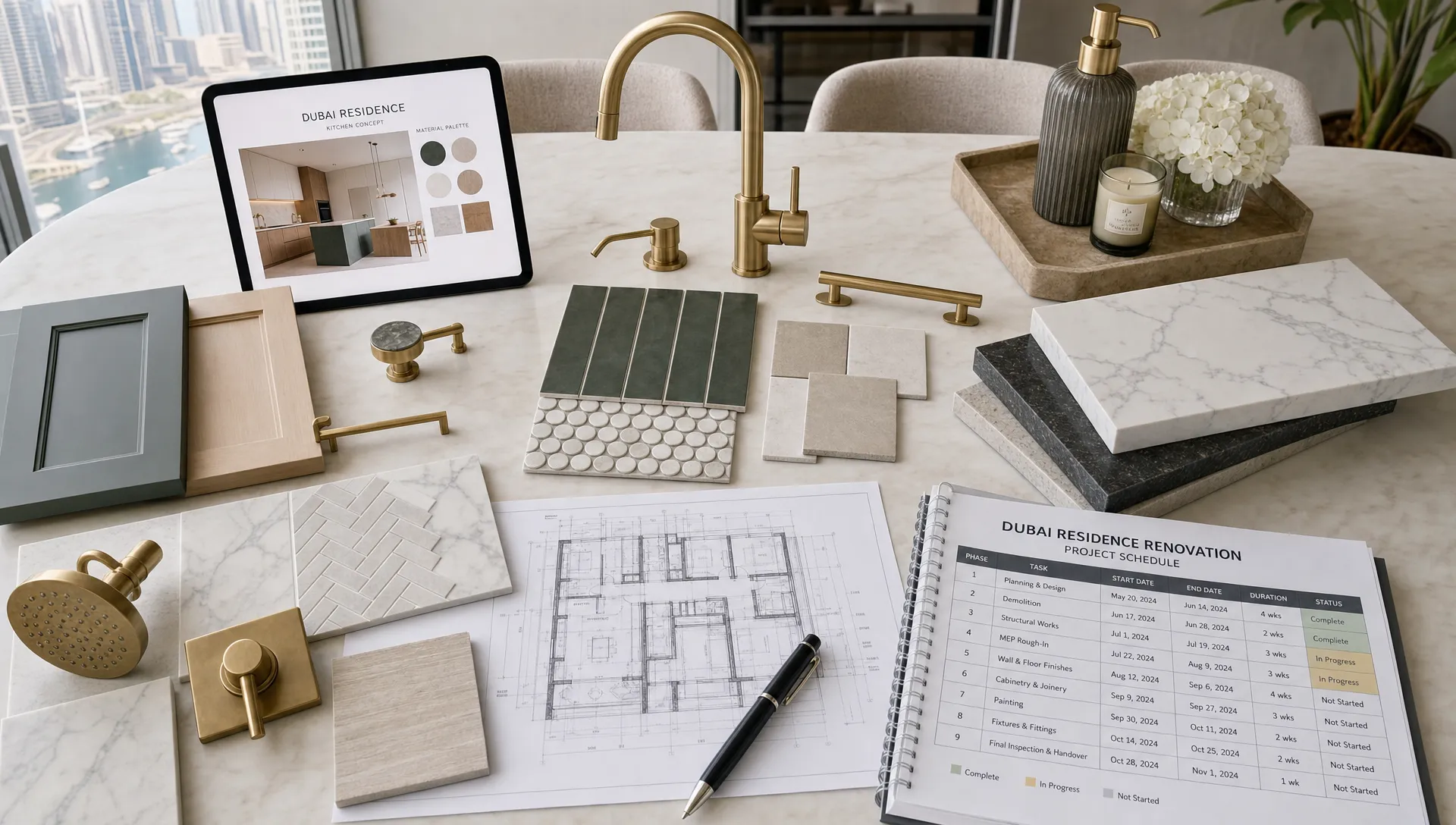
Budget factors to consider before combining both rooms
A combined renovation can make planning more efficient, but it also concentrates costs into one project window. Before committing, ask for an itemized proposal that separates labor, materials, fixtures, cabinetry, plumbing, electrical work, waterproofing, and finishing details.
Be especially clear about allowances. A kitchen sink, vanity mixer, toilet, oven, dishwasher, tiles, countertop, and cabinet hardware can vary widely in cost depending on brand, finish, and specification. If allowances are vague, the final cost can change quickly once selections begin.
Appliances deserve their own review. Some homeowners replace everything during a renovation, while others keep reliable units and spend more on cabinetry, lighting, or surfaces. Before deciding, it can be helpful to read general appliance repair and maintenance tips so you can think more clearly about what is worth repairing, reusing, or replacing during the remodel.
It is also wise to reserve a contingency for hidden issues. In wet areas, contractors may uncover damaged subfloors, leaks, old wiring, weak ventilation, or previous workmanship problems only after demolition begins. A realistic budget should leave room for these discoveries.
Design advantages of doing both at once
One of the biggest benefits of renovating both spaces together is visual continuity. Your kitchen and bathroom do not need to match exactly, but they should feel like they belong in the same home.
For example, you might repeat brushed nickel fixtures, warm wood tones, soft beige tiles, slim-profile lighting, or a consistent stone look. The kitchen may use the material in countertops while the bathroom uses it on a vanity top or feature wall. This creates cohesion without making the spaces feel identical.
Storage can also be planned more intelligently. In the kitchen, this may mean full-height pantry units, appliance garages, pull-out organizers, and deep drawers. In the bathroom, it may mean recessed niches, floating vanities, mirrored cabinets, and concealed laundry storage. When planned together, these storage decisions can reduce clutter throughout the home.
Lighting is another area where a combined project pays off. Kitchens need task lighting for food preparation, ambient lighting for everyday comfort, and accent lighting for mood. Bathrooms need bright grooming light, softer evening light, and safe wet-area fixtures. Coordinating both lighting plans can make the whole property feel more polished.
Dubai-specific timing considerations
In Dubai, timing can influence comfort and project efficiency. Many homeowners prefer scheduling major renovation work before moving in, during travel periods, or outside key family events. If you live in an apartment building or gated community, approvals, contractor access, elevator protection, work-hour rules, and waste disposal requirements may also affect the schedule.
Material availability is another practical factor. Imported tiles, specialty fixtures, custom joinery finishes, and stone surfaces may require lead time. A good renovation plan should confirm selections early so the project does not stall after demolition.
For villas, access and site protection can be easier, but the scope may be larger. For apartments, logistics can be tighter, so coordination becomes even more important. Either way, the goal is the same: minimize downtime while protecting quality.
A simple decision checklist
If you are still unsure whether to combine both projects, ask yourself these questions:
- Are both the kitchen and bathroom visibly outdated or functionally frustrating?
- Will plumbing, electrical, ventilation, or waterproofing work be needed in both spaces?
- Can your household manage a more intensive renovation period?
- Do you have enough budget to complete both rooms properly?
- Are you moving in, selling, renting, or upgrading for long-term living?
- Have you already chosen a design direction that works across the home?
If most answers are yes, renovating together may be the smarter path. If budget, access, or daily routines make the project too stressful, a phased renovation may be better.
Common mistakes to avoid
The first mistake is focusing only on finishes. Beautiful tiles and cabinets matter, but kitchens and bathrooms depend on what sits behind the surface. Waterproofing, plumbing quality, electrical safety, ventilation, and installation details are what determine whether the renovation lasts.
The second mistake is underestimating temporary disruption. If both rooms are under construction, you need a realistic plan for cooking, bathing, storage, cleaning, and contractor access. This is especially important for families with children, elderly relatives, or work-from-home routines.
The third mistake is making selections too late. Delayed tile, fixture, appliance, or countertop decisions can slow down the entire schedule. For a combined renovation, decisions should be made early enough for procurement, delivery, and coordination with trades.
The fourth mistake is hiring separate teams without a clear project manager. Kitchen and bathroom work overlaps across trades, and poor coordination can lead to delays, rework, and inconsistent finishes. A single accountable renovation partner can help keep the sequence, communication, and quality control aligned.
Frequently Asked Questions
Is it cheaper to renovate kitchen and bathroom together? It can be more efficient because trades, deliveries, demolition, and project management may be coordinated, but it is not automatically cheaper. The final cost depends on scope, materials, layout changes, and technical work.
How long does a combined kitchen and bathroom renovation take? Timelines vary based on property type, approvals, custom joinery, material lead times, and the complexity of plumbing or electrical changes. A detailed schedule should be prepared before work begins.
Should I move out during a combined renovation? If possible, moving out can make the process easier, especially if the home has one bathroom or the kitchen will be unusable. If you must stay, plan temporary cooking and bathing arrangements in advance.
What should be planned first, the kitchen or the bathroom? Plan both layouts together, then sequence the work based on technical needs, material delivery, and household access. Plumbing, electrical, waterproofing, and cabinetry timelines should guide the schedule.
Can I renovate both rooms in stages but keep one design style? Yes. If budget or logistics require staging, create a whole-home design plan first. This lets you renovate one room now and the other later without ending up with mismatched finishes.
Plan both spaces with confidence
Renovating your kitchen and bathroom together makes the most sense when both rooms need meaningful upgrades, you want a cohesive interior, and you can manage the budget and temporary disruption. It is a practical decision, but also a design opportunity.
Revo Craft Renovations helps Dubai homeowners and businesses plan tailored renovation projects with modern design, premium finishes, skilled craftsmanship, and transparent communication. If you are weighing whether to combine or phase your renovation, schedule a personalized design consultation with Revo Craft Renovations and build a plan that fits your space, lifestyle, and timeline.