
Renovating a home or commercial space can feel straightforward at first. You want a better kitchen, a more elegant living room, smarter storage, or a bathroom that finally feels like a retreat. Then the decisions start to multiply: layout, lighting, ceiling details, materials, joinery, plumbing points, color temperature, appliance placement, timelines, and budget priorities.
That is when many property owners realize they do not only need someone to build the renovation. They need someone to shape the renovation before work begins. An interior renovation designer helps turn scattered ideas into a functional, buildable, and visually consistent plan.
The key question is timing. Hire too late, and you may already be committed to the wrong layout or materials. Hire too early without clear goals, and the process can feel vague. Here is how to know when an interior renovation designer is worth bringing in, especially for homes, apartments, villas, and business spaces in Dubai.
What an Interior Renovation Designer Actually Does
An interior renovation designer is different from a decorator. A decorator may help with furniture, colors, accessories, and styling after the main renovation decisions are made. A renovation designer gets involved earlier, when the space itself is being improved.
Their role often includes planning how rooms function, how people move through the space, how storage is integrated, how lighting supports daily use, and how finishes work together. They think about proportions, materials, wall treatments, joinery, ceiling details, and the practical limits of the existing property.
For Dubai properties, this can be especially important because many renovations involve apartment building guidelines, villa community requirements, service access, air conditioning coordination, and MEP considerations. Even a beautiful concept can fail if it does not work with the site conditions.
A strong designer does not work in isolation. They coordinate with the renovation team so that the plan is realistic, priced properly, and executed with fewer surprises. This is why home renovation and design should be planned together rather than treated as separate steps.
The Best Time to Hire a Designer
The ideal time to hire an interior renovation designer is after you know what you want to improve, but before you finalize the scope, contractor quote, materials, or demolition schedule.
At this stage, you may know that the kitchen feels cramped, the living room lacks character, or the bedrooms need more storage. You may also have inspiration images saved from hotels, showrooms, or social media. What you may not yet have is a practical plan that connects your taste, budget, lifestyle, and property constraints.
A designer can help you define priorities before money is spent. This matters because early decisions affect almost everything that follows. Moving a wall can change lighting. Changing flooring can affect door clearances. Adding custom joinery can influence electrical points. Upgrading a bathroom may require careful plumbing and waterproofing checks.
If you wait until construction has started, the designer may still help, but the options become narrower. Changes can mean rework, delays, and extra costs. In renovation, design is not just about appearance. It is a risk-management tool.
Signs You Should Hire an Interior Renovation Designer
You Are Changing the Layout
If your renovation involves moving walls, opening up rooms, changing kitchen flow, converting a room’s purpose, or rethinking an entire floor, design support is highly valuable. Layout decisions shape how comfortable a space feels every day.
A designer studies circulation, furniture placement, natural light, storage, and sightlines. They can identify whether an open-plan layout will actually suit your lifestyle or whether a semi-open plan with better zoning would work better. This is particularly useful in Dubai apartments, where every square meter needs to be used intelligently.
You Are Renovating More Than One Room
Single-room updates can sometimes be handled with a clear brief and a capable contractor. Multi-room renovations are different. The more areas you renovate, the more important consistency becomes.
Flooring transitions, paint tones, lighting style, door finishes, hardware, and joinery details should feel connected. Without design direction, one room may look modern, another traditional, and another unfinished. A designer helps create a visual language that carries through the property without making every room look identical.
You Want a Kitchen or Bathroom Remodel
Kitchens and bathrooms are among the most technical spaces in a renovation. They involve plumbing, electrical planning, lighting, ventilation, waterproofing, durable materials, storage, and daily workflow. Small mistakes can become expensive because they are hidden behind tiles, cabinets, countertops, or walls.
For a kitchen, a designer considers how you cook, where appliances should sit, how many people use the space, and how storage can reduce clutter. For a bathroom, they think about wet and dry zones, lighting near mirrors, tile proportions, niche placement, drainage, and the feeling of space.
If your kitchen is central to family life, it may also be worth exploring how professional kitchen renovation services can transform busy homes through better layout, storage, and material choices.
You Need Custom Joinery or Built-In Storage
Custom carpentry can elevate a home, but only when it is carefully designed. Wardrobes, TV walls, kitchen cabinetry, bathroom vanities, study desks, and display units must suit both the room and the people using them.
A renovation designer helps define measurements, finishes, internal storage needs, lighting integration, and proportions. This prevents the common problem of built-ins that look attractive in drawings but feel bulky or impractical after installation.
You Want a Premium Finish
Luxury and premium interiors depend on restraint, proportion, and detail. It is rarely about adding the most expensive material to every surface. It is about knowing where to invest and where to simplify.
A designer can help you avoid overdesigning a space. They may recommend one feature wall instead of three, warmer lighting instead of brighter lighting, larger format tiles for a cleaner look, or custom hardware that gives ordinary cabinetry a more refined finish.
You Are Overwhelmed by Choices
Renovation decisions can be exhausting. There are hundreds of tile options, paint shades, cabinet finishes, countertop materials, handles, lighting fixtures, sanitaryware styles, and flooring types. When every choice affects another choice, decision fatigue sets in quickly.
A designer narrows the field. Instead of asking you to choose from everything available, they curate options that fit your style, budget, and renovation goals. This keeps the project moving and reduces the chance of last-minute decisions that do not fit the overall plan.
You Care About Resale or Rental Appeal
If you plan to sell or rent your property in the future, design choices should balance personal taste with broader market appeal. A designer can help you create a home that feels distinctive without becoming too specific or difficult for future buyers or tenants to imagine themselves in.
In Dubai’s competitive property market, a well-renovated interior can help a home feel more polished during viewings. Thoughtful lighting, practical storage, durable finishes, and a coherent design style can make a stronger impression than trendy details alone.
Quick Decision Guide
Use this table as a simple guide if you are unsure whether design help is necessary.
| Renovation situation | Designer needed? | Why it matters |
|---|---|---|
| Painting one room or replacing loose furniture | Usually not essential | A clear style direction may be enough |
| Updating lighting, wall finishes, and furniture together | Helpful | A designer can create a cohesive look and avoid mismatched choices |
| Renovating a kitchen or bathroom | Strongly recommended | Technical planning, workflow, materials, and services must work together |
| Changing layout or removing walls | Strongly recommended | Space planning affects comfort, safety, cost, and construction scope |
| Renovating a full apartment or villa | Highly recommended | Consistency, sequencing, budgeting, and trade coordination become more complex |
| Creating a luxury or highly customized interior | Highly recommended | Premium results depend on detailing, proportion, and material selection |
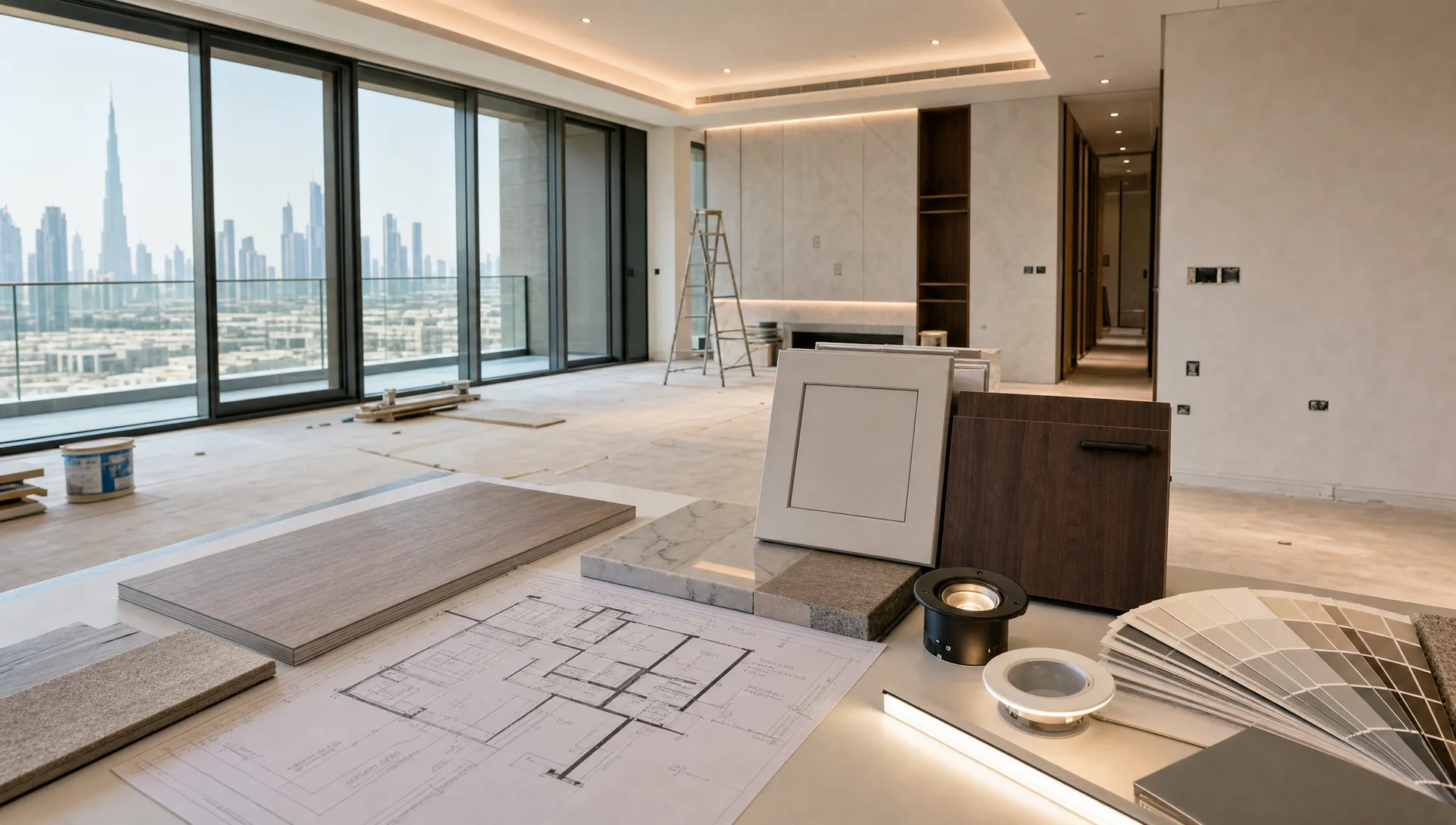
What Happens If You Hire a Designer Too Late?
Hiring a designer late is better than not getting expert guidance at all, but it can limit what is possible. Once a contractor has priced a basic scope, materials have been ordered, or demolition has started, changes may affect cost and schedule.
For example, you may decide that the living room needs built-in storage after electrical work is complete. That could require moving sockets, adjusting lighting, or modifying wall finishes. You may choose a bathroom tile without confirming grout color, niche dimensions, or mirror lighting, then discover the final result feels less refined than expected.
Late design changes also create communication gaps. The contractor may be building based on one assumption while the homeowner imagines something else. A designer reduces this gap by translating ideas into clearer specifications, drawings, finishes, and decisions.
Interior Renovation Designer vs Renovation Contractor
A designer and contractor serve different but connected roles. The designer focuses on how the space should function and feel. The contractor focuses on how to build it safely, efficiently, and to the agreed quality.
In the best projects, these roles work together from the beginning. The designer may suggest a wall finish, lighting layout, or custom cabinet detail. The contractor then confirms how it can be executed, what materials are suitable, how long it will take, and whether there are site limitations.
This collaboration is especially important when multiple trades are involved, such as carpentry, electrical work, plumbing, painting, tiling, and wall finishing. If you want to understand the build side of the process, it helps to know how interior renovation contractors bring designs to life through planning, sequencing, and quality control.
When Commercial Spaces Need a Designer
Interior renovation designers are not only for homes. They are also valuable for offices, boutiques, cafés, clinics, salons, and hospitality spaces. In commercial settings, the design must support both operations and brand experience.
A designer considers how customers enter, where they wait, how staff move, how products or services are displayed, and how lighting affects the mood of the space. For boutique retail or hospitality concepts, even small tactile details can support the overall identity, from branded textiles to packaging corners. Suppliers that create custom woven labels, patches, and ribbons can be useful when a renovated space includes branded uniforms, retail packaging, or soft furnishing details that need to feel consistent with the interior.
Commercial renovations also need practical planning. A beautiful reception counter is not enough if there is no storage, poor cable management, weak lighting, or awkward customer flow. Design helps connect the customer-facing experience with the back-of-house needs that keep the business running smoothly.
How to Prepare Before Meeting a Designer
You do not need to have every answer before your first consultation. In fact, the designer’s job is to help organize your ideas. Still, a little preparation can make the meeting more productive.
Bring or prepare the following:
- Photos and videos of the current space.
- Any available floor plans, measurements, or building information.
- Inspiration images that show styles, colors, and moods you like.
- A list of what currently frustrates you about the space.
- Your must-haves, nice-to-haves, and anything you want to avoid.
- A realistic budget range and ideal timeline.
- Information about building, landlord, or community renovation rules if available.
The most useful information is often practical rather than decorative. How many people use the kitchen? Do you work from home? Do you entertain often? Do you need hidden storage? Are there children, pets, elderly family members, or accessibility needs? Good design starts with real life.
How Much Design Support Do You Need?
Not every project needs a full design package. The right level of support depends on complexity.
A light consultation may be enough if you only need help choosing colors, finishes, or furniture direction. A partial design service may suit a single room where layout and materials need professional input. A full design and renovation plan is better for kitchens, bathrooms, multi-room renovations, and projects involving custom joinery or technical upgrades.
The important thing is to match the level of design support to the level of risk. The more permanent the decision, the more carefully it should be designed. Paint can be changed relatively easily. Plumbing locations, flooring, cabinetry, and ceiling work are much harder to correct after installation.
Red Flags That You Need Design Help Immediately
Some warning signs mean you should pause before moving ahead. If different contractors are giving very different quotes, the scope may not be clear enough. If you keep changing your mind about finishes, the design direction may be weak. If you are buying materials before confirming layout, you may be creating avoidable risk.
Another red flag is relying only on verbal instructions. Renovations need clear documentation, especially when several trades are working on the same site. Without drawings, specifications, or finish schedules, small misunderstandings can compound quickly.
Professional renovation services usually begin with consultation, assessment, planning, execution, and handover. If you are unsure how that journey works, this guide to what to expect from professional renovation home services explains the typical stages of a well-managed project.
Frequently Asked Questions
Do I need an interior renovation designer for a small project? Not always. If you are only repainting or replacing loose furniture, you may not need full design support. If the small project involves built-in storage, lighting changes, bathroom work, or high-visibility finishes, a designer can still add value.
Should I hire a designer before or after choosing a contractor? Ideally, speak with a designer before finalizing the contractor scope and quote. This helps ensure the contractor is pricing the right work and that important design decisions are not left until construction begins.
Can a renovation contractor also help with design? Some renovation companies offer design consultation and build services together. This can be efficient because the design is planned with execution in mind. The key is to ensure your ideas are translated into a clear scope, material selections, and realistic timeline.
Is hiring a designer worth it for a budget renovation? Yes, if the designer helps you spend in the right places. A good designer can recommend where to invest, where to simplify, and how to avoid choices that look affordable at first but create problems later.
What is the biggest mistake homeowners make before hiring a designer? The most common mistake is buying materials too early. Tiles, flooring, fixtures, and cabinetry finishes should be selected after the layout, lighting, measurements, and overall design direction are clear.
Plan Your Renovation With the Right Design Support
You should hire an interior renovation designer when your project affects layout, function, storage, lighting, technical systems, or the long-term feel of your space. The earlier design decisions are clarified, the smoother the renovation usually becomes.
If you are planning a home, kitchen, bathroom, interior upgrade, or custom renovation in Dubai, Revo Craft Renovations can help you shape the concept and execute it with expert craftsmanship, transparent communication, and project management. Start with a personalized consultation through Revo Craft Renovations and move forward with a renovation plan that is built around the way you live or work.