
A beautiful renovation starts as an idea, but it becomes a livable space through planning, coordination, and precise execution. That is where interior renovation contractors make the difference. They take design concepts, material selections, technical drawings, and lifestyle goals, then turn them into a finished interior that works in real daily life.
In Dubai, this role is especially important. Homes and commercial spaces often need to balance modern aesthetics with building regulations, community guidelines, air-conditioning performance, durable finishes, and tight project timelines. A skilled contractor does not simply “build what is drawn.” They interpret the design, identify practical constraints, coordinate trades, manage materials, and protect the quality of the final result.
What Interior Renovation Contractors Actually Do
Interior renovation contractors act as the bridge between design vision and physical construction. A designer may create the layout, mood board, finish palette, and visual direction, but the contractor is responsible for making those decisions buildable, safe, and durable.
This includes checking whether walls can be moved, whether plumbing points can be relocated, whether lighting plans suit the ceiling structure, and whether selected finishes are suitable for the space. Contractors also manage the specialists who bring the project together, including electricians, plumbers, carpenters, painters, tilers, installers, and finishing teams.
The best contractors also protect the homeowner from common renovation problems. They clarify scope, flag unrealistic timelines, plan the sequence of work, communicate changes, and check details before they become expensive mistakes. If you are comparing a full-service renovation journey, Revo Craft’s guide on what to expect from professional renovation home services explains how the process typically unfolds from consultation to handover.
Turning a Design Concept Into a Buildable Plan
The first step is understanding the existing space. Before demolition or installation begins, contractors assess the site carefully. They review measurements, ceiling heights, wall conditions, electrical points, plumbing routes, flooring levels, ventilation, drainage, and access restrictions.
This site survey helps convert a design idea into a practical work plan. For example, a homeowner may want an open-plan living area, but the contractor needs to confirm whether any walls are structural, whether new electrical routes are required, and how flooring will transition between zones. A kitchen island may look perfect in a 3D render, but the contractor must confirm circulation space, power supply, plumbing feasibility, and installation clearances.
A strong buildable plan usually includes clear drawings, confirmed materials, a defined scope of work, realistic timelines, and a structured sequence of activities. This reduces uncertainty and helps everyone understand what will happen before work begins.
| Renovation stage | Contractor’s role | Why it matters |
|---|---|---|
| Site assessment | Measures and inspects existing conditions | Prevents design decisions that do not suit the property |
| Scope planning | Defines what will be removed, upgraded, built, or finished | Reduces confusion and unexpected cost changes |
| Technical coordination | Aligns electrical, plumbing, AC, joinery, and finishing details | Ensures the design works safely and practically |
| Material planning | Confirms quantities, lead times, and installation requirements | Helps avoid delays and mismatched finishes |
| Quality control | Checks workmanship before final handover | Protects the look, function, and durability of the renovation |
Coordinating the Trades Behind the Finished Look
A finished interior may look seamless, but many trades work behind the scenes to create that result. Interior renovation contractors coordinate those trades in the right order so each stage supports the next.
For instance, electrical and plumbing work must usually be completed before walls are closed, ceilings are finished, or cabinetry is installed. Flooring may need to be leveled before joinery measurements are finalized. Wall finishes need proper surface preparation before paint, microcement, wallpaper, or decorative panels are applied.
This is where project sequencing becomes critical. If a carpenter arrives before MEP work is complete, joinery may need to be modified later. If tiling begins before waterproofing is checked, a bathroom or wet kitchen could develop problems after handover. Good contractors prevent these issues by controlling the workflow and keeping teams aligned.
The same principle applies across construction markets. A turn-key general contractor such as Summit Barndominiums & Outdoor Living highlights the value of managing multiple construction elements, from foundation work to finishes, under one coordinated process. In interior renovation, that same integrated mindset helps transform separate tasks into one cohesive result.
Protecting the Design Intent During Construction
One of the biggest challenges in renovation is preserving the original design intent. Small changes during construction can alter the feel of a room. A light installed a few centimeters off-center, a poorly aligned tile joint, an incorrect paint sheen, or a cabinet handle placed at the wrong height can affect the final impression.
Experienced contractors protect the design by working from detailed drawings, approved samples, and clear site instructions. They confirm dimensions before fabrication, review finish samples in the actual space, and check alignment before permanent installation.
This is especially important for modern Dubai interiors, where clean lines, integrated storage, layered lighting, and premium finishes are common expectations. The cleaner the design looks, the more precise the execution needs to be. Minimalist interiors often leave very little room for error because every joint, edge, and transition is visible.
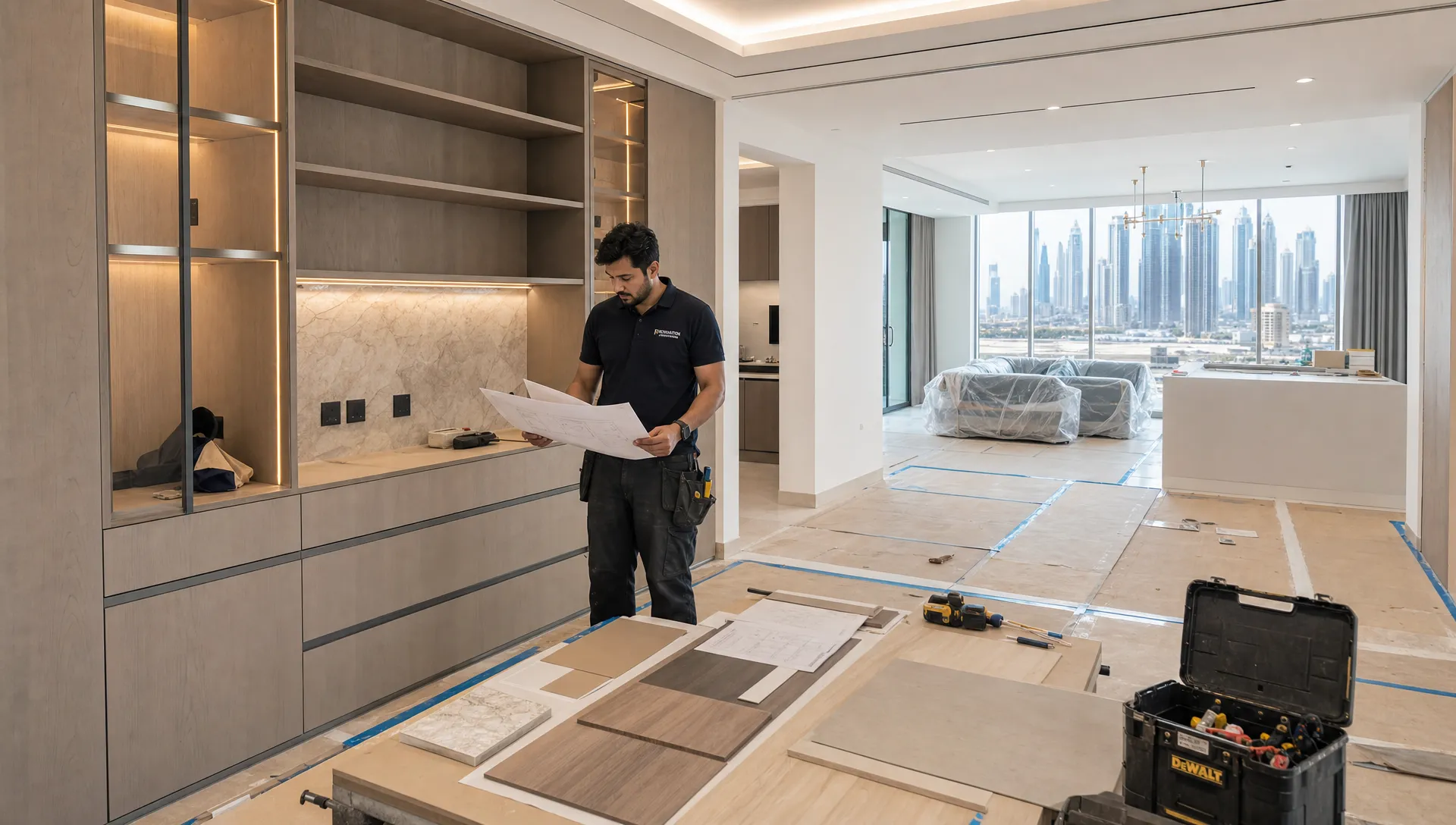
Selecting Materials That Fit the Space and Lifestyle
Designs come to life through materials. The same layout can feel completely different depending on the flooring, wall finish, lighting temperature, cabinet texture, stone selection, and hardware. Contractors help homeowners understand how those materials will perform once installed.
In Dubai, material choices should consider heat, humidity, air-conditioning, dust, sunlight exposure, and everyday maintenance. A finish that looks beautiful in a showroom may not always be ideal for a busy family home, a rental property, or a commercial space with heavy foot traffic.
Good contractors evaluate both appearance and performance. They may recommend moisture-resistant substrates for certain areas, durable wall finishes for high-contact zones, quality hinges and runners for frequently used cabinetry, and flooring materials that suit the level of wear expected in the room.
For homeowners planning highly personalized upgrades, Revo Craft’s article on custom home renovations for modern Dubai living explores how lifestyle, climate, and property type influence renovation decisions.
Managing Budget Without Weakening the Result
A renovation budget is not only about choosing cheaper or more expensive materials. It is about knowing where quality matters most and where smart substitutions can maintain the design effect without unnecessary overspending.
Interior renovation contractors help manage budget by clarifying priorities. For example, a homeowner may choose to invest more in custom joinery, lighting, and flooring because those elements shape the entire interior. In other areas, a contractor might suggest alternative finishes that create a similar look with easier maintenance or shorter lead times.
Transparent budget management also includes documenting changes. Renovation projects often evolve as homeowners see the space taking shape. A reliable contractor explains the cost and time impact of any change before proceeding, which helps avoid surprises near the end of the project.
Common budget-protecting practices include:
- Confirming the scope before work starts
- Reviewing material availability before ordering
- Separating must-have upgrades from optional enhancements
- Tracking changes in writing
- Inspecting completed stages before moving forward
Creating Functional Interiors, Not Just Beautiful Ones
A successful renovation is not only attractive. It should make daily life easier. Contractors help translate design into practical function by considering movement, storage, maintenance, lighting, access, and long-term usability.
In a kitchen, this might mean improving the work triangle, adding hidden storage, selecting easy-clean surfaces, and coordinating appliance locations. In a living room, it might involve better lighting layers, built-in media storage, improved wall finishes, and concealed wiring. In bedrooms, it may mean custom wardrobes, soft lighting, acoustic comfort, and better use of corners or awkward wall lengths.
This is particularly important for busy households where the home needs to look refined but still handle daily routines. If the kitchen is a key part of your renovation, Revo Craft’s guide to kitchen renovation services that transform busy homes offers practical ideas for layout, storage, lighting, and materials.
The Hidden Work Behind Premium Finishes
Premium interiors depend heavily on preparation. The visible finish is only as good as the surface beneath it. Before paint, wallpaper, panels, tiles, stone, or cabinetry are installed, contractors must ensure that the base conditions are ready.
This may include wall leveling, crack repair, waterproofing, screed correction, ceiling framing, electrical chasing, plumbing rerouting, and surface priming. These steps are not always exciting to look at, but they determine whether the final finish appears smooth, aligned, and long-lasting.
Custom carpentry and joinery also require technical accuracy. Contractors must coordinate shop drawings, site measurements, material thicknesses, hardware clearances, appliance dimensions, and installation tolerances. A wardrobe or kitchen cabinet may look simple once complete, but it depends on exact planning from the earliest stages.
Keeping the Project on Schedule
Renovation timelines can be affected by approvals, material lead times, building access rules, design changes, and coordination between trades. Interior renovation contractors bring structure to the process by creating a realistic schedule and updating it as work progresses.
A professional schedule considers what must happen first, what can happen at the same time, and what depends on supplier delivery. For example, custom joinery often needs early measurement and production time. Imported finishes may need advance ordering. Wet works require curing time before the next stage begins.
Good communication is just as important as the schedule itself. Homeowners should know what is happening on site, what decisions are needed, and whether any issue could affect completion. Clear communication builds trust and keeps the project moving.
Quality Control and Final Handover
The final stage of bringing a design to life is not simply cleaning the space and handing over the keys. Contractors should inspect the completed work, identify snags, test fixtures, check alignments, review finishes, and correct details before the client considers the project complete.
Quality control may include checking door swings, cabinet alignment, paint consistency, tile levels, electrical outlets, lighting scenes, plumbing fixtures, silicone joints, wall finishes, and hardware installation. This final attention to detail is what separates an average renovation from one that feels polished and professionally finished.
A proper handover also helps homeowners understand how to care for new materials and finishes. Some surfaces require specific cleaning methods, and certain fixtures or hardware may need maintenance over time.
How to Choose the Right Interior Renovation Contractors
Choosing a contractor is one of the most important renovation decisions you will make. The right team should understand design, construction, communication, and site management. They should also be honest about what is realistic for your property, timeline, and budget.
Look for a contractor who can explain the process clearly, review your space carefully, provide transparent scope details, and demonstrate relevant experience. A strong portfolio is useful, but the way a contractor communicates before work begins often reveals how the project will be managed later.
| What to look for | Why it matters |
|---|---|
| Detailed consultation | Shows the contractor is trying to understand your lifestyle and goals |
| Technical site review | Helps avoid design ideas that create hidden construction problems |
| Clear scope of work | Reduces misunderstandings during the project |
| Material and finish guidance | Supports better decisions for durability and appearance |
| Organized project management | Keeps trades, timelines, and communication under control |
| Quality-focused handover | Ensures the final details match the design intent |
Bringing Your Interior Vision to Life With Revo Craft Renovations
Revo Craft Renovations provides bespoke renovation and interior transformation services for homes and businesses in Dubai. The team focuses on modern design, premium finishes, expert craftsmanship, and tailored solutions that improve comfort, style, and functionality.
From personalized design consultations and interior styling to wall finishing, kitchen remodeling, electrical and plumbing upgrades, custom carpentry, joinery, and project management, Revo Craft helps clients move from concept to completion with clear communication and careful execution.
Frequently Asked Questions
What do interior renovation contractors do? Interior renovation contractors manage the practical execution of a renovation. They coordinate trades, review technical requirements, plan materials, manage timelines, oversee workmanship, and turn the design concept into a finished interior.
Do I need a contractor if I already have an interior designer? Yes, in most renovation projects. A designer creates the vision and specifications, while the contractor ensures those ideas can be built correctly, safely, and within the agreed scope.
How do contractors keep a renovation close to the original design? They use detailed drawings, approved samples, site measurements, technical coordination, and quality checks to make sure materials, proportions, alignments, and finishes match the design intent.
What should I ask before hiring an interior renovation contractor in Dubai? Ask about their experience, project process, site assessment, communication style, material guidance, timeline planning, and how they handle changes or unexpected issues.
Can contractors help with both style and function? Yes. Skilled contractors consider how the space will look and how it will perform day to day, including storage, lighting, movement, durability, and maintenance.
Ready to Transform Your Space?
If you have a design idea and want it executed with care, Revo Craft Renovations can help you turn that vision into a refined, functional interior. Whether you are updating a home, remodeling a kitchen, improving wall finishes, or planning a complete interior transformation, the right contractor makes every stage smoother and more precise.
Visit Revo Craft Renovations to start planning a renovation that brings your design to life with craftsmanship, clarity, and confidence.