
Modern Dubai homes have a unique design challenge: they need to feel elegant enough for entertaining, practical enough for busy daily routines, and comfortable through intense heat, bright sunlight, and compact urban living. Good interior home design is not only about choosing beautiful furniture. It is about shaping the way a space works, feels, and supports your lifestyle.
Whether you live in a Downtown apartment, a Jumeirah villa, a townhouse in a family community, or a rental you want to upgrade carefully, the best interiors balance style with long-term function. The ideas below focus on modern Dubai living, with practical ways to improve flow, comfort, storage, lighting, and finish quality without making your home feel overdesigned.
Start with lifestyle before style
Before choosing colors or materials, think about how your home is actually used. Dubai households often combine multiple lifestyles in one space: family time, remote work, hosting guests, prayer or quiet reflection, fitness, children’s study areas, and relaxed evening routines.
A beautiful interior that ignores these daily patterns can become frustrating quickly. For example, an open-plan living room may look spacious, but it needs smart zoning if children are watching TV while someone else is working nearby. A large kitchen island may be ideal for entertaining, but it also needs storage, durable surfaces, and comfortable circulation.
A strong design plan should answer a few essential questions. Where do you need privacy? Which spaces receive the most sunlight? Do you host often? Is storage a daily problem? Are you planning for children, guests, or aging family members? When these answers guide the design, your choices become more personal and less trend-driven.
For homeowners who want more than a cosmetic refresh, planning around lifestyle is also the foundation of successful custom home renovations, especially in Dubai homes where layout, climate, and finish durability all matter.
Use warm minimalism instead of cold minimalism
Minimalist interiors are popular in Dubai, but the most livable versions avoid looking empty or sterile. Warm minimalism works especially well because it keeps spaces clean and uncluttered while adding softness through texture, lighting, and natural tones.
Think of a palette built around warm whites, sand, taupe, stone grey, muted olive, clay, walnut, oak, brushed bronze, and matte black accents. These colors feel calm during the day and elegant at night. They also complement Dubai’s natural light better than stark white and high-gloss surfaces, which can create glare.
The key is restraint. Instead of using many decorative pieces, let each material do more work. A textured feature wall, a sculptural pendant, fluted timber panels, linen curtains, and a stone-effect coffee table can create depth without visual noise.
| Design choice | Why it works in Dubai | Best place to use it |
|---|---|---|
| Warm neutral walls | Softens strong daylight and feels timeless | Living rooms, bedrooms, hallways |
| Matte or satin finishes | Reduces glare compared with high gloss | Cabinets, wardrobes, wall panels |
| Natural wood tones | Adds warmth to modern spaces | Joinery, doors, shelves, vanities |
| Textured wall finishes | Creates luxury without heavy decoration | TV walls, foyers, dining areas |
| Sheer and blackout curtains | Controls privacy, light, and heat | Bedrooms, lounges, large windows |
Make the living room feel generous, not just large
A modern Dubai living room should feel open, comfortable, and welcoming. Many homes have generous floor areas, but poor furniture placement can make them feel awkward. The goal is not to push every sofa against the wall. It is to create conversation zones, clear walkways, and a focal point that anchors the room.
In apartments, a low-profile sofa, floating media unit, and wall-mounted lighting can make the space feel larger. In villas, you can use larger rugs, paired accent chairs, and custom joinery to give the room structure. If the living area connects to the dining space, use a rug, ceiling detail, or lighting feature to separate zones without closing them off.
A built-in media wall is one of the most effective upgrades for modern interiors. It can hide cables, frame the TV, include concealed storage, and provide space for decor. For a softer look, combine closed cabinets with open shelves and a textured backing such as microcement, veneer, stone-look panels, or fluted details.
Design kitchens for both daily routines and entertaining
The kitchen is often the busiest part of a Dubai home. It may serve weekday breakfasts, family meals, coffee rituals, weekend gatherings, and formal hosting. Modern kitchen design should therefore be durable, social, and easy to maintain.
If space allows, an island or peninsula can become a natural gathering point. However, it should not block movement between the sink, hob, fridge, and preparation zones. Storage also matters. Deep drawers, tall pantry units, appliance garages, pull-out organizers, and ceiling-height cabinets can keep countertops clear.
For finishes, consider materials that tolerate heat, moisture, and frequent cleaning. Quartz, porcelain, compact surfaces, and quality laminates are popular because they offer practical performance with a refined look. Cabinet colors can stay timeless with greige, warm white, walnut, charcoal, or soft sage, then gain personality through handles, lighting, backsplash texture, or statement stools.
Lighting deserves special attention in kitchens. Use task lighting under cabinets, ambient ceiling lights, and decorative pendants above islands or dining counters. This makes the kitchen more functional during food preparation and more atmospheric when entertaining.
Layer lighting for bright days and elegant evenings
Dubai homes experience strong daylight, especially in rooms with large windows. At night, the same room needs softer lighting for comfort and atmosphere. This is why one central ceiling light is rarely enough.
Layered lighting gives you flexibility. Ambient lighting provides overall brightness. Task lighting supports cooking, reading, grooming, or working. Accent lighting highlights artwork, textured walls, shelving, niches, or architectural features.
A modern lighting plan may include recessed ceiling lights, wall washers, pendant lights, LED strips inside joinery, bedside sconces, mirror lighting, and dimmable circuits. The best results come when lighting is planned early, before ceilings, walls, electrical points, and cabinetry are finalized.
Use warm white lighting in living rooms and bedrooms for a relaxed feel. In kitchens, bathrooms, and work zones, choose lighting that provides clarity without feeling clinical. Dimmers are especially useful because they let the same room shift from practical daytime use to relaxed evening ambience.
Build storage into the architecture
Storage is one of the biggest differences between a home that looks good for a week and a home that stays beautiful for years. In modern Dubai interiors, custom carpentry and joinery can turn awkward corners, long corridors, and unused wall sections into highly functional design features.
Instead of relying only on freestanding cabinets, consider built-in wardrobes, concealed shoe storage, laundry cupboards, entryway benches, floating vanities, pantry walls, and floor-to-ceiling shelving. These elements can be designed to match the room’s color palette, so storage feels like part of the architecture rather than an afterthought.
For families, hidden storage is especially useful near entrances, play areas, kitchens, and living rooms. For apartments, it can make compact spaces feel cleaner and more spacious. If you are working with a smaller footprint, the practical strategies in these apartment renovation ideas can help you think beyond basic furniture and use every square meter more intelligently.
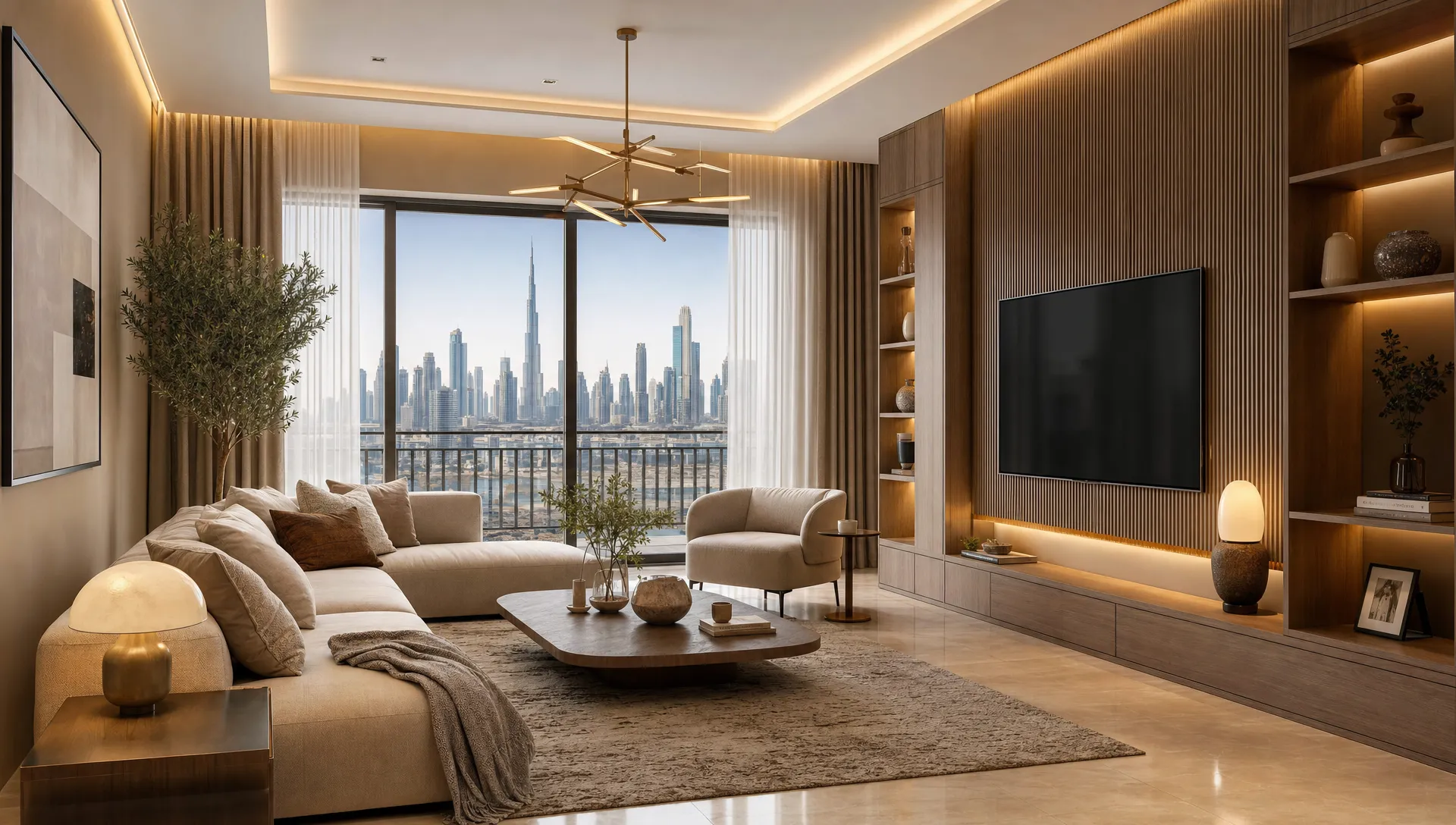
Bring in texture, not clutter
Modern interiors can feel flat when every surface is smooth, white, and reflective. Texture solves this without adding clutter. It gives the eye something to rest on and makes rooms feel more finished.
Textured walls are particularly effective in Dubai homes because they create impact without heavy decoration. Options can include limewash effects, microcement finishes, ribbed panels, natural stone accents, textured wallpaper, or timber slats. Use them strategically, perhaps behind a bed, in a foyer, along a staircase, or around a TV wall.
Soft texture is just as important. Linen curtains, boucle chairs, wool-blend rugs, woven baskets, upholstered headboards, and layered cushions can make sleek spaces feel comfortable. The goal is balance. If the walls and floors are simple, bring texture through furniture and textiles. If you choose a bold wall finish, keep the surrounding pieces quieter.
Create bedrooms that feel cool, restful, and private
Bedrooms in Dubai should be designed as calm retreats. The best schemes often use muted colors, soft lighting, layered curtains, and practical storage. Since sunlight and heat can affect sleep comfort, window treatments are not only decorative. A combination of sheer curtains and blackout curtains offers daytime softness and nighttime privacy.
A strong bedroom design usually starts with the bed wall. Upholstered panels, timber detailing, wall sconces, or a subtle textured finish can create a hotel-like focal point. Floating bedside tables keep the floor clear, while concealed LED lighting adds softness.
Wardrobes should be planned around real habits. Hanging space, drawers, shoe storage, accessory trays, luggage space, and mirrored sections all need to be considered. If the room is compact, sliding doors or handleless wardrobes can reduce visual clutter. If the bedroom is large, a walk-in wardrobe or dressing corner can improve daily comfort.
Upgrade bathrooms with spa-level practicality
Dubai homeowners often want bathrooms that feel like boutique hotel spaces. This is achievable, but the most successful bathroom designs combine visual calm with technical precision.
Large-format tiles can reduce grout lines and make a bathroom feel more seamless. Wall-hung vanities create a lighter look and make cleaning easier. Backlit mirrors, niche shelving, concealed storage, and high-quality fittings can improve both style and function.
Ventilation, waterproofing, plumbing quality, and electrical safety are critical. A beautiful bathroom can quickly become a problem if the technical work behind the walls is weak. This is one reason it is worth involving experienced renovation professionals for bathroom upgrades, especially when moving plumbing points or changing layouts.
For a modern look, consider stone-inspired porcelain, brushed metal fixtures, warm wood-effect vanities, frameless glass, and soft indirect lighting. Keep daily items hidden in drawers or mirrored cabinets so the space stays serene.
Plan for hybrid work and connected living
Modern Dubai living often includes remote work, smart devices, streaming, online learning, and home security systems. Interior design should support these needs without letting technology dominate the look of the home.
A well-designed home office does not need to be a separate room. It can be a study nook in a bedroom, a built-in desk near a window, a concealed workstation behind pocket doors, or a quiet corner of a family room. The essentials are comfortable seating, task lighting, enough power points, cable management, and acoustic control.
If you are integrating lighting automation, motorized curtains, climate control, or other connected features, it is better to plan wiring and device locations during renovation rather than after finishes are complete. These smart home remodeling ideas explain how technology can be considered as part of the design from the beginning.
For homeowners or entrepreneurs who run a business from home, digital infrastructure matters too. While your renovation team handles the physical environment, IT specialists can help with cybersecurity, cloud access, and reliable support. Examples such as managed IT and cloud services for small businesses show the type of operational thinking that can complement a well-planned home office.
Adapt the design to apartments, villas, and townhouses
The best interior home design ideas change depending on the property type. A compact apartment needs lightness, multifunctional furniture, and clever storage. A villa may need stronger zoning, larger-scale lighting, custom joinery, and more attention to indoor-outdoor flow. A townhouse often benefits from improved circulation, better under-stair storage, and a more efficient kitchen and dining layout.
In apartments, avoid oversized furniture and heavy visual contrasts that shrink the room. Choose floating units, reflective accents, compact dining solutions, and vertical storage. In villas, use larger statement pieces and architectural finishes so spacious rooms do not feel empty. In townhouses, focus on making transitional spaces useful, including corridors, landings, entryways, and stair areas.
Balconies, terraces, and garden-facing rooms deserve attention too. Use materials that handle sun exposure, choose easy-clean fabrics, and create continuity between indoor and outdoor palettes. Even a small balcony can become a morning coffee spot with compact seating, greenery, and soft lighting.
Add regional character in a subtle way
Modern Dubai interiors do not need to copy generic international styles. Subtle regional details can make a home feel more rooted and personal. This might include arches, patterned screens, brass details, desert-inspired colors, textured plaster, natural stone, woven accessories, or artwork from regional artists.
The key is to avoid over-theming. A contemporary majlis-inspired seating area, an arched niche, or a warm sand-toned palette can feel sophisticated when balanced with clean lines and modern finishes. These touches create a sense of place while keeping the home current.
Choose finishes that look good and live well
In Dubai, finishes need to handle heat, AC cycles, dust, sunlight, and frequent cleaning. This does not mean sacrificing beauty. It means choosing materials intentionally.
For floors, porcelain tiles, engineered wood, luxury vinyl, and stone-look surfaces can all work depending on the room and maintenance expectations. For walls, washable paints, textured finishes, and durable cladding can keep high-traffic zones looking fresh. For kitchens and bathrooms, prioritize water resistance, stain resistance, and professional installation.
Hardware also has a major effect on perceived quality. Handles, hinges, drawer runners, switches, taps, and door levers are touched every day. Upgrading these details can make a home feel more refined without changing the entire layout.
A practical checklist before starting your interior design project
A successful renovation is built on decisions made before work begins. Use this checklist to reduce delays, budget surprises, and design regrets.
- Define your priorities by room before choosing finishes.
- Measure furniture, circulation space, and storage needs accurately.
- Review electrical, plumbing, lighting, and AC requirements early.
- Choose durable materials that suit Dubai’s climate and your maintenance habits.
- Confirm building management or community approvals where required.
- Plan temporary living arrangements if major works will disrupt daily life.
- Work with a renovation team that communicates clearly from design to completion.
This planning stage is where a professional team can add significant value. Revo Craft Renovations provides tailored renovation and interior transformation services in Dubai, including home renovations, kitchen remodeling, interior styling, wall finishes, electrical and plumbing upgrades, custom carpentry, and project management. The right process keeps the design vision connected to practical execution.
Frequently Asked Questions
What is the best interior home design style for Dubai homes? Warm modern design works well for many Dubai homes because it combines clean lines, neutral tones, textured finishes, and practical comfort. It feels elegant without becoming cold or difficult to maintain.
How can I make a Dubai apartment feel bigger? Use built-in storage, lighter wall colors, floating furniture, layered lighting, mirrors, and furniture scaled to the room. Avoid blocking windows and keep circulation paths clear so the space feels open.
Which rooms should I prioritize first in an interior renovation? Start with the rooms that affect daily life most, usually the kitchen, bathrooms, living room, and bedrooms. Storage, lighting, and technical upgrades should also be planned early because they influence many design decisions.
Are smart home features worth including in interior design? Yes, if they support your lifestyle. Smart lighting, climate control, motorized curtains, and security systems can improve comfort, but they should be planned during renovation so wiring and controls are integrated neatly.
How do I choose materials for Dubai’s climate? Look for durable, easy-clean, moisture-resistant, and UV-conscious materials. Matte finishes, quality tiles, engineered surfaces, washable paints, and well-made joinery often perform better in busy homes.
Bring your modern Dubai home vision to life
The best interiors are not only stylish. They make daily life easier, calmer, and more enjoyable. With the right layout, lighting, storage, materials, and craftsmanship, your home can feel modern while still reflecting your personal way of living.
If you are planning a renovation or interior upgrade in Dubai, Revo Craft Renovations can help turn your ideas into a tailored, functional, and beautifully finished space through personalized design consultation, expert workmanship, and clear project communication.