
Dubai homes have a rhythm of their own. A villa in Arabian Ranches, a townhouse in Dubai Hills, and a compact apartment in Business Bay may all need elegance, but they do not need the same renovation. Family routines, hosting habits, climate, building rules, storage needs, and privacy expectations all shape what a successful upgrade should look like.
That is where custom home renovations make the difference. Instead of copying a showroom look, a custom renovation starts with how you actually live, then turns that into better layouts, smarter storage, durable finishes, and a home that feels natural every day.
For Dubai homeowners, the best renovation is not only beautiful. It is practical in summer heat, easy to maintain, comfortable for family life, suitable for entertaining, and flexible enough for changing needs.
What makes a renovation truly custom?
A custom renovation is not simply a more expensive renovation. It is a renovation planned around your lifestyle, property type, design taste, and long-term goals.
In Dubai, that often means balancing several priorities at once. You may want a more open kitchen but still need control over cooking aromas. You may want hotel-inspired bathrooms but also durable waterproofing and easy cleaning. You may want a sleek minimalist living room but still need concealed storage for children’s items, shoes, bags, or seasonal decor.
A custom approach connects design decisions to daily use. Wall finishes, joinery, electrical points, lighting scenes, plumbing upgrades, and furniture placement are considered together rather than treated as separate tasks.
Start with a lifestyle brief, not a mood board
Mood boards are useful, but they should not lead the project alone. The better starting point is a lifestyle brief that explains how the home needs to function.
Before selecting marble, paint colors, handles, or lighting, ask practical questions. How many people use the kitchen at the same time? Do you entertain weekly or only during holidays? Do you work from home? Do you need guest accommodation? Are there children, elderly family members, or pets to consider? Do you prefer hidden storage or decorative display areas?
A strong brief helps your renovation team make better recommendations. If you are still at the early stage, these house renovation planning tips for Dubai homeowners can help you organize goals, constraints, and priorities before work begins.
Renovating for Dubai’s climate and building conditions
Modern Dubai living is closely tied to climate. Heat, dust, humidity, and intense sunlight influence material selection, ventilation, wall treatments, and maintenance. A finish that looks beautiful in a catalog may not be the best choice for a busy home exposed to strong sun or daily air conditioning.
Good custom renovation planning looks at comfort first. That may include improved insulation in selected areas, better AC grille placement, upgraded lighting that does not overheat rooms, moisture-resistant bathroom materials, and wall finishes that handle regular cleaning.
For apartments, building management rules can affect working hours, waste disposal, elevator access, plumbing modifications, and approvals. For villas, outdoor transitions, roof areas, garden access, and service zones may need more attention. In both cases, early technical review prevents delays and helps align the design with what is actually possible.
The rooms that benefit most from customization
Every home is different, but certain areas usually deliver the biggest lifestyle improvement when they are customized well.
Kitchens that support busy households
The modern Dubai kitchen is often more than a cooking zone. It can be a breakfast area, family command center, coffee station, entertaining space, and storage hub.
A custom kitchen renovation may rethink the workflow between the fridge, sink, hob, oven, and serving areas. It can also add deep drawers, appliance garages, tall pantry units, better task lighting, and durable countertops. For families who cook often, ventilation and easy-clean surfaces matter as much as style.
If your main renovation goal is to modernize the busiest parts of the home, this guide to bathroom and kitchen renovations explores how layout, lighting, and material choices can transform daily routines.
Living rooms designed for hosting and downtime
Dubai homes often need living rooms that move easily between quiet evenings and social gatherings. A custom renovation can improve seating orientation, TV wall design, lighting layers, acoustic comfort, and storage.
Instead of treating the TV wall as a purely decorative feature, think of it as a functional wall system. It can conceal cables, include display niches, integrate warm lighting, and provide closed storage. In larger villas, formal and family living areas may need different design moods while still feeling connected.
Bedrooms with calm, storage, and privacy
Bedrooms should feel restful, but they also need to solve storage challenges. Custom wardrobes, dressing areas, bedside lighting, and vanity zones can make bedrooms feel far more organized.
For master suites, homeowners often choose built-in headboards, textured wall panels, concealed lighting, and coordinated wardrobes. For children’s rooms, flexibility is key. Joinery should support changing ages, study needs, and toy storage without requiring another full renovation too soon.
Bathrooms built for daily durability
A bathroom renovation in Dubai should never focus on surface beauty alone. Wet areas need careful waterproofing, proper slopes, reliable plumbing, ventilation, and suitable sealants around joints and edges.
This is where craftsmanship becomes visible over time. Even a premium tile can fail if the preparation, grouting, or sealing is poor. The same principle applies internationally, where specialist joint sealing firms treat sealing as a dedicated trade because small joints can have a major impact on durability and water resistance.
Matching renovation choices to modern Dubai lifestyles
The best renovation decisions come from matching improvements to real needs. The table below shows how common lifestyle goals can translate into practical renovation choices.
| Lifestyle need | Renovation focus | Practical upgrade examples |
|---|---|---|
| More family storage | Custom carpentry and joinery | Built-in wardrobes, entryway cabinets, pantry units |
| Better entertaining | Open flow and layered lighting | Kitchen island, dining feature wall, dimmable lighting scenes |
| Work from home comfort | Flexible room planning | Study nook, acoustic panels, concealed power points |
| Easier maintenance | Durable finishes | Washable wall finishes, porcelain tiles, moisture-resistant cabinetry |
| More luxury feel | Interior styling and detailing | Textured walls, upgraded hardware, bespoke TV wall, statement lighting |
| Improved performance | MEP upgrades | Electrical revisions, plumbing improvements, AC coordination |
Choosing materials that suit Dubai homes
Material selection is one of the most important parts of custom home renovations. The goal is not to choose the most expensive option. The goal is to choose finishes that match the home’s use, climate exposure, and maintenance expectations.
For flooring, porcelain tiles are popular because they are durable and easy to clean. Engineered wood or wood-look finishes can add warmth, but suitability depends on the room and moisture conditions. For walls, textured finishes, microcement-style surfaces, feature panels, and washable paints can create visual depth without making maintenance difficult.
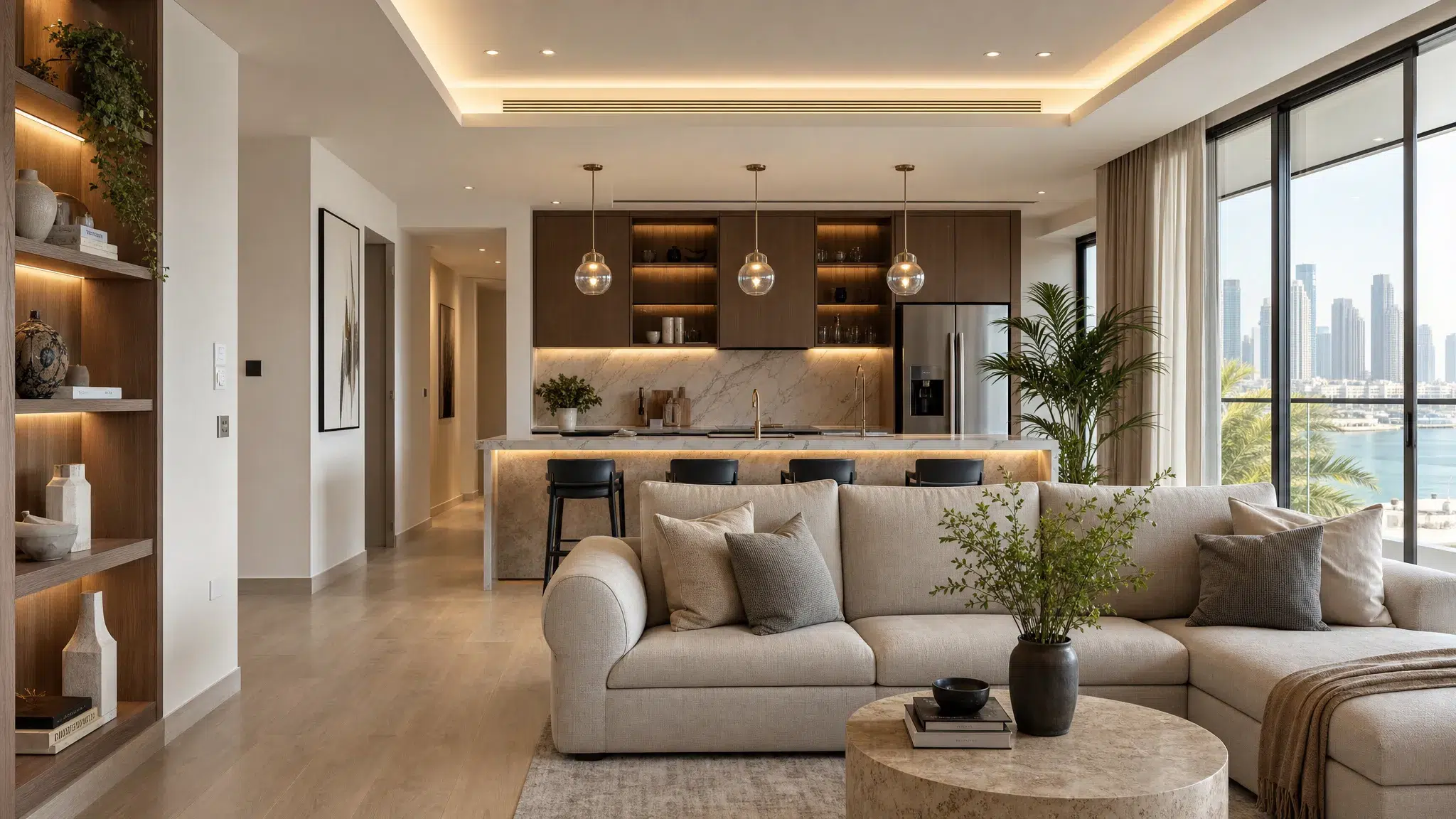
Cabinetry also deserves careful planning. Kitchen and wardrobe materials should be selected for daily use, not only appearance. Hardware quality, hinge systems, drawer mechanisms, and edge detailing all affect how the renovation feels after months of use.
Do not overlook the hidden upgrades
Many of the most valuable renovation choices are not immediately visible. Electrical and plumbing upgrades, AC coordination, waterproofing, wall preparation, and structural checks can determine whether the finished space performs well.
Modern homes need enough power points for appliances, chargers, smart devices, workstations, and lighting. Older layouts may not match current usage habits. A renovation is the right time to review switch locations, circuit capacity, data points, and lighting controls.
Plumbing is equally important in kitchens, bathrooms, laundries, and outdoor areas. Moving fixtures can improve layout, but it should be assessed carefully. Good project planning ensures that design ambitions are supported by safe and reliable technical work.
Apartments and villas need different renovation strategies
A custom renovation should respect the property type. Dubai apartments often require clever space planning. Built-in storage, compact kitchens, sliding doors, lighter finishes, and multi-use furniture can make apartments feel larger and more comfortable.
Villas offer more freedom, but they also involve more zones. Entry areas, staircases, family rooms, guest suites, outdoor connections, maid’s rooms, service spaces, and garages can all affect the renovation plan. If you are upgrading a larger property, a focused guide to luxury villa renovation in Dubai can help you think through major areas before committing to a scope.
The mistake is assuming that one design formula fits all properties. An apartment renovation may need precision and restraint. A villa renovation may need stronger sequencing, zoning, and project management. Both benefit from personalization.
Project management matters as much as design
Even the best design can become stressful without clear project management. Dubai renovations often involve multiple trades, building approvals, material lead times, delivery coordination, and site access rules. Homeowners need transparent communication from the start.
A well-managed renovation should define the scope clearly, confirm material selections early, coordinate trades in the right order, and keep the homeowner informed. This reduces rework and helps protect both budget and timeline.
It is also important to set realistic expectations. Some changes look simple but require technical work behind the scenes. Moving a sink, adding recessed lighting, changing flooring levels, or creating built-in joinery can affect plumbing, electrical routing, ceiling work, and finishing schedules.
How to personalize without over-customizing
Customization should improve your life and the value of your home. It should not make the property difficult to maintain, sell, or adapt.
The safest approach is to personalize fixed elements with timeless quality, then use furniture, decor, and styling for more changeable preferences. For example, a well-designed kitchen layout, neutral premium cabinetry, and strong lighting plan can last for years. Color accents, artwork, loose furniture, and decorative accessories can evolve more easily.
This balance is especially useful in Dubai, where homeowners may renovate for personal comfort, rental appeal, resale value, or a future family change. A good renovation feels tailored, but not overly narrow.
Why custom renovation is ideal for modern Dubai living
Modern Dubai living combines comfort, hospitality, efficiency, and design awareness. People want homes that feel refined but not impractical, stylish but not fragile, and personal but not chaotic.
Custom renovation supports that balance. It allows a home to respond to your actual lifestyle, whether that means a stronger kitchen, calmer bedrooms, better storage, upgraded bathrooms, improved MEP systems, or a more cohesive interior design language.
For many homeowners, the biggest benefit is not one single feature. It is the way the entire home starts working better. Circulation improves. Storage feels natural. Lighting supports different moods. Materials are easier to maintain. The home feels more intentional.
Frequently Asked Questions
What are custom home renovations? Custom home renovations are upgrades planned around a homeowner’s lifestyle, property type, design preferences, and functional needs. They can include layout changes, kitchen remodeling, interior styling, wall finishes, carpentry, plumbing, electrical work, and project management.
Are custom renovations only for villas in Dubai? No. Apartments, townhouses, and villas can all benefit from customization. Apartments often need space-saving design and smart storage, while villas may need larger-scale zoning, guest areas, outdoor transitions, and more detailed project sequencing.
Which areas should I renovate first? Kitchens, bathrooms, storage, lighting, and high-use living areas usually create the biggest daily improvement. The right priority depends on your goals, budget, property condition, and whether you are renovating for personal use, rental appeal, or resale value.
How long does a custom home renovation take in Dubai? Timelines vary depending on the scope, approvals, material availability, and property type. A cosmetic refresh is usually faster than a renovation involving kitchens, bathrooms, MEP upgrades, or custom joinery. A detailed consultation is the best way to set realistic expectations.
How do I avoid renovation delays? Start with a clear brief, confirm materials early, understand building rules, avoid frequent scope changes, and work with a renovation team that coordinates trades carefully. Transparent communication is essential throughout the project.
Create a Dubai home that fits the way you live
A modern home should do more than look updated. It should support your routines, reflect your taste, and perform well in Dubai’s climate and lifestyle.
Revo Craft Renovations provides bespoke renovation and interior transformation services for homes and businesses in Dubai, including home renovations, kitchen remodeling, interior design and styling, wall finishing, electrical and plumbing upgrades, custom carpentry, and project management.
If you are planning custom home renovations and want a space that feels personal, practical, and beautifully finished, visit Revo Craft Renovations to start shaping your renovation plan.