
When buyers walk into a home, they usually form an opinion before they have inspected the floor plan, service charges or square footage in detail. They notice light, smell, surfaces, storage and whether the space feels easy to live in. That is why the best add value renovations are not always the loudest or most expensive. They are the improvements that remove friction, make the home feel maintained and help buyers imagine moving in with fewer compromises.
In Dubai, this matters even more. Many buyers compare properties quickly across similar communities, towers or villa clusters. If your home photographs well, feels cool and bright on viewing day and shows no obvious maintenance gaps, it has a stronger chance of standing out.
Below are nine renovations buyers tend to notice first, with practical notes on where to invest, where to stay restrained and how to avoid upgrades that look impressive but fail under daily use.
Why buyer-noticed renovations matter
A renovation only adds real value when it improves both perception and function. A beautiful feature wall may help a listing photo, but cracked grout in the bathroom or weak kitchen storage can undo that positive impression during a viewing.
Buyers are not only looking for luxury. They are looking for confidence. They want to know that the home has been cared for, that the finishes suit the property and that they will not inherit immediate repair work after handover.
For sellers, landlords and owners planning ahead, the strongest renovation strategy usually has three layers: visible upgrades that create an emotional first impression, functional upgrades that make daily life easier and technical upgrades that reduce doubts during inspection.
| Renovation area | What buyers notice first | Value signal it sends |
|---|---|---|
| Entrance and hallway | Clean door, lighting and tidy transition space | The home feels cared for from the first step |
| Kitchen | Cabinet condition, counters and appliance layout | The main daily-use area is practical and current |
| Bathrooms | Fixtures, grout, vanity and ventilation | Wet areas have been maintained properly |
| Lighting | Brightness, warmth and layered control | The home feels larger, cleaner and more comfortable |
| Storage | Built-ins, wardrobes and utility zones | The layout supports real daily living |
1. A sharper entrance and first-view area
The entrance is the first renovation buyers experience in person. In an apartment, that may mean the front door, threshold, hallway wall finish and lighting. In a villa or townhouse, it can include the gate, pathway, porch, main door hardware and foyer.
This area does not need to be extravagant. A freshly finished door, upgraded handle set, clean skirting, warm wall lights and concealed shoe or bag storage can transform the mood immediately. Buyers often interpret a neat entrance as a sign that the rest of the home has been maintained with similar care.
Avoid making the entrance too personalized. Very bold wallpaper, oversized chandeliers or highly themed decor can make the space memorable for the wrong reason. A buyer should feel welcomed, not challenged to imagine a full redesign.
2. Layered lighting that makes rooms feel larger
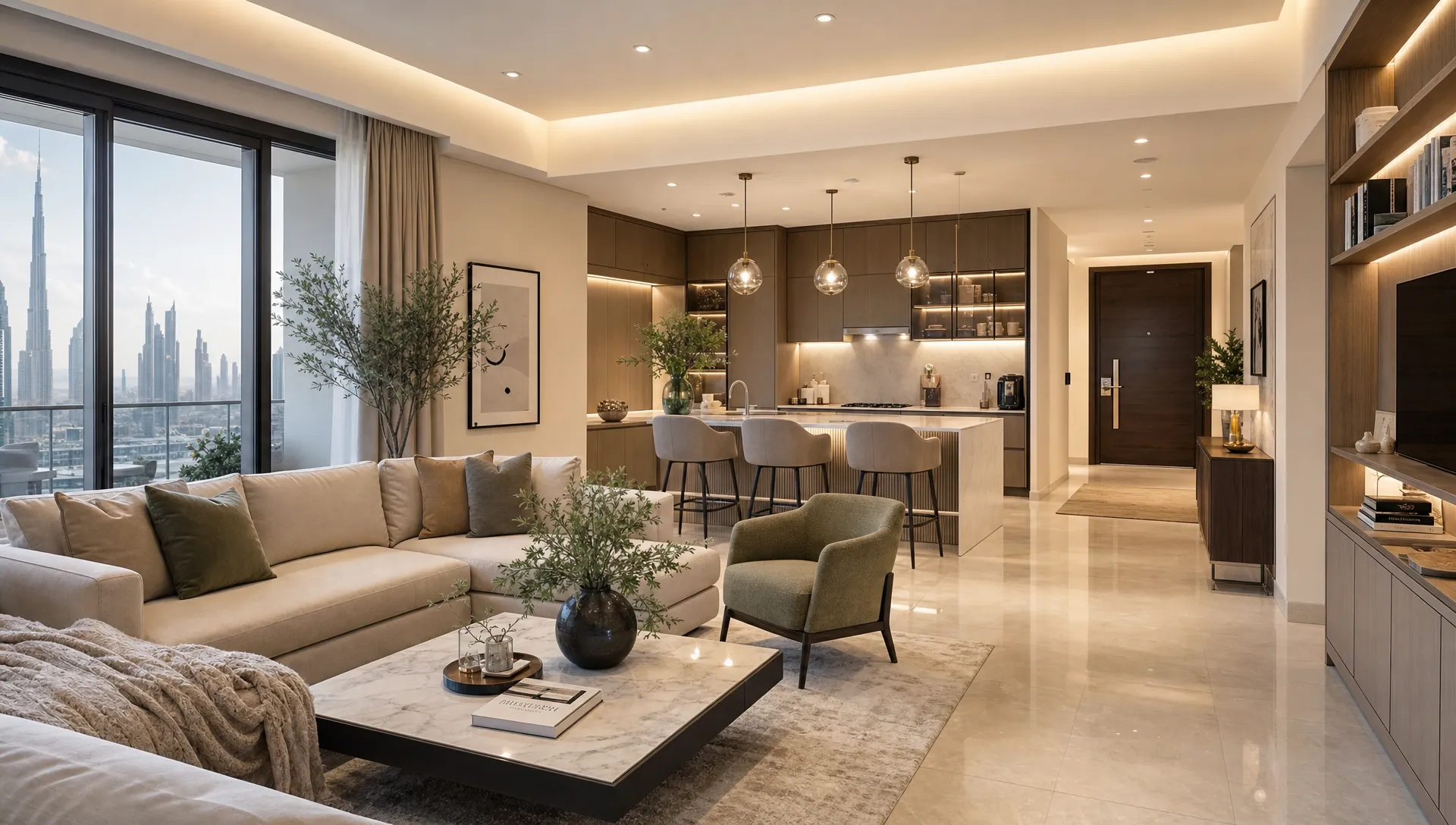
Lighting is one of the quickest ways to change how a property feels. Poor lighting can make a renovated home look flat, small or older than it is. Good lighting helps buyers read the room correctly: ceiling height feels better, finishes look cleaner and furniture placement becomes easier to imagine.
For Dubai homes, layered lighting is especially useful because harsh daylight and evening ambience require different moods. A strong plan can combine recessed ceiling lights, pendant lights, wall lights, cove lighting or track lighting depending on the architecture.
Focus on consistency. Mixing too many light temperatures can make the home feel unfinished. Warm white lighting often works well in living areas and bedrooms, while task lighting matters more in kitchens, bathrooms, dressing areas and work corners.
If your budget is limited, start with the main living room, entrance, kitchen and bathrooms. These are the rooms buyers inspect most closely and where improved lighting can make the strongest visual difference.
3. A kitchen refresh with visible quality
The kitchen is one of the most buyer-sensitive areas in any home. Even buyers who rarely cook still judge the kitchen because it signals lifestyle, hygiene and the cost of future upgrades. A dated kitchen can make an otherwise strong property feel neglected.
You do not always need a full remodel. Cabinet refacing, upgraded handles, better hinges, new worktops, a cleaner backsplash and improved lighting can create a major change when the existing layout is still functional. If the layout is awkward, though, cosmetic improvements may not be enough. In that case, reworking circulation, storage and appliance placement can create a more meaningful upgrade.
Buyers notice practical details quickly. Soft-close drawers, deep storage, easy-to-clean surfaces and proper under-cabinet lighting all suggest quality. In open-plan apartments or villas, the kitchen also influences the style of the living area, so the materials should coordinate with flooring, wall finishes and nearby joinery.
For a deeper look at why this area carries so much buyer weight, Revo Craft Renovations explains the value logic behind kitchen and bathroom remodeling in Dubai homes.
4. Bathrooms that feel clean, modern and low-maintenance
Bathrooms are small spaces with a large impact. Buyers inspect them closely because they are costly and inconvenient to renovate after moving in. Outdated tiles, stained silicone, poor drainage, weak ventilation or low-quality fixtures can create immediate hesitation.
A strong bathroom renovation should make the space feel fresh without overcomplicating it. Frameless glass, a modern vanity, concealed storage, quality mixers, improved lighting and clean grout lines can make a major difference. Where possible, improve ventilation and waterproofing rather than focusing only on surface finishes.
Neutral materials usually perform best for resale appeal. Stone-look porcelain, warm neutrals, brushed metal fixtures and simple mirror lighting tend to age better than very trend-led colors. Buyers want a bathroom that feels hygienic, durable and easy to personalize with towels, accessories and styling.
5. Premium-looking walls and finishes
Walls take up more visual space than most renovation elements, so buyers notice them immediately. Uneven paint, patchy repairs, moisture marks or low-quality finishes can make a home feel older, even when the furniture is attractive.
A high-quality repaint is often one of the most cost-effective ways to improve buyer perception. The key is preparation. Smooth surfaces, repaired corners, clean skirting lines and consistent color flow matter more than choosing an expensive paint color.
For homes that need a stronger design statement, consider one or two controlled feature areas. A textured wall behind a TV unit, refined wall panels in a hallway or a soft limewash-style finish in a bedroom can add character without overwhelming the home. The goal is to make the property feel finished, not overly decorated.
If you are balancing budget and impact, the same principle applies across many upgrades: choose fewer improvements and execute them well. You can find more ideas in this guide to budget home renovation ideas that look premium.
6. Flooring that creates flow from room to room
Flooring sets the tone for the entire home. Buyers may not name the material immediately, but they notice whether the floor looks clean, level and consistent. Mismatched flooring between rooms can make a property feel fragmented, especially in open-plan layouts.
The right flooring choice depends on the property type, expected use and maintenance needs. In Dubai, durability and easy cleaning are major advantages. Porcelain tiles, engineered wood and high-quality vinyl or laminate can all work when selected and installed properly. The finish should suit the price positioning of the home.
If a full flooring replacement is not possible, address the visible issues first. Repair damaged sections, replace cracked tiles, refresh grout and ensure transitions between rooms are neat. Buyers often associate damaged flooring with larger hidden problems, even when the issue is only cosmetic.
Also pay attention to skirting. New or refinished skirting can make existing flooring look much cleaner and more intentional.
7. Built-in storage and custom joinery
Storage is one of the renovations buyers appreciate because it solves a daily problem. A beautiful room with nowhere to store shoes, linens, cleaning supplies or luggage can feel less livable during a viewing.
Custom carpentry and joinery can add value when it looks integrated rather than added as an afterthought. In apartments, buyers often appreciate built-in wardrobes, entry storage, media units and laundry cabinets. In villas, useful upgrades may include pantry storage, under-stair cabinets, garage organization, study shelving or bedroom wardrobes.
The most valuable joinery is usually simple, durable and proportionate. Avoid overfilling rooms with cabinetry. Buyers need storage, but they also want the space to feel open. Good joinery should make the home feel calmer, not smaller.
Hardware quality is important too. Smooth drawers, aligned doors, clean edging and strong hinges are small signals buyers can touch. These details make the renovation feel more trustworthy.
8. Electrical, plumbing and climate comfort upgrades
Not every add-value renovation is immediately decorative. Some of the most persuasive improvements are the ones buyers feel during a viewing: steady water pressure, enough power outlets, quiet extraction, reliable switches and a cool indoor temperature.
Electrical and plumbing upgrades should be handled carefully because they affect safety, compliance and long-term reliability. Buyers may not see the wiring or pipework, but they do notice signs of poor work such as flickering lights, exposed trunking, slow drainage, low pressure or visible leaks.
Climate comfort is especially important in Dubai. A home that feels hot, humid or poorly ventilated during a viewing can raise doubts quickly. Improving AC performance, sealing gaps, checking ventilation and choosing heat-appropriate materials can strengthen buyer confidence.
The principle is simple: technical work should be handled with the same discipline expected in any safety-sensitive field. That mindset is familiar in industries such as technical diving and corporate safety training, where process, preparation and risk control matter as much as visible skill. Renovation work deserves the same respect, especially when it involves electrical, plumbing or structural decisions.
9. Balconies, terraces and flexible living zones
Buyers in Dubai often value usable outdoor and semi-outdoor space, even when it is compact. A balcony that feels clean, shaded and practical can become a strong emotional selling point. The same applies to a villa terrace, courtyard, rooftop area or garden corner.
Simple upgrades can make these areas feel more valuable. Outdoor-rated flooring, better lighting, privacy screens, built-in seating, planters and storage can turn neglected space into a usable extension of the home. For villas, a well-planned outdoor zone can support dining, children’s play, relaxation or entertaining.
Flexible indoor zones also matter. Many buyers now look for a work corner, reading nook, guest area or compact study. You do not need to add a full room to create this value. Smart joinery, lighting and layout planning can make an unused corner feel purposeful.
The key is to show buyers how the space can be used without overfurnishing it. A clear function is more persuasive than a crowded display.
How to prioritize renovations before selling
If you are renovating mainly to attract buyers, start with the problems that could create doubt. Water damage, outdated bathrooms, poor lighting, broken flooring and weak storage should take priority over decorative extras. Once the basics are strong, add design choices that elevate the home visually.
A practical order of priority usually looks like this:
- Fix maintenance issues that buyers will question during inspection.
- Improve the entrance, lighting and main living area because they shape first impressions.
- Upgrade kitchens and bathrooms where the current condition hurts value perception.
- Refresh walls, flooring and joinery for a cleaner whole-home look.
- Style lightly so buyers can imagine their own furniture and lifestyle.
This approach helps prevent a common mistake: spending heavily on one showpiece while ignoring the rest of the home. Buyers notice imbalance. A premium kitchen beside dated flooring or poor lighting can make the renovation feel incomplete.
Renovations to approach carefully
Some renovations may look impressive, but they do not always increase buyer appeal. Highly personalized finishes, unusual colors, niche built-ins, oversized luxury features and fragile materials can limit the audience. The more specific the taste, the more likely a buyer will mentally subtract the cost of changing it.
That does not mean every home should look plain. It means the permanent elements should have broad appeal, while personality can come through furniture, art, rugs and styling. Fixed finishes should feel timeless enough to support different lifestyles.
Also be cautious with shortcuts. Cheap fixtures, rushed paintwork and poor installation can be spotted quickly. Buyers may not know the technical language, but they can feel when something is flimsy, uneven or poorly aligned.
Frequently Asked Questions
Which renovations do buyers notice first? Buyers usually notice the entrance, lighting, kitchen, bathrooms, flooring, wall condition and storage first. They also react quickly to comfort issues such as weak AC, poor ventilation, leaks or low water pressure.
Do kitchen and bathroom renovations add the most value? They often have the strongest influence because they are expensive and disruptive for buyers to renovate after purchase. The best results come from combining modern finishes with practical layout, storage, lighting and reliable plumbing.
Should I renovate before selling my Dubai property? It depends on the current condition, location, buyer expectations and likely selling price. If visible wear or dated finishes make the home compare poorly with similar listings, targeted renovations can improve appeal.
What is the safest renovation style for resale? Neutral, durable and well-finished interiors usually appeal to the widest buyer pool. You can still add warmth through lighting, texture and joinery, but avoid permanent choices that are too personal.
Are technical upgrades worth doing if buyers cannot see them? Yes, when they improve comfort and reduce risk. Electrical, plumbing, ventilation and AC upgrades can prevent objections during viewings or inspections, especially when the home otherwise looks move-in ready.
Plan add-value renovations with the right sequence
The renovations buyers notice first are rarely random. They follow the path of a viewing: entrance, light, main living area, kitchen, bathrooms, storage, comfort and outdoor potential. When each stage feels clean, functional and well-finished, the whole home becomes easier to trust.
If you are planning a renovation in Dubai, Revo Craft Renovations can help you identify which upgrades will make the strongest difference for your property, from kitchen remodeling and wall finishes to custom joinery, MEP improvements and full project coordination. Start with a personalized consultation through Revo Craft Renovations and build a renovation plan that improves both everyday living and buyer appeal.