
Choosing a bathroom renovations contractor is not just about finding someone who can install tiles neatly. Bathrooms are compact, high-use spaces where plumbing, waterproofing, electrical work, ventilation, storage, lighting, and finishes all have to work together. A beautiful bathroom that leaks, traps humidity, or drains poorly can become one of the most expensive mistakes in a home renovation.
In Dubai, the decision matters even more because many properties have building management rules, work-hour restrictions, material logistics, and approval requirements. Whether you are upgrading a villa ensuite, remodeling an apartment bathroom, or refreshing a guest powder room, the right contractor should combine technical discipline with design judgment and clear communication.
Here is how to choose a bathroom renovations contractor with confidence, and how to spot the difference between a polished sales pitch and a team that can actually deliver.
Understand What Type of Bathroom Renovation You Need
Before comparing contractors, define the kind of project you are planning. A contractor who is excellent at cosmetic updates may not be the right fit for a full bathroom gut-out involving drainage relocation, concealed plumbing, or structural changes.
Most bathroom renovations fall into a few broad categories:
- Cosmetic refresh: Replacing sanitaryware, mirrors, lighting, accessories, paint, or selected finishes while keeping the layout intact.
- Partial remodel: Upgrading vanity units, shower screens, tiles, fittings, and storage without major plumbing relocation.
- Full renovation: Stripping the bathroom back, replacing waterproofing, plumbing, tiles, fixtures, ceiling, lighting, and ventilation.
- Layout transformation: Moving the shower, WC, bathtub, or vanity, which requires deeper technical planning and approval awareness.
If you are not yet sure what the process involves, reviewing what homeowners should expect from professional bathroom renovation services can help you prepare a more realistic brief before you request quotes.
A clear scope makes it easier to compare contractors fairly. Without it, one quote may include waterproofing, plumbing upgrades, ceiling works, and debris removal, while another may only cover visible finishes.
Look for Bathroom-Specific Experience, Not Just General Renovation Work
A general renovation contractor may be able to handle many parts of a home upgrade, but bathrooms require specific expertise. Water exposure, hidden pipework, drainage slopes, tile substrate preparation, and ventilation are unforgiving. A minor shortcut can lead to leaks, mold, loose tiles, unpleasant smells, or recurring maintenance problems.
Ask each contractor to show recent bathroom projects that are similar to yours. If you live in a Dubai apartment, request examples of apartment bathroom renovations. If you own a villa, ask about villa bathrooms, maid’s rooms, ensuites, and wet areas with more complex plumbing runs.
Pay attention to the details in their portfolio. Look beyond glossy final photos and ask about the technical work behind the finish. A reliable contractor should be able to explain how they handled waterproofing, drainage, tile leveling, access panels, lighting placement, and ventilation.
| What to ask | Why it matters | Strong answer signals |
|---|---|---|
| Have you completed bathrooms in similar Dubai properties? | Building type affects access, approvals, and technical constraints | They can show relevant projects and explain challenges |
| How do you approach waterproofing? | Waterproofing failure is one of the biggest bathroom risks | They describe preparation, product systems, and testing |
| Can you coordinate plumbing, electrical, tiling, and joinery? | Bathrooms need multiple trades to work in sequence | They explain who manages each stage and how quality is checked |
| Do you provide a written scope and schedule? | Verbal promises are hard to compare or enforce | They issue a clear proposal with inclusions and exclusions |
Verify Licensing, Insurance, and Approval Awareness
The right bathroom renovations contractor should operate professionally, not informally. Depending on your property type and the extent of work, renovation activity may require coordination with building management, developer guidelines, community rules, or local approval procedures.
For apartment projects, contractors may need to follow access rules, service elevator booking, noise restrictions, waste disposal requirements, and common-area protection. For villas, there may be community requirements, work permits, and restrictions on external modifications or utility connections.
Ask practical questions before you commit. Who handles building management coordination? What documents will be provided if an NOC or work permit is required? How will common areas be protected during demolition and material delivery? Does the team understand working hours and site rules in your building or community?
A contractor does not need to overcomplicate the process, but they should know what questions to ask and what steps to take before work starts.
Insist on a Detailed Site Survey Before Accepting a Quote
A bathroom quote prepared without a proper site visit is rarely reliable. Photos and measurements can help with early budgeting, but they cannot reveal everything. A site survey allows the contractor to inspect existing plumbing points, drainage levels, water pressure, wall conditions, ceiling height, ventilation, electrical provisions, access limitations, and possible hidden risks.
During the site survey, observe how thorough the contractor is. Do they ask how the bathroom is used? Do they inspect under-sink plumbing, shower drainage, and ceiling access? Do they discuss storage, lighting, ventilation, and maintenance access? Do they explain what cannot be confirmed until demolition?
If you are comparing multiple companies, use the same project brief for each one. This makes it easier to evaluate pricing, scope, and professionalism. For a broader comparison method, this guide on how to compare bathroom remodeling companies near you can help you avoid judging quotes on price alone.
Compare Quotes by Scope, Not Just Total Price
The cheapest bathroom renovation quote can become the most expensive if it excludes important work. A low number may omit waterproofing, plumbing upgrades, tile adhesive quality, electrical modifications, ceiling repairs, debris removal, supervision, or post-completion snagging.
Ask for an itemized quote that separates labor, materials, fixtures, provisional sums, and optional upgrades. The contractor should also clarify what is supplied by them and what is supplied by you.
| Quote item | Why it should be clear | Red flag |
|---|---|---|
| Demolition and disposal | Bathrooms create debris and need controlled removal | Waste removal is not mentioned |
| Waterproofing | Critical for long-term durability | Listed vaguely as “wet area works” |
| Plumbing | Pipe changes, mixers, drains, and valves affect performance | No detail on concealed plumbing |
| Electrical and lighting | Safety, comfort, and functionality depend on planning | No mention of exhaust fan, switches, or fixture positions |
| Tiles and installation | Tile size, pattern, and substrate affect labor | Quote assumes basic tiles despite premium design expectations |
| Sanitaryware and fittings | Brands and specifications affect cost and compatibility | Fixtures are described only as “standard” |
| Project management | Sequencing and supervision reduce errors | No named point of contact or schedule |
A professional quote does not need to be excessively complicated, but it should be specific enough that you understand what you are buying.
Evaluate Their Waterproofing and Plumbing Standards
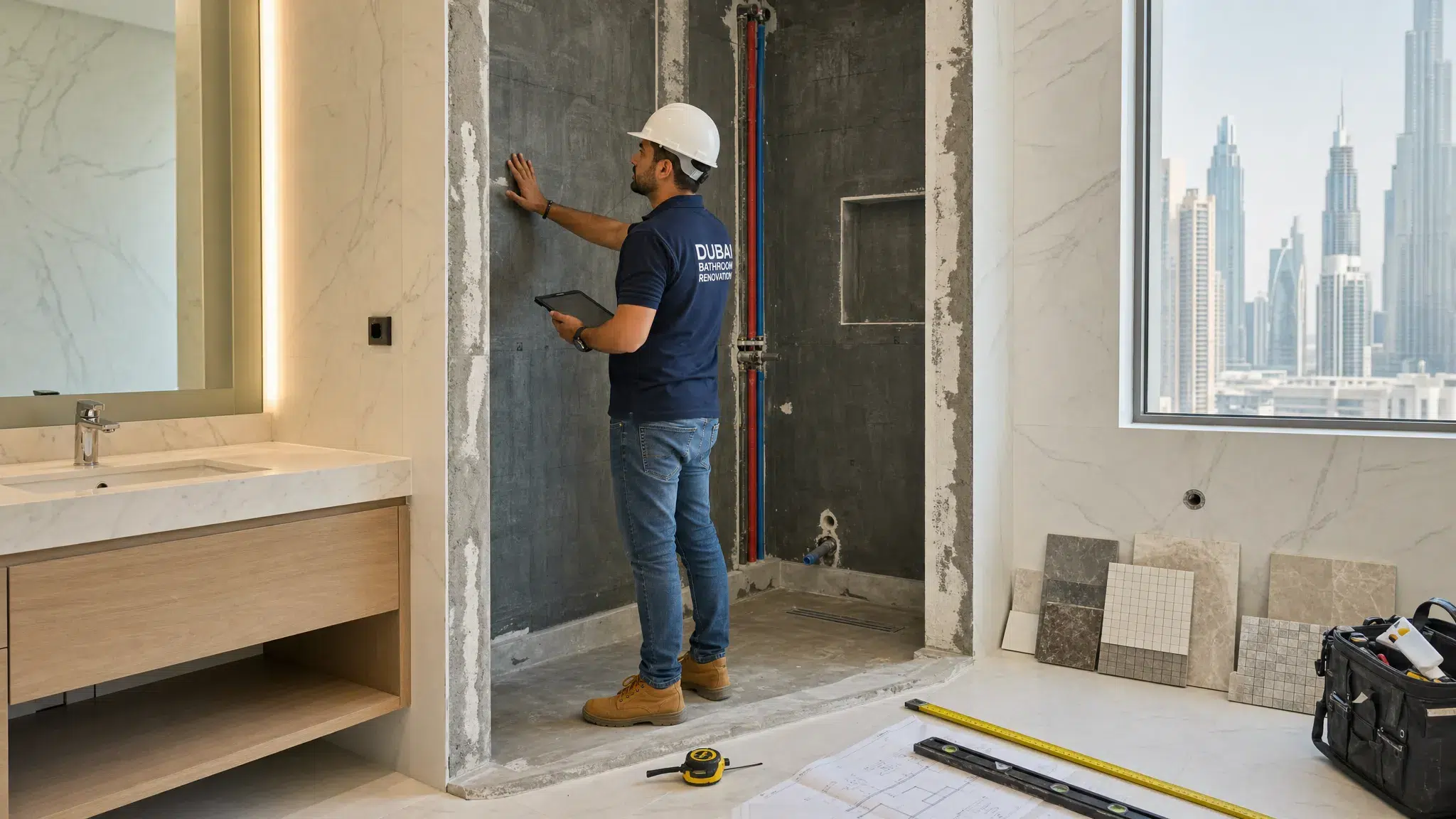
Waterproofing is one of the biggest tests of a bathroom contractor’s competence. Once tiles are installed, waterproofing is hidden. If it fails, repairs may require removing tiles, cabinets, sanitaryware, and sometimes sections of the floor or wall.
Ask the contractor to explain their waterproofing process in plain language. You want to know how surfaces are prepared, which areas are treated, how corners and pipe penetrations are handled, whether the system is suitable for wet areas, and whether any testing is performed before tiling begins.
Plumbing deserves the same level of attention. A contractor should check whether existing pipes are in good condition, whether drainage slopes are adequate, whether valves are accessible, and whether selected mixers, wall-hung toilets, bathtubs, or shower systems are compatible with the existing setup.
A contractor who cannot clearly explain waterproofing and plumbing should not be trusted with a full bathroom renovation, even if their finish photos look attractive.
Assess Design Guidance, Material Knowledge, and Finish Coordination
A good bathroom renovations contractor should help you make practical design decisions, not simply ask you to choose from a catalog. Bathrooms need finishes that handle moisture, frequent cleaning, and daily wear. The contractor should guide you on tile slip resistance, grout selection, vanity materials, mirror placement, storage depth, shower screen layout, and fixture compatibility.
Lighting is another area where design and technical planning overlap. A bathroom often needs layered lighting, including task lighting near the mirror, ambient ceiling lighting, and accent lighting for niches or feature walls. For powder rooms or dry-zone decorative areas, homeowners may also explore customizable designer lighting that can be tailored to ceiling height, canopy size, or finish preferences. For wet zones, always confirm that fixtures are suitable for the location and meet the required safety standards.
Material coordination also affects the timeline. Imported tiles, custom vanities, special mixers, concealed cisterns, and shower glass may have lead times. A responsible contractor will flag these early so your project does not stall halfway through.
Ask How They Manage Timelines and Site Disruption
Bathroom renovations can be disruptive, especially if the home is occupied. A contractor should provide a realistic schedule that explains the sequence of work. Typical stages include protection, demolition, plumbing and electrical rough-ins, waterproofing, screed or substrate preparation, tiling, ceiling works, fixture installation, glass installation, joinery, final silicone, cleaning, and snagging.
Be cautious of timelines that sound too good to be true. Some stages require drying or curing time, and rushing them can compromise quality. At the same time, a contractor should not leave your bathroom idle without explanation.
Ask how many workers will be on-site, who supervises them, how often updates are provided, and what happens if hidden issues are discovered. Transparent communication is often the difference between a stressful renovation and a controlled one.
Review Communication Style Before You Sign
The way a contractor communicates before payment is usually a preview of how they will communicate during the project. If they are vague, slow, dismissive, or unwilling to document details during the quoting stage, that behavior may become more frustrating once the bathroom is demolished.
Look for a contractor who listens carefully, explains trade-offs, answers technical questions, and confirms decisions in writing. You should feel comfortable asking about cost, timing, materials, and risks without being pressured.
Good communication does not mean saying yes to every request. In fact, a trustworthy contractor will sometimes advise against ideas that may create drainage issues, maintenance problems, or unnecessary cost.
Watch for Red Flags
Some warning signs are easy to miss when you are focused on price or design. Be especially cautious if a contractor avoids technical details or wants to start immediately without proper planning.
Common red flags include:
- No site survey before the final quote.
- Vague scope with little detail on waterproofing, plumbing, or electrical work.
- Pressure to pay a large amount upfront without documentation.
- No clear project timeline or point of contact.
- Reluctance to show relevant bathroom renovation examples.
- Very low pricing compared with other detailed quotes.
- Unclear responsibility for approvals, access, waste removal, or material supply.
- Poor communication during the consultation stage.
One red flag does not always mean you should reject a contractor, but several together should make you pause.
Choose Value Over the Lowest Price
Bathroom renovation costs vary based on size, layout changes, material quality, plumbing complexity, tile selection, sanitaryware, lighting, glasswork, and custom joinery. A higher quote is not automatically better, but a suspiciously low quote often means something has been excluded or underestimated.
Think in terms of long-term value. Paying for proper waterproofing, experienced supervision, quality tile installation, and suitable fittings can reduce the risk of repairs later. If you are renovating before selling or renting, a well-executed bathroom can also improve the perceived quality of the entire property.
For homeowners balancing style and cost, it helps to identify where premium choices matter most. You may be able to keep the existing layout, choose cost-effective tiles, and still create a polished result by investing in visible focal points, better lighting, and clean detailing. This approach is explored further in Revo Craft’s guide to bathroom renovations on a budget that still look luxe.
Questions to Ask Before Hiring a Bathroom Renovations Contractor
Before signing a contract, ask direct questions and listen for specific answers. The goal is not to interrogate the contractor, but to confirm they have a structured process.
| Question | What a good answer should include |
|---|---|
| What is included in your bathroom renovation scope? | Clear breakdown of demolition, waterproofing, plumbing, electrical, tiling, fixtures, finishing, and cleanup |
| Who supervises the work on-site? | A named project manager, supervisor, or responsible contact |
| How do you handle hidden issues? | Explanation of inspection, variation approval, pricing, and documentation |
| What materials are included in the quote? | Specific brands, specifications, allowances, or supply responsibilities |
| How do you protect the rest of the property? | Floor protection, dust control, debris removal, and access planning |
| What is the expected timeline? | A realistic sequence with allowance for curing, approvals, and material lead times |
| Do you provide snagging and handover? | Final inspection, corrections, cleaning, and maintenance guidance |
If the answers are vague, ask for clarification in writing. A professional contractor should welcome clarity because it protects both sides.
Make Sure the Contract Matches the Conversation
Once you have selected a contractor, the written agreement should reflect the final scope, price, payment schedule, project timeline, materials, exclusions, and variation process. Do not rely on verbal promises about “including everything” or “handling it later.”
Important details to document include tile sizes, sanitaryware selections, mixer types, vanity finishes, mirror dimensions, lighting points, exhaust fan location, shower glass specifications, waterproofing scope, and any custom joinery. If you are supplying fixtures yourself, confirm delivery dates and responsibility for compatibility.
A clear contract reduces misunderstandings and gives the contractor a better chance of delivering exactly what you expect.
Final Checklist for Choosing the Right Contractor
Use this checklist before making your decision:
- The contractor has relevant bathroom renovation experience.
- They completed a proper site survey before final pricing.
- Their quote is detailed and easy to compare.
- Waterproofing, plumbing, electrical, and ventilation are clearly addressed.
- They understand building or community coordination requirements.
- They communicate clearly and document decisions.
- Their timeline is realistic, not rushed.
- Their portfolio shows work similar to your project.
- You understand what is included, excluded, and optional.
- The contract matches the agreed scope and specifications.
If a contractor meets these criteria and you feel confident in their process, you are far more likely to end up with a bathroom that looks good, works well, and lasts.
Frequently Asked Questions
What should I look for in a bathroom renovations contractor? Look for bathroom-specific experience, a detailed site survey, clear waterproofing and plumbing standards, transparent pricing, approval awareness, strong communication, and a written project scope.
Should I choose the cheapest bathroom renovation quote? Not automatically. A cheap quote may exclude waterproofing, plumbing upgrades, quality materials, waste removal, or proper supervision. Compare quotes by scope and long-term value, not just the total price.
How important is waterproofing in a bathroom renovation? Waterproofing is critical because failures are often hidden until damage appears. Ask your contractor about surface preparation, wet-area coverage, corner treatment, pipe penetrations, and testing before tiles are installed.
Do bathroom renovations in Dubai require approvals? Some projects may require coordination with building management, developer guidelines, community rules, or local approval procedures, depending on the property and scope. A qualified contractor should advise you before work begins.
How long does a bathroom renovation take? Timelines vary based on size, complexity, approvals, material availability, and curing times. A contractor should provide a realistic schedule after the site survey and explain the sequence of work.
Plan Your Bathroom Renovation With the Right Team
Choosing the right bathroom renovations contractor is about more than finding a team that can create a stylish finish. You need technical expertise, careful planning, reliable communication, and a process that protects your home from costly mistakes.
Revo Craft Renovations provides tailored bathroom renovation, interior upgrade, plumbing, electrical, wall finishing, carpentry, and project management services for homes and businesses in Dubai. If you are planning a bathroom transformation, contact Revo Craft Renovations to discuss your space, style goals, and renovation requirements with a team focused on craftsmanship and a seamless experience.