
A home that feels custom is not defined by how much you spend. It is defined by how well the space fits your routines, how cohesive the finishes feel, and how carefully the details are handled. That is good news if you are planning home remodeling on a budget, especially in Dubai, where apartment and villa renovations can quickly expand once finishes, permits, technical work, and furniture are added to the plan.
The goal is not to make every surface expensive. The goal is to make every decision intentional. A budget remodel can still feel tailored when the layout supports your lifestyle, the color palette feels resolved, lighting is layered properly, and a few high-impact custom details are placed where they matter most.
Below is a practical guide to creating a custom-feel remodel without overspending, with ideas that suit modern Dubai homes, rental-friendly upgrades, and long-term family living.
What makes a budget remodel feel custom?
A custom-feel remodel usually has three qualities: proportion, consistency, and purpose. Proportion means every element feels like it belongs in the room, from cabinetry height to rug size to wall panel spacing. Consistency means finishes repeat in a controlled way rather than competing with each other. Purpose means the home solves specific problems, such as poor storage, awkward lighting, or a kitchen that does not support entertaining.
Many homeowners assume custom means bespoke everything, but that is rarely necessary. A room can feel custom with standard materials if they are planned well. For example, ready-made cabinets can look more built-in with filler panels, upgraded handles, a matching toe kick, and a clean countertop edge. A simple painted wall can feel premium with the right shade, a smooth finish, and warm lighting.
This is where design discipline matters. Instead of spreading your budget thin across dozens of upgrades, choose a few moments that will shape the entire impression of the home.
Start with a budget map, not a shopping list
Before choosing tiles, paint, or cabinet colors, create a budget map. This is different from a shopping list because it organizes spending around impact and necessity. A shopping list often grows emotionally as you browse showrooms. A budget map keeps decisions tied to the end result.
A useful budget map separates your remodel into four categories:
- Essential technical work: Electrical upgrades, plumbing fixes, waterproofing, AC adjustments, surface preparation, and safety-related work.
- High-impact visible finishes: Flooring, wall finishes, lighting, cabinet fronts, countertops, doors, and hardware.
- Custom-feel details: Built-in storage, feature walls, fitted shelving, niche lighting, joinery trims, and tailored furniture pieces.
- Flexible decor: Curtains, rugs, art, cushions, loose furniture, and accessories that can be added gradually.
The mistake is spending too much on flexible decor too early while underfunding the work behind the walls. A beautiful space will not feel premium if sockets are poorly placed, lighting is harsh, doors do not align, or water issues appear after handover.
For broader inspiration, Revo Craft Renovations has also shared practical budget home renovation ideas that look premium that pair well with this custom-focused approach.
Keep the layout where possible, customize the experience
Moving plumbing, walls, and major electrical points can consume a large share of the renovation budget. If the current layout works reasonably well, consider keeping the main service points in place and customizing the experience around them.
In a kitchen, that might mean keeping the sink and hob in the same general location while replacing cabinet fronts, improving lighting, adding better internal storage, and upgrading the backsplash. In a bathroom, it might mean keeping the toilet and shower position while improving the vanity, mirror lighting, tiles, and fittings.
This approach is especially effective in Dubai apartments, where building approvals, service shafts, and community rules can limit major layout changes. It is also useful in villas when you want a visible transformation without turning the project into a full structural renovation.
The custom feeling comes from how the room works day to day. A kitchen with a dedicated coffee zone, hidden appliance storage, deeper drawers, and lighting under the upper cabinets can feel more personal than a much more expensive kitchen that simply replaces old materials with new ones.
Spend on the surfaces you see and touch every day
When the budget is limited, prioritize the surfaces you interact with most. These are the details that shape the daily feeling of quality.
Cabinet handles, door levers, drawer runners, countertops, switches, faucets, and wardrobe pulls are small compared with major construction costs, but they are touched constantly. Upgrading them can make a modest remodel feel much more refined.
The same logic applies to flooring. A continuous floor finish through living areas can make a home feel calmer, larger, and more deliberate. If full flooring replacement is not possible, focus on the most visible zones first, such as the living room, entry, and kitchen.
Paint and wall finishing also deserve attention. A budget paint job looks expensive when preparation is done properly. Smooth surfaces, crisp edges, repaired cracks, and the right sheen can change how light moves through the home. In Dubai, where sunlight can be intense, testing paint samples at different times of day is important. A color that looks soft in a showroom can appear too bright or too yellow in a sunlit apartment.
Use semi-custom joinery for a made-to-measure look
Full bespoke joinery can be a worthwhile investment, but you do not need to customize every cabinet to create a fitted look. Semi-custom joinery is often the sweet spot for home remodeling on a budget.
This means using a mix of standard carcasses, simple shelving, modular storage, and custom finishing elements. The tailored effect comes from the finishing pieces that connect everything to the architecture.
Consider these high-impact joinery ideas:
- Entry storage: A slim shoe cabinet, wall hooks, and a small bench can make the entrance feel planned rather than improvised.
- TV wall storage: Floating cabinets, vertical panels, and concealed wiring create a clean focal point without overbuilding the room.
- Wardrobe improvements: New doors, internal organizers, better handles, and integrated lighting can refresh bedrooms without replacing every unit.
- Kitchen extensions: A small pantry tower, appliance garage, or open shelf section can make a standard kitchen feel tailored.
The key is to avoid overcomplication. Simple flat panels, consistent gaps, and clean lines usually look more premium than busy shapes and too many materials.
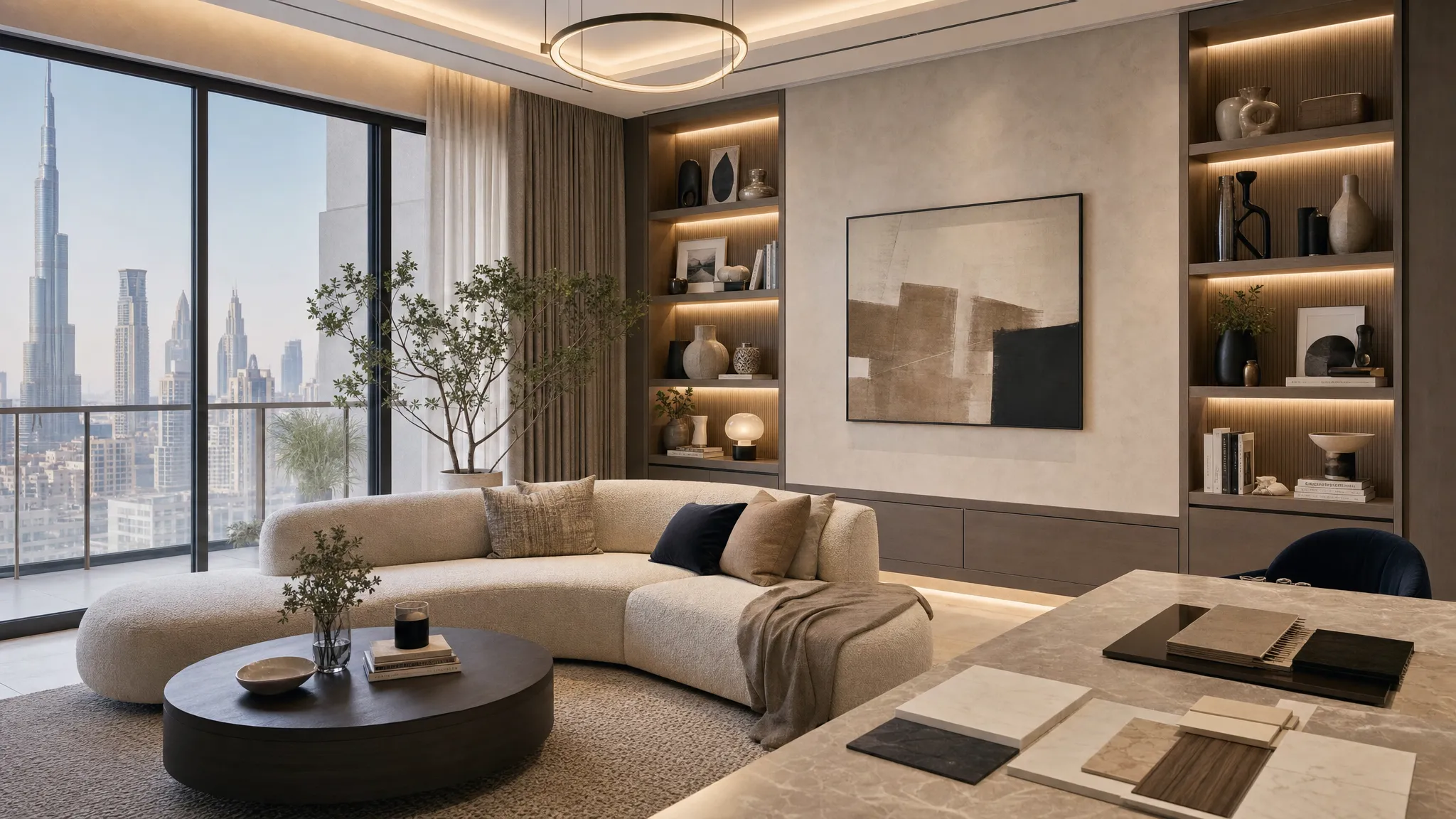
Create a custom palette before buying materials
A custom-feel home rarely has random finishes. Even when the budget is modest, the palette should look intentional. Start with three base decisions: wall color, flooring tone, and wood or metal finish. Then choose supporting materials around them.
For a modern Dubai home, warm minimalism works well because it feels elegant without requiring expensive decorative layers. Think soft beige, greige, warm white, muted taupe, light oak, walnut accents, brushed nickel, champagne bronze, or matte black in controlled amounts.
A simple palette might look like this:
| Design element | Budget-friendly choice | Custom-feel upgrade |
|---|---|---|
| Walls | Warm off-white paint | Smooth wall preparation with one accent texture |
| Flooring | Large-format porcelain tile | Continuous finish through main living areas |
| Cabinetry | Existing boxes with new fronts | Added fillers, plinths, and upgraded handles |
| Lighting | Standard ceiling points | Layered ceiling, wall, and task lighting |
| Storage | Freestanding units | Semi-custom fitted joinery in key zones |
| Decor | Mixed accessories | Repeated tones, fewer pieces, better scale |
The table shows a simple principle: the upgrade is often not the most expensive material, but the way the material is integrated.
Make lighting do more of the luxury work
Lighting is one of the most powerful ways to make a budget remodel feel custom. Many homes rely on one central ceiling light per room, which makes even good finishes look flat. Layered lighting creates depth and helps separate activities within the same space.
A well-planned lighting scheme usually includes ambient lighting for general brightness, task lighting for work areas, and accent lighting to highlight features. In a living room, this could mean recessed ceiling lights, a floor lamp, and a warm LED strip inside shelving. In a kitchen, it could mean ceiling lights, under-cabinet task lighting, and pendant lights over a breakfast counter.
Pay attention to color temperature. Warm white lighting is often more flattering for living areas and bedrooms, while slightly brighter task lighting can work in kitchens, laundry areas, and dressing zones. Consistency matters. Mixing too many light temperatures in one open-plan space can make the remodel feel less polished.
Lighting is also a smart place to plan early because wiring changes are easier before ceilings and walls are finished. If you want a custom effect without a large decorative budget, start with the lighting plan.
Focus the kitchen budget on what changes the whole room
The kitchen is often the most expensive room to remodel, but it also offers the best opportunities for selective spending. If the existing layout is practical, you may not need a full rebuild. Cabinet refacing, new worktops, backsplash upgrades, hardware changes, and better lighting can create a major transformation.
For a high-end look on a controlled budget, choose one strong focal point. This could be a stone-look countertop, a full-height backsplash behind the hob, a slim island, or a beautiful set of handles on simple cabinet fronts. Avoid trying to make every element a statement.
If you want more kitchen-specific ideas, this guide to budget kitchen renovation tips for a high-end look goes deeper into cabinet updates, layouts, and finish choices.
A custom-feel kitchen should also solve storage problems. Deep drawers, pull-out bins, tray dividers, pantry organizers, and appliance storage can have more daily value than decorative upgrades. When the kitchen functions smoothly, the whole home feels better designed.
Give bathrooms one luxury moment
Bathrooms can become expensive quickly because plumbing, waterproofing, tiles, glass, and fittings all add up. The best budget strategy is to choose one luxury moment and keep the rest clean and simple.
That luxury moment might be a floating vanity, a large backlit mirror, a rainfall shower, a niche with accent lighting, or a feature tile wall. The surrounding finishes can be more affordable as long as they are installed neatly and coordinate with the focal point.
For a custom feel, avoid clutter around the sink. Built-in storage, mirrored cabinets, recessed niches, and wall-mounted accessories make a bathroom feel planned. Also consider grout color, drain style, and silicone finish. These details are small, but poor execution can make new tiles look cheap.
If your remodel includes wet areas, do not treat waterproofing as a place to cut corners. Water damage can undo the savings of an entire renovation. The same principle applies in any climate where roofs, terraces, or exterior surfaces face heavy rain and humidity. For example, property owners in island environments often rely on a certified roofing, waterproofing and cladding specialist to protect the building envelope before focusing on interior finishes.
Use architectural details instead of expensive decor
Custom interiors often look expensive because the architecture itself has depth. You can create some of that effect without major construction by adding simple architectural details.
Wall mouldings, fluted panels, picture ledges, concealed curtain tracks, upgraded skirting boards, and framed openings can make a space feel designed. These details work best when they are restrained. A single paneled wall behind a bed or sofa is usually more elegant than adding decorative panels everywhere.
Curtains are another overlooked upgrade. Floor-to-ceiling curtains make windows feel larger and ceilings feel higher. In Dubai apartments with strong daylight, layered window treatments can also improve comfort. Sheer curtains soften the light during the day, while blackout curtains help bedrooms feel calm and private.
Doors can also change the feeling of a remodel. Repainting doors, upgrading handles, aligning gaps, or replacing dated wardrobe shutters can make the home feel newer without changing the entire layout.
Know where not to save
Budget remodeling is not about choosing the cheapest option. It is about protecting the quality of the finished home. Some areas should be handled carefully because mistakes are costly to fix later.
Do not aggressively cut budget from electrical work, plumbing, waterproofing, surface preparation, or installation labor. A low-cost tile can look excellent when installed well, while an expensive tile can look poor if the substrate is uneven or the grout lines are inconsistent.
You should also avoid buying materials before confirming measurements. This is common with online purchases, seasonal discounts, and showroom promotions. A bargain becomes expensive if the quantity is wrong, the tone does not match, or the product is unsuitable for the room.
A clear scope of work helps prevent budget drift. It should define what is included, what is excluded, which materials are selected, and how changes will be approved. This is where professional project management can protect both budget and timeline.
Room-by-room ways to make a remodel feel personal
Every room needs one or two custom-feel decisions. They do not need to be expensive, but they should respond to how you live.
| Room | Custom-feel idea | Why it works on a budget |
|---|---|---|
| Entryway | Fitted shoe storage and a mirror | Creates a strong first impression with limited materials |
| Living room | TV wall with concealed wiring | Makes the space cleaner and more intentional |
| Kitchen | Refaced cabinets with upgraded hardware | Changes the visible style without rebuilding everything |
| Dining area | Pendant light centered over the table | Defines the zone in an open-plan layout |
| Bedroom | Headboard wall with side lighting | Adds hotel-like comfort without full room renovation |
| Bathroom | Floating vanity and backlit mirror | Gives one premium focal point while controlling tile costs |
| Balcony | Better flooring and wall finish | Extends usable living space in cooler months |
| Home office | Built-in desk niche or shelving | Supports daily routines without needing a separate room |
This room-by-room approach keeps the remodel focused. Instead of asking, “How can I upgrade everything?” ask, “What one change would make this room feel designed for me?”
Plan for Dubai living, not just showroom style
A remodel should match the way homes are used in Dubai. That means thinking about heat, dust, sunlight, entertaining, storage, and maintenance. Glossy finishes can look attractive in a showroom but may show fingerprints. Very dark floors can show dust. Delicate materials may not suit busy family homes or rental properties.
For families, custom-feel design often means better storage, durable finishes, flexible seating, and easy maintenance. For apartments, it may mean maximizing vertical storage and using lighting to make compact rooms feel larger. For villas, it may mean improving flow between the kitchen, dining, living, and outdoor areas.
If you are planning a larger transformation, this article on custom home renovations that fit modern Dubai living is a useful companion because it focuses on lifestyle-based renovation choices.
The most successful remodels are not copied directly from social media. They borrow inspiration, then adapt it to the property, budget, and daily routine.
How Revo Craft Renovations helps create a custom-feel remodel
A budget-conscious remodel benefits from clear planning and experienced execution. Revo Craft Renovations provides home renovation, kitchen remodeling, interior design and styling, wall finishing, electrical and plumbing upgrades, custom carpentry and joinery, and project management for homes and businesses in Dubai.
The advantage of working with a renovation team is coordination. Design choices, technical work, finishing details, and timelines need to support each other. When those parts are handled separately without a clear plan, the home can end up looking patched together. With the right process, even selective upgrades can feel cohesive and personal.
A personalized design consultation can also help you decide where to save and where to invest. Sometimes the best custom detail is not the most expensive one. It is the one that solves the right problem.
Frequently Asked Questions
Can home remodeling on a budget really feel custom? Yes. A budget remodel can feel custom when the layout, finishes, lighting, storage, and details are planned around your lifestyle. The key is to focus spending on visible, high-use areas and avoid random upgrades.
What is the best room to remodel first on a limited budget? Kitchens, bathrooms, and living areas usually create the strongest daily impact. If your budget is tight, start with the room that causes the most frustration or the space guests and family use most often.
How do I make standard cabinets look custom? Use matching filler panels, upgraded handles, clean plinths, good lighting, consistent gaps, and a countertop or backsplash that ties the cabinetry into the room. Proper installation is just as important as the cabinet style.
Should I choose cheap materials to stay on budget? Not always. Choose cost-effective materials, but do not compromise on installation, waterproofing, electrical work, plumbing, or surface preparation. Poor workmanship can make even expensive materials look bad.
How can I avoid overspending during a remodel? Set a clear scope, confirm measurements before purchasing materials, keep major service points in place where possible, and decide which upgrades matter most before visiting showrooms.
Ready to remodel with a custom feel?
You do not need an unlimited budget to create a home that feels personal, polished, and comfortable. You need the right priorities, a clear plan, and details that are chosen for your space rather than copied from someone else’s.
If you are planning a budget-conscious renovation in Dubai, Revo Craft Renovations can help you shape a practical scope, refine the design direction, and coordinate the work with transparent communication and expert craftsmanship. Visit Revo Craft Renovations to start planning a home remodel that feels custom without unnecessary overspending.