
A home does not always need a full rebuild to feel more elegant, comfortable, and current. Often, the biggest transformation comes from a series of focused interior renovation ideas that improve what you see, touch, and use every day: lighting, walls, storage, doors, finishes, and the way each room flows into the next.
For Dubai homeowners, the right upgrades should also respond to local lifestyle needs. Interiors must handle bright sunlight, air conditioning, dust, humidity, frequent entertaining, and the desire for a polished home that still feels practical. The goal is not only to make the space look premium, but to make it easier to live in.
Below are interior renovation ideas that can instantly elevate a home, from quick visual upgrades to more involved improvements that create long-term value.
Start With a Strong Design Direction
Before changing finishes or ordering materials, define the mood of your home. A clear design direction helps every decision feel intentional, even if the renovation happens in stages.
For a modern Dubai home, popular directions include warm minimalism, contemporary luxury, soft neutral palettes, hotel-inspired comfort, and natural textures. The most elevated interiors usually avoid mixing too many styles at once. Instead, they repeat a few key elements across rooms, such as the same metal finish, consistent flooring tone, similar wall colors, or matching door hardware.
A simple design direction might include warm off-white walls, brushed brass details, light oak joinery, textured fabrics, and soft indirect lighting. Another could use stone-effect porcelain, matte black hardware, walnut cabinetry, and layered grey-beige tones. Neither approach has to be overly expensive. What matters is consistency.
Upgrade Lighting Before Anything Else
Lighting is one of the fastest ways to make a home feel more expensive. Many older interiors rely on one bright ceiling light per room, which creates shadows, glare, and a flat atmosphere. A layered lighting plan makes the same space feel warmer, larger, and more architectural.
A balanced lighting setup usually combines ambient lighting, task lighting, and accent lighting. Ambient lighting provides general brightness. Task lighting supports activities such as cooking, reading, dressing, or working. Accent lighting highlights walls, shelves, artwork, niches, or textured surfaces.
In living rooms, consider cove lighting, wall washers, floor lamps, and dimmable ceiling fixtures. In bedrooms, bedside pendant lights or wall sconces free up surface space and create a boutique-hotel effect. In kitchens, under-cabinet lighting improves function while making countertops look cleaner and more refined.
If your renovation includes electrical upgrades, plan switch locations and dimmers early. Beautiful lighting loses impact when switches are inconvenient or when every light turns on at the same intensity.
Add Texture to Plain Walls
Plain painted walls can look clean, but they may also make a home feel unfinished. Wall finishing is a powerful interior renovation idea because it adds depth without changing the room layout.
Textured paint, microcement, limewash-style finishes, fluted panels, wood veneer, stone cladding, wallpaper, and decorative moldings can all create a focal point. The best choice depends on the home. A compact apartment may need one subtle feature wall behind the sofa or bed. A larger villa can handle more architectural treatments, such as full-height wall panels or a dramatic TV wall.
The key is restraint. A feature wall should support the room, not overwhelm it. If the furniture, flooring, and curtains are already bold, choose a softer wall texture. If the room feels too simple, a stronger finish can become the visual anchor.
Replace Small Details That Make a Big Impression
Interior elevation often comes from the details people notice subconsciously. Door handles, cabinet pulls, hinges, switch plates, skirting boards, air-conditioning grilles, and curtain tracks may seem minor, but dated or mismatched details can make an otherwise attractive room feel tired.
Replacing glossy silver hardware with matte black, brushed nickel, bronze, or brass can instantly modernize doors and cabinets. Taller skirting boards can make walls look more finished. Slimline switches can create a cleaner visual effect. Concealed curtain tracks can make ceilings feel higher and windows more elegant.
These upgrades are especially useful when the overall layout is working well and the home only needs a refined refresh.
Improve Flooring Transitions
Flooring has a major influence on how spacious and cohesive a home feels. Even if you do not replace every floor, improving transitions between rooms can make the interior look more intentional.
When different rooms have clashing tile, laminate, or thresholds, the home can feel visually broken. A more elevated approach is to use fewer flooring changes and select transitions that are slim, level, and well aligned. Large-format porcelain tiles, engineered wood looks, herringbone patterns, and warm stone-effect finishes can all create a premium feel when installed properly.
For Dubai homes, durability and maintenance matter. Flooring should handle sand, frequent cleaning, AC-cooled interiors, and daily foot traffic. Glossy surfaces may look dramatic in showrooms, but matte or satin finishes are often more forgiving in real homes.
| Interior upgrade | Why it elevates the home | Disruption level | Best suited for |
|---|---|---|---|
| Layered lighting | Adds depth, comfort, and visual warmth | Low to medium | Living rooms, bedrooms, kitchens |
| Textured feature walls | Creates a focal point without changing layout | Low to medium | TV walls, headboards, dining areas |
| New hardware | Modernizes doors and cabinets quickly | Low | Full-home refreshes and rentals |
| Built-in storage | Reduces clutter and improves function | Medium | Apartments, villas, family homes |
| Flooring updates | Makes rooms feel larger and more cohesive | Medium to high | Older homes or mismatched interiors |
| Bathroom refinements | Adds daily comfort and perceived value | Medium | Master suites and guest bathrooms |
Use Built-In Joinery to Hide Clutter
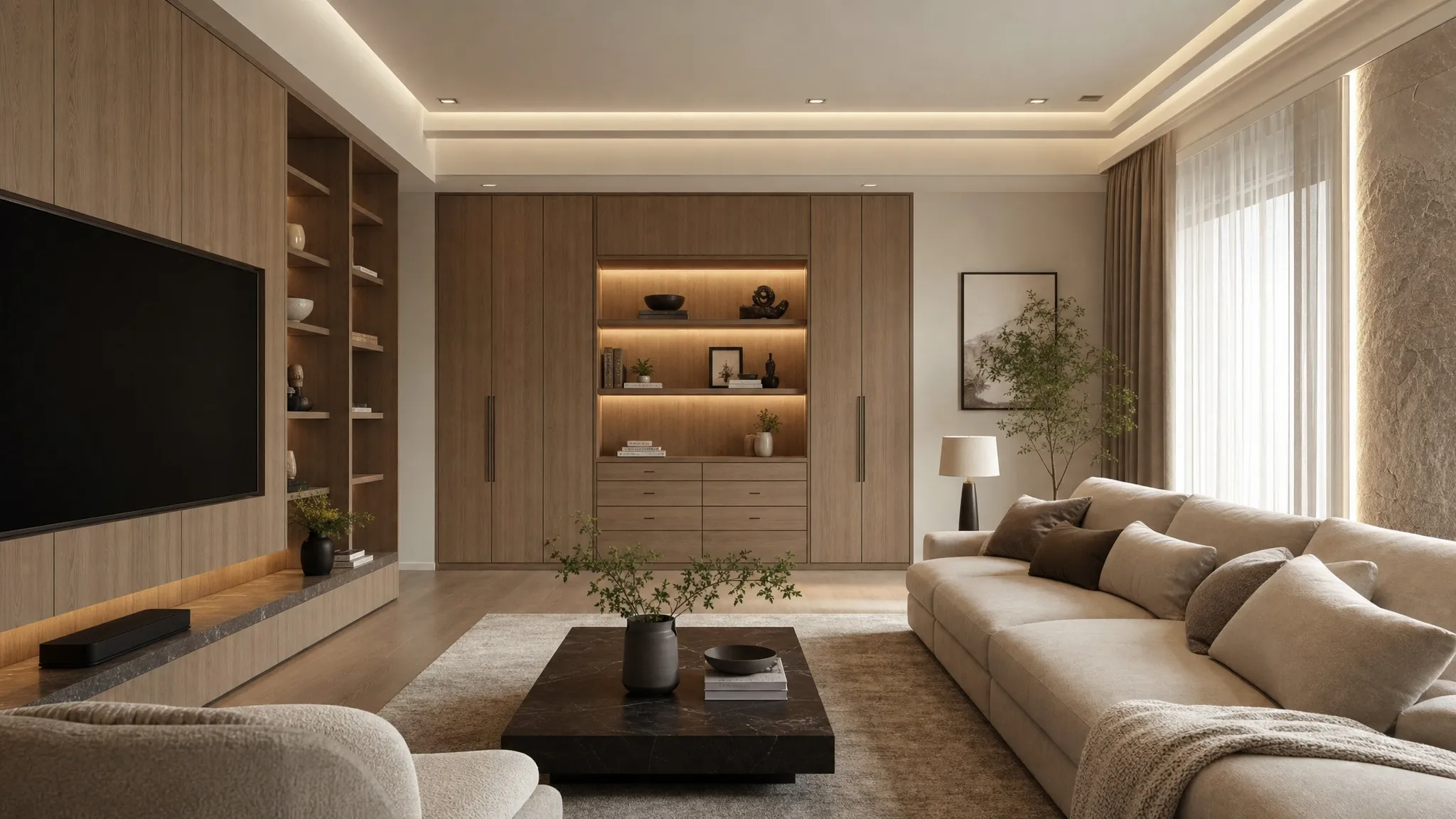
Clutter is one of the biggest reasons a home feels less polished than it should. Custom carpentry and joinery can transform awkward corners, blank walls, and unused spaces into functional storage that looks like part of the architecture.
Built-in TV units, entry cabinets, wardrobes, laundry storage, floating shelves, banquette seating, and home office joinery can make a home feel tailored. Instead of adding loose furniture to solve every storage problem, built-ins create a cleaner and more permanent solution.
The most elevated joinery usually combines closed storage with a few open display areas. Closed cabinets hide daily items, while open niches can show books, ceramics, plants, or artwork. Integrated lighting makes the result feel more premium and helps avoid a heavy, bulky appearance.
Refresh the Kitchen Without Overcomplicating It
A full kitchen remodel can dramatically improve a home, but not every kitchen needs to be fully replaced. If the layout is functional and the cabinetry structure is in good condition, a focused refresh can still create a high-end look.
Consider cabinet refacing, new handles, a modern backsplash, improved under-cabinet lighting, a cleaner countertop profile, and better organization inside drawers. Replacing a dated sink and tap can also change how the kitchen feels in daily use.
For open-plan homes, the kitchen must visually connect with the living and dining areas. Cabinet colors, countertop tones, and pendant lights should feel like part of the wider interior scheme. A kitchen that looks disconnected from the rest of the home can reduce the impact of the entire renovation.
If plumbing, appliance locations, or electrical load need to change, involve qualified professionals early. This helps avoid expensive rework after finishes are installed.
Make Bathrooms Feel Like Private Retreats
Bathrooms are small spaces, but they have a major effect on how a home feels. Even modest bathroom upgrades can make daily routines more comfortable and create a spa-like impression.
High-impact ideas include large mirrors, better vanity lighting, wall-hung storage, niche shelving in showers, frameless glass partitions, modern mixers, rainfall showers, and large-format tiles. Warm lighting around mirrors or under vanities can soften the space and make it feel more relaxing.
Waterproofing, drainage, ventilation, and plumbing quality should never be treated as afterthoughts. The same principle applies in any market: specialist work should be handled by qualified trades, whether that means licensed plumbing professionals in Dubai or an authorized drainage contractor for drainage-related projects elsewhere. Beautiful bathrooms only stay beautiful when the hidden systems behind the finishes are properly executed.
Elevate Ceilings and Curtains
Ceilings are often ignored, yet they shape the entire room. A simple gypsum ceiling detail, recessed lighting, shadow gaps, or a clean cove can make an interior feel more designed. In Dubai homes with generous ceiling heights, this can be especially effective.
Curtains also have a major visual effect. Hanging curtains close to the ceiling, rather than just above the window frame, makes walls appear taller. Full-length curtains that touch or slightly break at the floor create a softer, more luxurious look. Sheer curtains can filter strong daylight, while blackout layers improve privacy and comfort in bedrooms.
When curtain tracks are recessed into the ceiling, the result feels clean and architectural. This is a relatively small detail that can noticeably change the atmosphere of a room.
Create a Better Entry Experience
The entrance sets the tone for the entire home. A cluttered or poorly lit entry can make even a well-designed interior feel less impressive. With a few thoughtful upgrades, this area can become both practical and welcoming.
A built-in shoe cabinet, a floating console, a mirror, wall lighting, a textured wall finish, and a concealed place for keys or bags can make the entrance feel organized. In villas, the foyer can also include statement flooring, a decorative ceiling detail, or a feature wall. In apartments, compact joinery and lighting often deliver the biggest improvement.
The best entry renovations balance beauty and function. If the space looks elegant but has nowhere to store everyday items, clutter will return quickly.
Choose a Cohesive Color Palette
Color has an immediate impact on how a home feels. For a more elevated interior, choose a palette that flows from room to room rather than treating every room as a separate design experiment.
Warm neutrals, soft greige, muted taupe, sand, ivory, clay, olive, and deep charcoal can work beautifully in Dubai homes. These tones pair well with natural light and create a calm backdrop for furniture, art, and accessories.
A good rule is to keep the main surfaces timeless and add personality through accents. Walls, floors, large cabinetry, and sofas are harder to change, so they should have lasting appeal. Cushions, artwork, rugs, and accessories can carry stronger colors because they are easier to update later.
Add Architectural Lines With Moldings or Panels
Wall moldings, fluted panels, and vertical battens can make a room feel more structured. They are especially useful in spaces that lack architectural character.
In a living room, vertical panels can make ceilings feel higher. In a bedroom, a paneled headboard wall can replace the need for excessive furniture. In a dining area, subtle wall molding can frame artwork or a mirror. These details work best when proportions are carefully planned around furniture heights, door openings, switches, and AC vents.
Avoid adding panels randomly. Poor alignment can make the room look busy. A professional layout ensures the lines feel balanced and intentional.
Upgrade Interior Doors
Interior doors take up more visual space than many homeowners realize. Old doors, damaged frames, or mismatched finishes can affect the entire home. Replacing or refinishing doors can create an immediate sense of freshness.
Solid-feel doors, modern profiles, concealed hinges, magnetic latches, and high-quality handles all contribute to a more premium experience. Even painting existing doors in a coordinated color can make hallways and bedrooms feel more cohesive.
For a contemporary look, consider doors in warm white, greige, walnut, or matte charcoal, depending on the wider palette. Glass-paneled doors can help bring light into darker corridors, but privacy and acoustic comfort should be considered.
Bring Softness Through Fabrics and Acoustics
A visually beautiful home can still feel uncomfortable if it echoes, feels harsh, or lacks softness. Fabrics improve both style and comfort.
Rugs, upholstered headboards, curtains, cushions, fabric wall panels, and soft seating help absorb sound and make rooms feel calmer. This is particularly useful in homes with tile floors, large windows, and open-plan layouts.
Acoustic comfort is an underrated part of interior renovation. When a room sounds softer, it often feels more luxurious, even if visitors cannot immediately identify why.
Do Not Ignore the Hidden Technical Work
Some of the most important renovation decisions are hidden behind walls, ceilings, and floors. Electrical upgrades, plumbing changes, AC coordination, waterproofing, and load requirements may not be visible after handover, but they determine how well the renovation performs over time.
For example, a new lighting plan may require additional wiring and switch circuits. A kitchen refresh may need dedicated points for appliances. A bathroom upgrade may require waterproofing and proper slope before tiles are installed. A built-in TV wall may need ventilation, cable management, and access panels.
This is where project management becomes essential. A polished interior depends on sequencing: technical works first, surface preparation next, finishes after that, and final installation at the end. Rushing this order can lead to delays, defects, or unnecessary cost.
Prioritize the Rooms You Use Most
If you cannot renovate everything at once, start with the areas that affect daily life and first impressions. Living rooms, kitchens, bathrooms, master bedrooms, and entrances usually deliver the most noticeable impact.
For homeowners preparing a property for rent or resale, neutral finishes, better lighting, clean bathrooms, functional kitchens, and strong storage are often more effective than highly personal design statements. For homeowners planning to stay long term, comfort, lifestyle fit, and personalized details may matter more.
A phased renovation can still look cohesive if the full design direction is planned from the beginning. This prevents each phase from feeling disconnected.
Frequently Asked Questions
What is the fastest interior renovation idea to elevate a home? Lighting upgrades are often the fastest way to improve the mood and perceived quality of a home. New fixtures, dimmers, wall lights, and accent lighting can make rooms feel warmer and more refined without changing the layout.
Which interior renovation ideas add the most value? Kitchens, bathrooms, flooring, built-in storage, lighting, and technical upgrades usually have the strongest impact because they improve both appearance and daily function. The best choice depends on the property condition and your long-term goals.
Can I make my home look premium without a full renovation? Yes. You can achieve a premium look with focused upgrades such as wall finishes, new hardware, improved lighting, cabinet refacing, curtains, mirrors, and custom storage. Consistency and workmanship are more important than doing everything at once.
Do interior renovations in Dubai need approvals? Some works may require building management, developer, or community approvals, especially when they involve plumbing, electrical changes, structural modifications, external works, or noisy activities. Always check requirements before starting.
How do I avoid choosing finishes that go out of style quickly? Keep permanent surfaces timeless and use trend-led colors or patterns in items that are easier to replace. Neutral flooring, quality joinery, classic hardware, and layered lighting tend to age better than overly bold fixed finishes.
Bring Your Interior Renovation Ideas to Life
The best interior renovation ideas are not just decorative. They improve how your home looks, feels, and functions every day. From lighting and wall finishes to custom joinery, kitchen updates, bathroom refinements, and technical upgrades, every detail should work together.
Revo Craft Renovations helps homeowners and businesses in Dubai create tailored interiors with modern design, premium finishes, expert craftsmanship, and organized project management. If you are ready to elevate your home with a renovation that feels personal and practical, contact Revo Craft Renovations to discuss your space and goals.