
Luxury interiors are no longer defined by ornament alone. Today’s most elegant homes feel personal, calm, practical, and beautifully detailed. The best spaces combine refined materials, thoughtful layouts, warm lighting, and craftsmanship that still looks impressive years after installation.
For homeowners in Dubai, luxury home remodeling also needs to respond to local lifestyles. Homes often serve many roles at once, from family gathering spaces and majlis areas to work zones, entertainment rooms, guest suites, and quiet retreats. The right renovation brings these functions together without making the interior feel crowded or overdesigned.
Below are the luxury home remodeling trends shaping elegant interiors, along with practical ways to use them in villas, apartments, penthouses, and townhouses.
What Defines Luxury Home Remodeling Today?
Luxury remodeling is not simply choosing the most expensive marble or the largest chandelier. A truly high-end interior feels resolved. Every visible element, from wall finishes to cabinet handles, should support the same design story.
In 2026, elegant interiors are moving toward quieter sophistication. Homeowners are asking for spaces that look premium but also feel warm, livable, and easy to maintain. This means better planning, fewer random features, and more attention to proportion, texture, lighting, storage, and detail.
A successful luxury remodel usually includes three layers: a functional layout, high-quality finishes, and custom elements that make the home feel unique. When these layers are handled well, the result is a home that feels polished rather than flashy.
1. Quiet Luxury With Warm, Natural Palettes
One of the strongest luxury interior trends is quiet luxury. Instead of bold patterns everywhere, homeowners are choosing soft neutral palettes, natural textures, and subtle contrast. Think warm whites, taupe, greige, sand, stone, walnut, bronze, champagne metal, and muted charcoal accents.
This approach works especially well in Dubai homes because it creates a calm contrast to the city’s bright light and fast pace. It also makes interiors feel more spacious, which is useful in both compact apartments and large villas.
Quiet luxury does not mean plain. The richness comes from layering materials carefully. A living room with limewash-style walls, oak veneer shelving, textured upholstery, and soft concealed lighting can feel more elegant than a room filled with oversized decorative pieces.
| Design element | Luxury direction | Best use |
|---|---|---|
| Wall color | Warm neutrals and mineral tones | Living rooms, bedrooms, corridors |
| Wood finishes | Walnut, oak, ash, or refined veneer | Joinery, doors, TV walls, wardrobes |
| Metals | Brushed bronze, champagne, matte black | Handles, lighting, trims, taps |
| Stone effects | Marble, travertine, limestone, porcelain slabs | Kitchens, bathrooms, feature walls |
| Fabrics | Linen, bouclé, velvet, textured cotton | Seating, cushions, curtains, headboards |
The key is consistency. If every room uses a different theme, the home can feel disconnected. A more luxurious result comes from repeating a controlled palette across the property while allowing each room to have its own personality.
2. Statement Kitchens That Feel Like Living Spaces
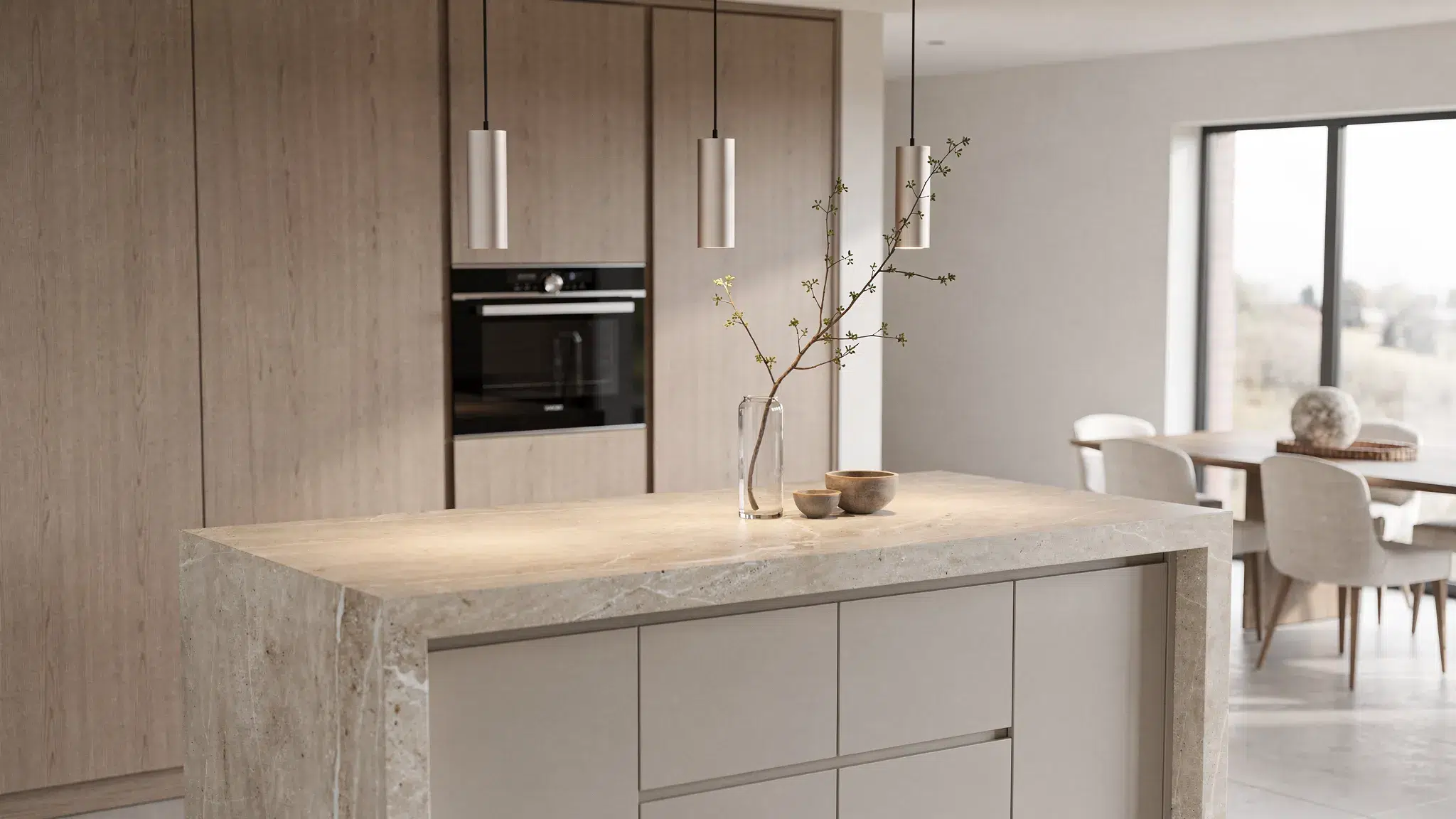
The kitchen is no longer treated as a separate service area. In many modern Dubai homes, it is part of the main social zone, connected to the dining and living areas. This is why luxury kitchen remodeling now focuses as much on atmosphere as it does on cooking performance.
Popular features include large islands, integrated appliances, handleless cabinetry, concealed storage, stone-look slab backsplashes, and warm under-cabinet lighting. Homeowners are also choosing appliance garages, hidden coffee stations, tall pantry units, and custom drawer organizers to reduce visual clutter.
A luxury kitchen should look elegant when guests arrive, but it should also function smoothly during daily use. The most successful layouts consider how people cook, store groceries, serve food, clean up, and move between zones.
If your kitchen feels outdated or difficult to use, a professional remodel can improve daily routines as much as aesthetics. Revo Craft Renovations covers this topic in more detail in its guide on how kitchen remodeling services improve daily living.
3. Spa-Inspired Bathrooms and Wellness Suites
Bathroom design is becoming more sensory and wellness-focused. Homeowners want spaces that feel like private retreats, not just functional rooms. This trend is especially strong in master bathrooms, guest suites, and luxury powder rooms.
Common features include walk-in showers, floating vanities, large-format tiles, backlit mirrors, wall niches, soft lighting, and refined tapware. Natural stone looks, textured porcelain, fluted glass, and warm wood-effect cabinetry help create a spa-like mood without making the space difficult to maintain.
However, beauty should never come before technical quality. In Dubai, bathroom renovation needs careful attention to waterproofing, ventilation, plumbing, drainage slopes, and electrical safety. A beautiful bathroom can quickly become a costly problem if the hidden work is not done correctly.
For a deeper look at the process, see Revo Craft Renovations’ guide on what to expect from bathroom renovation services.
4. Custom Joinery That Makes the Home Feel Bespoke
Custom carpentry and joinery are among the clearest signs of a luxury remodel. Built-in elements make a home feel designed for its owners, not assembled from standard furniture pieces.
This can include TV walls, wardrobes, dressing rooms, display shelving, shoe storage, bar units, study desks, wall panels, concealed doors, and storage benches. When designed properly, joinery improves both the look and function of the home.
In elegant interiors, joinery should feel architectural. Instead of adding bulky cabinets as an afterthought, the design should integrate storage into walls, corners, niches, and unused spaces. Details such as shadow gaps, matching grain direction, soft-close hardware, and consistent handle finishes can make a major difference.
For apartments, custom joinery is useful for maximizing storage without making rooms feel smaller. For villas, it can create a more cohesive flow between larger spaces, especially when repeated finishes connect the entrance, living room, bedrooms, and corridors.
5. Layered Lighting for Mood, Depth, and Function
Lighting is one of the most powerful tools in luxury home remodeling. Even premium materials can look flat under poor lighting, while a simple room can feel elegant with a well-planned lighting scheme.
Elegant interiors usually combine several types of lighting rather than relying on one central ceiling light. Ambient lighting provides overall brightness, task lighting supports specific activities, accent lighting highlights architectural features, and decorative lighting adds character.
In a living room, this might mean recessed downlights, cove lighting, wall washers, floor lamps, and a sculptural pendant over the dining table. In a bedroom, soft bedside lights, wardrobe lighting, and concealed ceiling lighting can create a calm evening atmosphere.
Smart lighting controls are also becoming more common in luxury homes. The goal is not technology for its own sake, but convenience. Preset scenes can help homeowners shift from bright daytime use to relaxed evening lighting with minimal effort.
6. Feature Walls With Texture, Not Clutter
Feature walls remain popular, but the design direction has changed. Instead of heavy decorative panels or busy wallpaper everywhere, high-end interiors now favor texture, proportion, and restraint.
Popular wall finishing ideas include stone cladding, timber slats, fluted panels, microcement-style finishes, textured paint, fabric panels, and bookmatched porcelain slabs. These finishes can work beautifully behind a TV, bed, dining console, staircase, or entryway.
The mistake to avoid is using too many feature walls in one home. If every room has a competing statement, the interior can feel tiring. A better approach is to choose a few focal points and make them excellent.
Wall finishing should also be coordinated with lighting. Grazing light can reveal texture beautifully, while poorly placed lights can expose surface imperfections. This is where experienced workmanship and planning become essential.
7. Indoor-Outdoor Flow for Dubai Living
Dubai homes often have balconies, terraces, courtyards, gardens, or poolside areas that can become part of the living experience. Luxury remodeling increasingly focuses on making these transitions smoother.
For villas, this may involve opening the living and dining area toward the garden, upgrading exterior flooring, improving outdoor lighting, or creating a shaded seating area. For apartments and penthouses, it may mean designing the balcony as a stylish extension of the interior with durable finishes, planters, lighting, and compact seating.
The goal is visual continuity. Similar color palettes, aligned flooring tones, and coordinated furniture materials help the interior and exterior feel connected. Even a small balcony can feel more luxurious when treated as a designed space rather than a storage corner.
Materials should be selected for local conditions. Outdoor finishes need to handle heat, dust, cleaning, and sun exposure. This is one reason professional material selection matters in Dubai renovations.
8. Home Offices and Flexible Luxury Spaces
The modern luxury home is flexible. Homeowners increasingly want rooms that can shift between work, wellness, hobbies, guests, and family use.
A spare bedroom might become a refined home office with a concealed sofa bed. A landing area might become a reading lounge. A corridor niche might become a compact workstation. A basement or unused room might become a gym, cinema, children’s study room, or entertainment area.
The luxury element comes from making these spaces feel intentional. A home office, for example, should not look like a desk placed in a random corner. Built-in shelving, acoustic-friendly finishes, hidden cables, proper lighting, and comfortable seating can make it feel like part of the home’s architecture.
Flexibility is especially valuable for long-term property value. A room that is beautifully designed but too specific may not suit future needs. A room with adaptable storage, lighting, and layout can remain useful for years.
9. Premium Materials Chosen for Durability
Luxury interiors should age well. That means material selection should consider cleaning, maintenance, humidity, impact resistance, and daily use, not just showroom appearance.
Natural marble, for example, can look stunning, but it may require more care than high-quality porcelain slabs. Real wood adds warmth, but engineered alternatives or veneers may perform better in certain applications. Matte finishes can look refined, but some surfaces may show fingerprints more easily.
A professional renovation team can help compare the appearance, maintenance, and suitability of each material before work begins.
| Material choice | Elegant effect | Practical consideration |
|---|---|---|
| Natural stone | Unique veining and premium character | Needs sealing and proper care |
| Porcelain slabs | Seamless stone look with durability | Requires skilled installation |
| Wood veneer | Warm bespoke joinery finish | Edge detailing must be precise |
| Microcement-style finishes | Minimal, modern surface effect | Substrate preparation is important |
| Brushed metal | Subtle luxury in details | Finish consistency matters across rooms |
The best luxury remodeling decisions balance beauty with performance. A home that looks impressive but is difficult to live in will not feel luxurious for long.
10. Better Planning, Fewer Surprises
One trend that does not always appear in design magazines is the growing demand for smoother renovation management. Homeowners want beautiful results, but they also want clarity, communication, and fewer disruptions.
A luxury remodel should begin with a clear brief. This includes the rooms being renovated, the design style, functional problems, preferred materials, timeline expectations, and any building or community requirements. Before construction begins, drawings, finishes, MEP requirements, and joinery details should be coordinated as much as possible.
This is especially important when electrical and plumbing upgrades are involved. Moving sockets, adding lighting circuits, changing bathroom layouts, or remodeling kitchens can affect multiple trades. Without coordination, small decisions can cause delays or rework.
For broader planning guidance, Revo Craft Renovations has a detailed article on how to plan a full home renovation in Dubai.
How to Make Luxury Trends Feel Timeless
Trends are useful for inspiration, but a luxury home should not feel outdated after one season. The most elegant interiors usually combine timeless foundations with a few current accents.
Keep the permanent elements refined and versatile. Flooring, wall finishes, kitchens, bathrooms, and built-in joinery are harder to change, so they should be chosen carefully. Trend-led colors, fabrics, loose furniture, art, and decorative lighting are easier to update later.
A simple way to avoid overdesigning is to ask whether each choice supports the overall atmosphere of the home. If the goal is calm elegance, every material, light fitting, handle, and wall finish should contribute to that mood.
Strong luxury interiors often follow these principles:
- Use a consistent palette across connected spaces.
- Invest in craftsmanship where details are visible.
- Prioritize lighting before buying decorative pieces.
- Choose durable finishes for kitchens, bathrooms, and high-use areas.
- Add personality through art, styling, and custom features.
This approach creates a home that feels current but not temporary.
Why Craftsmanship Matters More Than Ever
Luxury remodeling is detail-driven. A premium material can look average if it is poorly installed, while a modest material can look refined when executed with precision.
Details such as tile alignment, grout width, cabinet gaps, paint finish, edge profiles, door reveals, lighting placement, and hardware installation all affect the final impression. These details are often what separate a standard renovation from a truly elegant interior.
This is where experienced project management becomes valuable. Coordinating designers, carpenters, electricians, plumbers, painters, and finishing teams helps protect the design intent from start to finish.
Revo Craft Renovations provides bespoke renovation and interior transformation services in Dubai, including home renovation, kitchen remodeling, interior design and styling, wall finishing, electrical and plumbing upgrades, custom carpentry and joinery, and project management. For homeowners who want a polished result, working with a team that manages both design details and site execution can make the process more seamless.
Frequently Asked Questions
What is luxury home remodeling? Luxury home remodeling is the process of upgrading a home with high-quality design, premium finishes, improved layouts, custom details, and expert craftsmanship. It focuses on both beauty and functionality.
Which rooms add the most luxury to a home? Kitchens, bathrooms, living rooms, master bedrooms, dressing areas, and entryways usually create the strongest impact. Custom joinery, lighting, and wall finishes can also elevate corridors and transitional spaces.
Are luxury interiors always expensive? Not always. Luxury depends on planning, proportion, workmanship, and material selection. A well-designed neutral palette, layered lighting, and precise carpentry can look premium without using the most expensive option in every area.
What are the best luxury remodeling trends for Dubai homes? Quiet luxury, spa-inspired bathrooms, statement kitchens, custom joinery, layered lighting, textured wall finishes, and indoor-outdoor living are especially suited to Dubai homes.
How do I keep a luxury remodel from looking outdated? Choose timeless foundations for permanent elements such as flooring, cabinetry, bathrooms, and kitchens. Use trend-led colors and accessories in items that are easier to update later.
Do I need approvals for luxury remodeling in Dubai? Some renovations may require approvals from building management, community developers, or relevant authorities, especially when changing layouts, plumbing, electrical systems, or structural elements. A professional renovation team can guide you based on your property type.
Create an Elegant Interior That Feels Designed Around You
Luxury home remodeling is most successful when every decision is tailored to the way you live. The right materials, lighting, joinery, and layout can transform your home into a space that feels refined, comfortable, and practical every day.
If you are planning a villa, apartment, penthouse, kitchen, bathroom, or full home renovation in Dubai, Revo Craft Renovations can help you shape a personalized design and manage the details from concept to completion. Reach out to discuss your vision and explore how expert craftsmanship can bring a more elegant interior to life.