
A bathroom can look beautiful on the surface while hiding problems behind the tiles. A slow leak under a vanity, poor drainage under a shower tray, weak waterproofing around pipe penetrations, or old connections inside a wall can quietly turn a simple renovation into repeated repair bills.
That is why the smartest plumbing and bathroom renovations start with the systems you cannot see. Tiles, lighting, mirrors, and fittings shape the look of the room, but plumbing, drainage, waterproofing, ventilation, and access points determine whether the bathroom will stay reliable for years.
For Dubai homeowners, this matters even more. High water use, apartment drainage stacks, air-conditioning condensation, humidity, and frequent tenant turnover can all expose weak bathroom work faster than expected. A renovation that prioritizes prevention helps protect finishes, reduce emergency callouts, and preserve property value.
Why plumbing should lead the bathroom renovation plan
Many bathroom problems begin when design decisions are made before technical checks. A homeowner chooses a freestanding tub, concealed mixer, wall-mounted toilet, or walk-in shower, then discovers later that the existing pipe locations, floor depth, drainage slope, or wall structure cannot support the plan without extra work.
A plumbing-first approach reverses that sequence. The renovation begins by understanding how water enters the room, how it drains away, where waterproofing is vulnerable, and how future maintenance will be handled. Once those details are clear, design choices become more practical and less risky.
This does not mean compromising on style. In fact, the best bathrooms combine premium finishes with practical engineering. A marble-look porcelain floor, recessed lighting, custom vanity, and frameless shower screen will feel more luxurious when the room also drains properly, smells fresh, and does not develop damp patches after six months.
If you are preparing for a full upgrade, it helps to understand what bathroom experts check before a renovation begins, especially when the project involves moving sanitaryware, replacing old pipes, or opening walls and floors.
Warning signs your bathroom plumbing needs attention
Not every plumbing issue is dramatic. Many expensive repairs start as small signals that are easy to ignore. Before renovating, take these warning signs seriously:
- Slow drainage in the shower, bathtub, or floor drain
- Repeated foul smells from drains, especially after the bathroom has not been used
- Damp marks on walls, ceilings, or cabinetry
- Loose tiles, cracked grout, or hollow-sounding floor areas
- Unstable water pressure from mixers or shower heads
- Rust stains, mineral buildup, or discoloration around fixtures
- Mould growth that returns quickly after cleaning
- Water pooling outside the shower zone
- Noisy pipes, banging sounds, or gurgling drains
These symptoms do not always mean the bathroom must be fully rebuilt, but they should be investigated before new finishes are installed. Covering old plumbing with new tiles can trap the problem deeper inside the structure, making the eventual repair more disruptive.
The hidden systems that prevent future repairs
A durable bathroom renovation depends on a chain of technical decisions. If one link is weak, the final result can fail even when the visible workmanship looks good.
| Renovation element | What can go wrong | Preventive renovation approach |
|---|---|---|
| Water supply pipes | Leaks, corrosion, weak pressure, poor fixture performance | Inspect exposed and concealed pipework, replace compromised sections, match pipe sizing to fixture demand |
| Drainage lines | Slow drainage, bad smells, blockages, backflow risk | Check pipe slopes, trap placement, venting, floor drain position, and drain capacity |
| Waterproofing | Damp walls, ceiling leaks, tile failure, mould | Apply a suitable waterproofing system before tiling, with careful detailing around corners and penetrations |
| Shower area | Water escaping into dry zones, pooling, slippery floors | Plan correct floor falls, shower curb or channel drain placement, and proper sealing at glass and wall junctions |
| Fixture installation | Movement, leaks at joints, difficult maintenance | Use compatible fittings, secure supports, accessible valves, and tested connections |
| Ventilation | Condensation, odours, mould, swollen cabinetry | Improve air movement with mechanical extraction or better ventilation planning where needed |
| Access points | Expensive demolition for minor repairs | Include access panels for concealed valves, mixers, traps, and serviceable parts |
This is where experienced project management becomes valuable. A bathroom renovation is not only a design project. It is a coordinated sequence involving demolition, plumbing, electrical work, waterproofing, tiling, carpentry, finishing, and inspection.
Should you keep the same bathroom layout?
Keeping the same layout is often the most cost-conscious choice because it reduces major plumbing changes. If the toilet, shower, basin, and drain locations already work well, you can focus budget on better fittings, improved waterproofing, new cabinetry, lighting, and wall finishes.
However, keeping the old layout is not always the best decision. If the shower is too small, the toilet location blocks movement, the vanity lacks storage, or the floor drain is poorly positioned, a layout change may prevent long-term frustration. The key is to compare design value against plumbing complexity before work begins.
Moving a basin is usually simpler than moving a toilet because waste pipe diameter, slope, and connection points are different. Converting a bathtub into a walk-in shower may be practical, but only if drainage and waterproofing are handled properly. Adding a second basin can improve comfort in a family bathroom, but it may require supply and drainage upgrades.
Good planning helps you avoid the common mistake of choosing a layout that looks attractive on paper but creates technical compromises on site. For a smoother process, review practical bathroom renovation planning tips before finalizing the scope.
Waterproofing is not the place to cut corners
Waterproofing is one of the most important parts of any bathroom renovation because it protects the structure behind the finishes. Once tiles are installed, the waterproofing layer is no longer visible, but it continues doing the most important job in the room.
Weak waterproofing can lead to damp ceilings below, swollen skirting, loose tiles, mouldy grout, musty odours, and disputes in apartment buildings. In villas, water migration can damage adjacent rooms, built-in wardrobes, or false ceilings.
A reliable waterproofing plan should cover wet-zone floors, shower walls, corners, pipe penetrations, niches, thresholds, and transitions between wet and dry areas. The surface must also be prepared correctly before waterproofing is applied. Dust, uneven screeds, loose material, and rushed curing times can reduce performance.
The most expensive tile in the showroom cannot compensate for poor waterproofing underneath it. If your goal is to avoid costly repairs, insist on proper preparation, application, and testing before finishing layers begin.
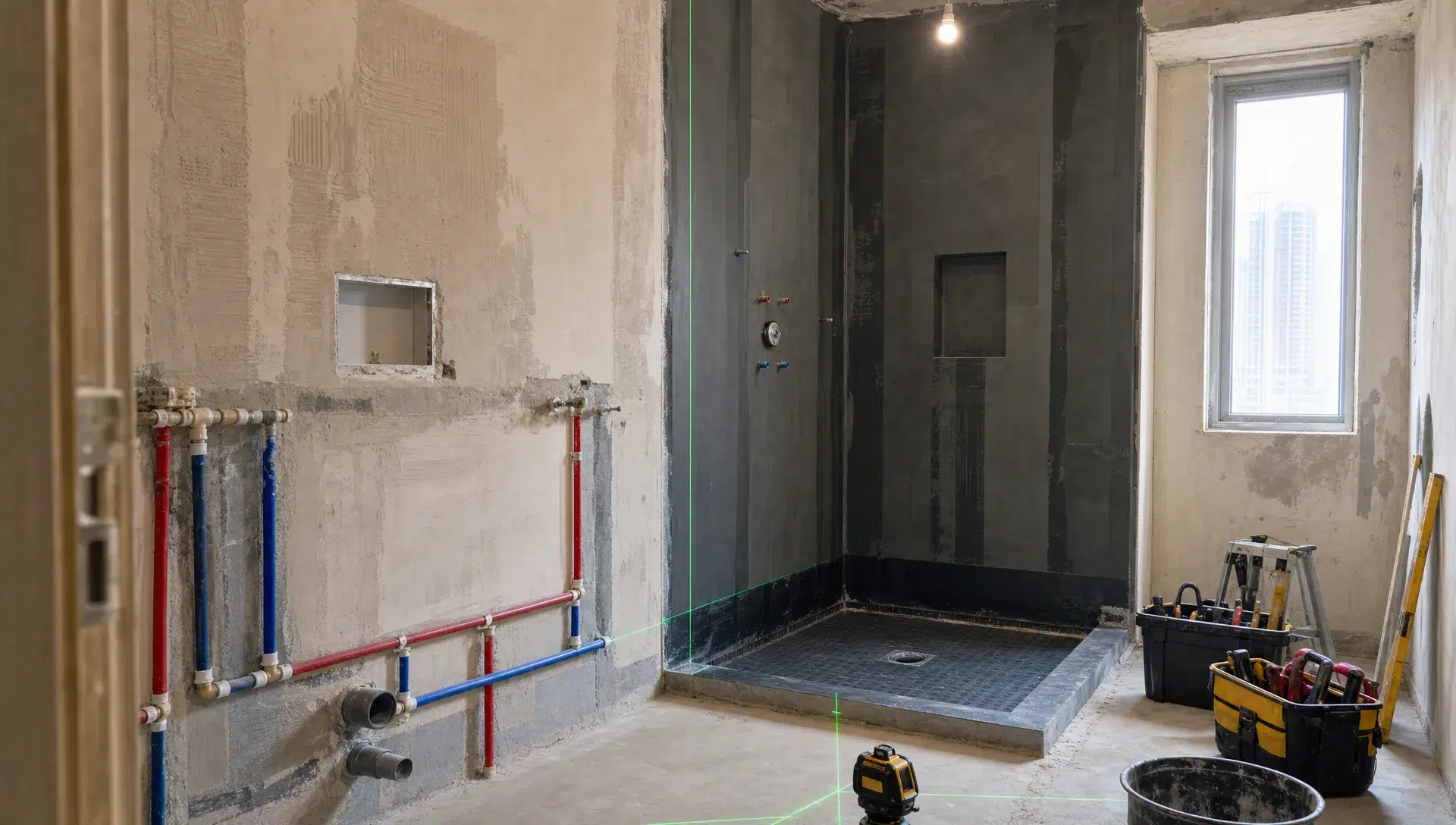
Renovation choices that reduce plumbing risk
Some bathroom upgrades add style and comfort while also making maintenance easier. These details may not be the first things people notice, but they often determine whether the space remains trouble-free.
Isolation valves are a simple example. When each main fixture has accessible shut-off control, a future mixer or hose replacement becomes easier and less disruptive. Access panels for concealed cisterns, bathtub traps, or shower mixers can also save major demolition later.
Wall-mounted toilets and concealed cisterns create a sleek look, but they must be installed with proper framing, compatible components, and service access. Concealed mixers need accurate placement, stable wall depth, and careful waterproofing around penetrations. Linear drains look elegant in walk-in showers, but they require correct floor slope and cleanable components.
Material selection also affects repair risk. Moisture-resistant vanity materials, quality sealants, non-slip floor tiles, and grout suited for wet areas all help the bathroom handle daily use. In Dubai homes, where bathrooms may be used frequently by families, guests, or tenants, durability should be part of the design conversation from the beginning.
Plumbing and electrical upgrades should be coordinated
Modern bathrooms often include more than basic plumbing. Homeowners may want LED mirrors, heated towel rails, shaver sockets, smart toilets, extractor fans, water heaters, or feature lighting. These additions require careful coordination between plumbing and electrical work.
Poor coordination can create unsafe or inconvenient results. An outlet may end up too close to a wet zone, a mirror light may conflict with a pipe route, or a water heater may be placed without proper maintenance access. When electrical and plumbing plans are reviewed together, the bathroom becomes safer, cleaner, and easier to service.
This is especially important in compact bathrooms, where every wall may need to carry multiple functions. A coordinated renovation avoids last-minute changes that can weaken waterproofing, delay tiling, or force visible compromises.
How preventive bathroom renovations protect property value
A well-renovated bathroom can improve daily comfort, but it can also protect long-term property value. Buyers, tenants, and guests judge homes quickly by bathrooms and kitchens because these rooms reveal how well the property has been maintained.
For landlords and short-stay property owners, reliable bathrooms are even more important. Leaks and drainage complaints can interrupt bookings, create negative reviews, and increase maintenance costs. Travelers increasingly compare private stays by the same standards they expect from premium hospitality, from luxury serviced apartments to private luxury vacation rentals that emphasize comfort, privacy, and well-maintained amenities.
In Dubai’s competitive rental and resale market, a bathroom that looks modern but fails under daily use can damage confidence. A bathroom that is both attractive and technically sound sends a stronger message: the property has been upgraded with care.
Common shortcuts that lead to expensive repairs
Renovation problems often come from shortcuts taken early in the project. Some are done to save time, others to reduce budget, and some simply result from poor coordination. The cost usually appears later, after the bathroom is in use.
Avoid these common mistakes:
- Installing new tiles over unresolved damp areas
- Reusing old pipework without checking its condition
- Moving fixtures without confirming drainage slope
- Skipping flood tests or waterproofing checks where appropriate
- Using low-quality sealant in high-movement wet areas
- Hiding valves and traps with no service access
- Choosing fittings before confirming compatibility with site conditions
- Rushing curing times before tiling or using the shower
A bathroom renovation should not be judged only by how quickly it is completed. Speed matters, but not at the expense of work that must remain reliable behind walls and under floors.
Budgeting for prevention, not just appearance
Many homeowners begin with a visual budget: tiles, vanity, mirror, fittings, lighting, and accessories. Those items matter, but the technical budget deserves equal attention. Plumbing repairs, waterproofing, drainage corrections, and ventilation improvements may not be glamorous, yet they are what protect the investment.
A practical way to budget is to separate must-do technical work from style upgrades. If the existing plumbing is old or unreliable, prioritize replacement before spending extra on luxury finishes. If the drainage layout is poor, solve it before choosing a premium shower screen. If ventilation is weak, improve it before installing custom cabinetry that may swell in moisture.
This does not mean the bathroom must look plain. It means the best design choices should sit on a reliable foundation. Revo Craft Renovations focuses on tailored solutions that balance comfort, style, functionality, and craftsmanship, which is exactly what prevention-focused renovation requires.
What a reliable renovation process should include
A professional bathroom renovation should feel organized from the first consultation to final handover. Homeowners should know what will be checked, what will be replaced, which materials will be used, and how different trades will be scheduled.
The process typically includes a site review, discussion of goals, layout planning, technical inspection, material selection, demolition, plumbing and electrical work, waterproofing, tiling, fixture installation, finishing, and final checks. Clear communication helps prevent misunderstandings and gives homeowners confidence throughout the project.
If you want a clearer picture of the renovation journey, this guide on what to expect from bathroom renovation services explains how a structured process can reduce stress and improve project outcomes.
Frequently Asked Questions
Do I need to replace all bathroom plumbing during a renovation? Not always. If the existing pipework is in good condition, correctly sized, and compatible with the new design, full replacement may not be necessary. However, old, leaking, corroded, or poorly routed pipes should be addressed before new finishes are installed.
Can waterproofing be repaired without removing tiles? Minor sealant issues may be fixed at the surface, but failed waterproofing behind tiles usually requires removal of finishes to access the problem. This is why proper waterproofing during renovation is much more cost-effective than repairing hidden water damage later.
Is it expensive to move a toilet or shower? It depends on the existing drainage route, floor depth, building type, and connection points. Moving a toilet is often more complex than moving a basin because waste pipe size and slope requirements are stricter. A site inspection is the safest way to understand feasibility.
How can I make a bathroom easier to maintain? Choose durable wet-area materials, include access panels, install accessible isolation valves, improve ventilation, use quality sealants, and avoid overly complex fixture layouts. A simple maintenance-friendly design can still look premium.
What is the biggest cause of costly bathroom repairs? Hidden water movement is one of the biggest causes. Leaks, failed waterproofing, poor drainage, and condensation can damage walls, ceilings, cabinetry, and finishes before the problem becomes visible.
Plan a bathroom that looks refined and works reliably
A bathroom renovation should do more than refresh the room. It should protect your home from leaks, dampness, drainage issues, and avoidable repair costs.
Revo Craft Renovations provides bespoke renovation and interior transformation services in Dubai, including bathroom upgrades, plumbing and electrical improvements, wall finishing, custom carpentry, project management, and personalized design consultations. If you want a bathroom that combines modern design with practical reliability, start with a renovation plan that puts the hidden systems first.
Contact Revo Craft Renovations to discuss a plumbing-focused bathroom renovation built for comfort, style, and long-term peace of mind.