
A bathroom renovation can look simple from the outside because the room is compact. In reality, it is one of the most technically demanding spaces in a home. Plumbing, waterproofing, drainage, lighting, ventilation, tiling, storage, and finish details all need to work together in a tight footprint.
That is why strong bathroom renovation planning matters. A clear plan helps you avoid rushed material choices, hidden site surprises, schedule delays, and expensive changes once work has already started. Whether you are updating a guest bathroom, modernizing an en-suite, or creating a spa-like master bathroom in Dubai, the smoother project usually begins weeks before demolition.
Below are practical planning tips to help you move from idea to handover with fewer headaches.
Start With a Practical Renovation Brief
Before choosing tiles or fixtures, define what the bathroom actually needs to achieve. A beautiful design will not feel successful if the storage is too small, the shower splashes everywhere, or the lighting is poor for daily routines.
Start by writing a simple brief. It does not need to be technical, but it should be specific. Include who uses the bathroom, what frustrates you about the current space, what must stay, and what you want to improve.
| Planning question | Why it matters | Example decision |
|---|---|---|
| Who uses the bathroom daily? | A family bathroom needs different storage and durability than a powder room. | Add a larger vanity and easy-clean surfaces. |
| What is the main problem? | Renovations should solve real issues, not just change finishes. | Improve ventilation, lighting, and shower drainage. |
| What is your preferred style? | A clear direction prevents mismatched purchases. | Warm minimal, hotel-inspired, classic neutral, or modern luxury. |
| What must fit in the space? | Fixtures affect plumbing, circulation, and cost. | Walk-in shower, double vanity, bathtub, bidet, niche, or laundry cabinet. |
| What is the target completion date? | Timelines affect material ordering and contractor scheduling. | Plan around travel, guests, handover, or tenancy dates. |
This early brief becomes the reference point for every decision. When choices become overwhelming, you can return to the brief and ask, does this support the goal of the bathroom?
Check Site Conditions Before Committing to a Design
Many bathroom delays happen because the design is finalized before the site is properly assessed. Existing pipe locations, drainage levels, floor thickness, wall structure, ceiling voids, and electrical routes can all affect what is possible.
In Dubai apartments and villas, you may also need to consider building management rules, approved work hours, noise restrictions, service lift access, waterproofing standards, and whether any changes require formal approval. This is especially important if you are moving plumbing points, replacing floor drains, changing electrical layouts, or renovating in a managed community.
A proper site survey should review:
- Existing plumbing and drainage locations
- Water pressure and shut-off access
- Electrical points, lighting circuits, and extractor fan provision
- Wall and floor levels
- Signs of leaks, mold, or failed waterproofing
- Ceiling height and false ceiling options
- Access for workers, materials, and debris removal
For broader property upgrades, the same principle applies across the home. Revo Craft’s guide to house renovation planning for Dubai homeowners explains why early checks, clear scope, and approval planning are essential before work begins.
Decide the Layout Before You Choose Finishes
The bathroom layout has the biggest impact on cost, comfort, and construction complexity. Moving a basin a short distance may be simple, but relocating a toilet, changing the shower drain, or altering concealed plumbing can add time and cost.
If the existing layout works, keeping major plumbing points in place is often the most efficient option. You can still achieve a dramatic transformation with new tiles, a better vanity, improved lighting, modern sanitaryware, custom storage, and upgraded fixtures.
If the layout does not work, plan the changes carefully. Consider circulation space, door swing, shower entry width, vanity depth, mirror height, towel rail placement, and whether cabinet doors can open comfortably. A bathroom can look spacious in a 3D concept but feel awkward if clearances are too tight.
As a general rule, prioritize function in this order:
- Safe movement and comfortable access
- Correct drainage and waterproofing
- Ventilation and moisture control
- Storage and daily usability
- Lighting and mirror placement
- Decorative finishes and accessories
Finishes matter, but they should support a layout that works every day.
Build a Budget That Includes the Hidden Costs
A bathroom renovation budget should cover more than visible items like tiles, taps, and a vanity. The behind-the-wall work is often where quality is won or lost. Waterproofing, plumbing corrections, electrical upgrades, floor preparation, and proper installation all affect how long the bathroom performs.
Create a budget with three layers. The first is construction labor and technical work. The second is materials and fixtures. The third is contingency. For bathrooms, a contingency is especially important because hidden leaks, damaged screed, uneven walls, or outdated plumbing may only become visible after demolition.
Typical budget categories include:
- Demolition and debris removal
- Plumbing and drainage work
- Electrical work and lighting
- Waterproofing and testing
- Wall and floor preparation
- Tiles, grout, trims, and adhesives
- Sanitaryware, mixers, shower fittings, and accessories
- Vanity, mirror, storage, and joinery
- Painting, ceiling work, and ventilation
- Cleaning, snagging, and final handover
If the bathroom is part of an investment property, rental property, or business premises, keep organized records for invoices and project expenses. Property owners with tax considerations in Australia, for example, may benefit from speaking with expert tax and accounting consultants about how renovation-related costs should be documented.
The goal is not to spend more. The goal is to avoid underestimating the parts of the project that protect your home from water damage and future repairs.
Choose Materials for Moisture, Heat, and Daily Cleaning
Dubai bathrooms need finishes that handle humidity, frequent cleaning, and temperature changes. A material can look beautiful in a showroom but still be impractical if it stains easily, becomes slippery, or requires maintenance you do not want to manage.
Porcelain tiles are a popular option because they are dense, durable, and available in many finishes. Large-format tiles can create a clean modern look, but they require skilled installation and proper wall preparation. Natural stone can look premium, but it may need sealing and more careful maintenance.
| Bathroom element | Planning tip | Why it helps |
|---|---|---|
| Floor tiles | Choose slip-resistant finishes, especially in wet zones. | Reduces risk and improves daily safety. |
| Wall tiles | Confirm tile size, edge trims, and grout color early. | Prevents awkward cuts and mismatched detailing. |
| Vanity | Use moisture-resistant materials and practical storage. | Protects cabinetry and reduces clutter. |
| Shower glass | Plan thickness, hinges, seals, and door swing. | Improves water control and usability. |
| Tapware | Select finishes that suit cleaning habits and water quality. | Helps preserve appearance over time. |
| Lighting | Use layered lighting for mirror, ceiling, and mood zones. | Makes the bathroom functional and comfortable. |
A smoother project comes from selecting materials before work starts, not while the contractor is waiting on site.
Plan Waterproofing and MEP Work Carefully
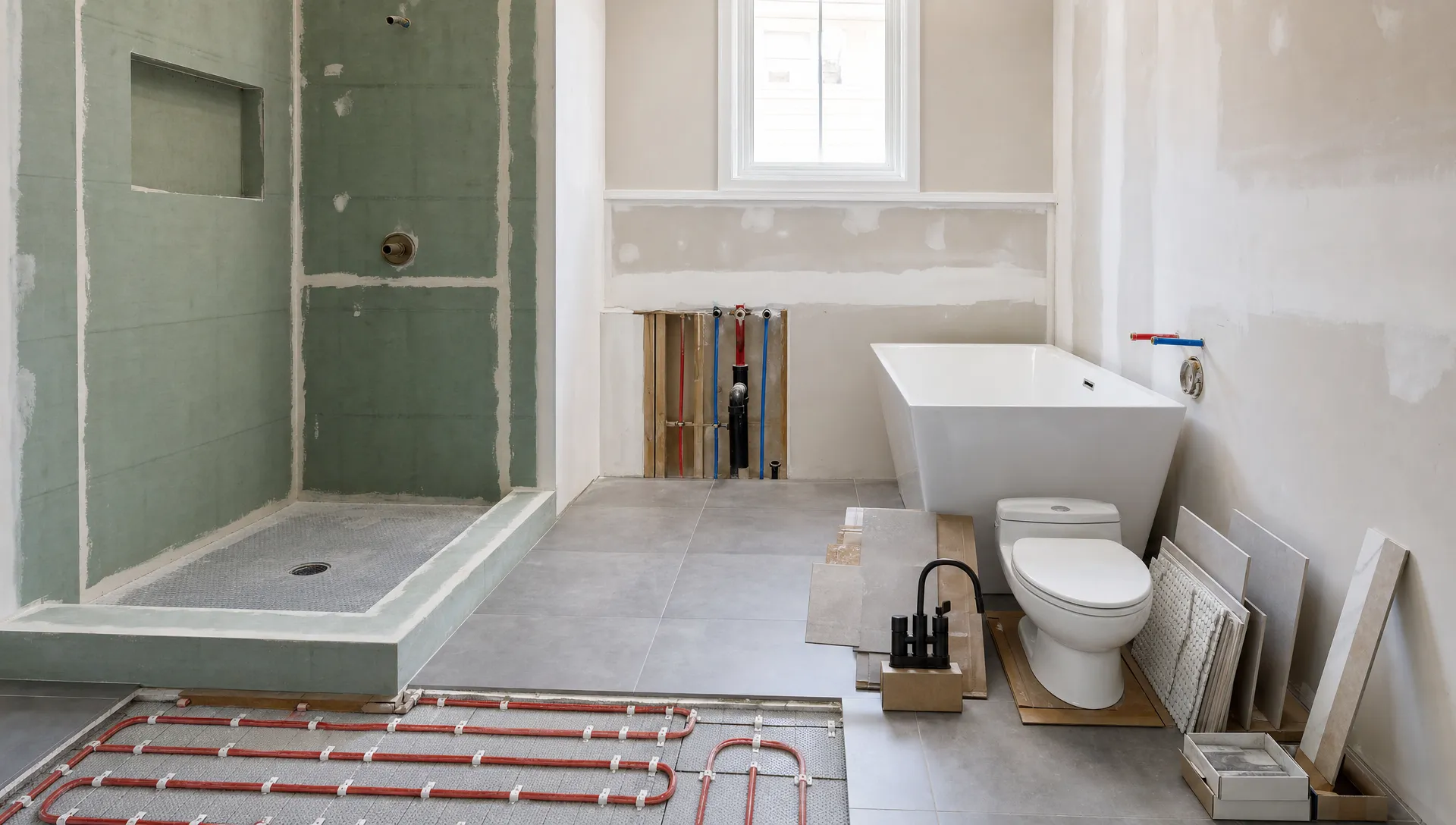
MEP work, meaning mechanical, electrical, and plumbing, is the backbone of a successful bathroom renovation. The most attractive bathroom can fail quickly if waterproofing is poor, drainage slopes are wrong, or electrical work is not suitable for wet areas.
Waterproofing should be treated as a critical stage, not a quick task hidden under tiles. Wet areas such as showers, floors, corners, and wall junctions need proper preparation and application. Once tiles are installed, fixing waterproofing mistakes becomes expensive and disruptive.
Plumbing planning should include pipe routes, mixer heights, drain positions, concealed cistern access, water pressure, and maintenance access. Electrical planning should consider safe placement of switches, sockets, lighting, extractor fans, mirror lighting, and any smart features.
If you are unsure what a professional renovation process should include, this overview of what to expect from bathroom renovation services gives a helpful look at consultation, site survey, design, material selection, execution, and handover.
Sequence the Work Before Demolition Begins
A bathroom renovation is not just a collection of tasks. It is a sequence. When the order is wrong, work may need to be repeated. For example, tiling before confirming shower niches or electrical points can create avoidable rework.
A typical bathroom renovation sequence looks like this:
| Stage | What happens | Common delay risk |
|---|---|---|
| Planning and survey | Scope, measurements, layout, and site checks are confirmed. | Incomplete measurements or unclear brief. |
| Design and selections | Tiles, fixtures, vanity, lighting, and finishes are chosen. | Late product decisions or unavailable stock. |
| Approvals and scheduling | Building rules, access, and work timings are organized. | Delayed approvals or access restrictions. |
| Demolition | Old fixtures, tiles, and damaged materials are removed. | Hidden leaks or weak substrate. |
| Plumbing and electrical rough-in | Pipes, drains, wiring, and ventilation points are prepared. | Layout changes after rough-in. |
| Waterproofing | Wet areas are sealed and checked. | Rushing curing or testing time. |
| Tiling and ceiling work | Floors, walls, trims, ceiling, and paint areas are completed. | Tile shortages or uneven surfaces. |
| Fixture installation | Sanitaryware, vanity, glass, mirrors, and accessories are fitted. | Incorrect dimensions or missing parts. |
| Testing and snagging | Drainage, water flow, lighting, doors, and finishes are checked. | Minor defects not recorded early. |
The sequence should be shared with everyone involved so decisions happen at the right time. A good renovation plan also includes lead times for imported tiles, custom joinery, shower glass, and specialty fixtures.
Finalize Key Decisions Before Work Starts
Changing your mind is normal during design, but changes become more expensive once demolition starts. The best time to adjust is before materials are ordered and before pipes, drains, or electrical points are fixed.
Decisions to finalize early include tile layout, grout color, vanity dimensions, basin type, tapware finish, shower mixer position, niche size, mirror lighting, towel rail location, floor drain style, and accessory placement.
This does not mean every small detail must be rigid. It means technical decisions should be locked before construction reaches the stage where they are difficult to alter. For example, a wall-mounted mixer must be planned before tiling, and a recessed medicine cabinet must be coordinated before wall closing.
A practical way to avoid uncertainty is to create a bathroom schedule. This document lists each product, model, finish, quantity, and installation location. Even a simple spreadsheet can reduce confusion between the homeowner, designer, supplier, and contractor.
Choose the Right Renovation Team
Bathroom renovation planning is easier when the contractor understands both design and technical execution. The right team will ask about your goals, inspect the site, explain constraints, coordinate trades, communicate clearly, and help you avoid choices that look good but cause problems later.
When comparing contractors, look beyond the lowest quote. A very low price may exclude waterproofing details, proper preparation, debris removal, project management, or finishing quality. Ask what is included, what is excluded, how changes are handled, and who supervises the site.
Useful questions include:
- Have you completed similar bathroom renovations in Dubai?
- Can you explain the waterproofing and drainage approach?
- How do you manage plumbing, electrical, tiling, and joinery coordination?
- What information do you need from building management?
- How will progress updates be shared?
- What is the expected timeline and what could affect it?
If you are still evaluating options, this guide on choosing the right bathroom renovations contractor covers practical checks such as experience, scope clarity, approvals, communication, and workmanship.
Prepare for Disruption at Home
Even a well-managed bathroom renovation creates some disruption. There will be noise, dust, workers moving through the property, temporary water shut-offs, and periods when the bathroom cannot be used.
Plan ahead, especially if you have only one bathroom at home. Confirm whether you need temporary arrangements, how long water shut-offs may last, where materials will be stored, and how debris will be removed. In apartments, coordinate lift access and building security requirements early.
Protect nearby rooms with dust control measures and clear pathways before work begins. Remove toiletries, towels, medicine, cleaning supplies, artwork, and personal items from the bathroom and adjacent cabinets. If you have children, pets, or elderly family members at home, discuss site safety and access limits with your contractor.
A smoother project is not only about construction. It is also about keeping daily life manageable while the work is underway.
Do Not Skip the Handover Checklist
The final stage is exciting, but do not rush it. Before accepting the finished bathroom, test everything carefully. Small issues are easier to correct when the team is still on site.
Check water flow from all taps and showers. Watch how quickly water drains. Look for pooling on the shower floor. Open and close vanity drawers, cabinet doors, shower screens, and access panels. Inspect grout lines, silicone joints, tile edges, mirror alignment, lighting, extractor fan function, and paint touch-ups.
A basic handover checklist should include:
- Hot and cold water working correctly
- No leaks under the basin, toilet, shower, or mixers
- Shower drainage working without pooling
- Toilet flushing and refilling properly
- Vanity doors and drawers aligned
- Mirror, lights, switches, and sockets functioning
- Exhaust fan operating properly
- Grout, silicone, and tile edges finished neatly
- Accessories fixed securely
- Site cleaned and debris removed
Ask for care guidance for tiles, tapware, glass, joinery, and grout. The right cleaning products and habits can keep your renovated bathroom looking new for longer.
Frequently Asked Questions
How long does bathroom renovation planning usually take? Planning can take anywhere from a few days to several weeks depending on the project size, material availability, approvals, and how quickly design decisions are finalized. It is better to spend more time planning than to make rushed choices during construction.
Should I keep the same bathroom layout? If the existing layout works, keeping major plumbing points in place can save time and reduce cost. If the layout causes daily frustration, poor drainage, or wasted space, redesigning it may be worth the investment.
What is the most important part of a bathroom renovation? Waterproofing, drainage, and plumbing quality are the most important technical elements. Tiles and fixtures create the look, but the hidden work determines durability and long-term performance.
When should I order bathroom materials? Order key materials before demolition whenever possible, especially tiles, sanitaryware, custom vanities, shower glass, and specialty fixtures. Delayed materials are one of the most common reasons bathroom projects slow down.
Do bathroom renovations in Dubai need approvals? It depends on the property type, scope of work, and building or community rules. Apartments and managed communities often have requirements for work permits, access, timing, and contractor documentation. Always check before starting.
Plan Your Bathroom Renovation With Confidence
A smooth bathroom renovation starts with clear goals, accurate site checks, realistic budgeting, suitable materials, and a well-sequenced plan. When these pieces are in place, the project becomes easier to manage and the final result is more likely to match your expectations.
Revo Craft Renovations helps homeowners and businesses in Dubai plan and deliver tailored renovation projects with a focus on modern design, premium finishes, expert craftsmanship, and transparent communication. If you are preparing for a bathroom upgrade, the right planning conversation can help you turn ideas into a practical, beautiful space that works for everyday life.
To discuss your renovation goals, visit Revo Craft Renovations and start planning your bathroom transformation with a team that understands Dubai homes and modern living spaces.