
Quality remodeling is easy to misunderstand. Many homeowners picture marble countertops, hidden LED lines, and a dramatic before-and-after reveal. Those things can be part of a beautiful renovation, but they are not the full definition of quality.
Real home quality remodeling is what you see, what you feel, and what continues to work after the project team leaves. It is the cabinet door that still closes smoothly after months of daily use, the bathroom waterproofing that does not fail, the lighting that flatters the room at night, and the layout that makes mornings easier.
In Dubai, that standard matters. Homes deal with intense sun, humidity, heavy air conditioning use, apartment building rules, villa community guidelines, and families with fast-moving routines. A quality remodel must look elegant, but it also has to be practical, durable, and carefully managed.
Quality begins before demolition
The first sign of a quality remodel is not the sound of demolition. It is the quality of the questions asked before any wall, tile, cabinet, or ceiling is touched.
A professional remodeling process begins with a site assessment, measurements, photos, notes on existing services, and a clear understanding of how the home is used. The team should look at current pain points, storage problems, lighting gaps, plumbing or electrical limitations, wall conditions, access restrictions, and building requirements.
If you are still choosing a renovation partner, it helps to understand how serious contractors structure surveys, quotations, and timelines. This guide to comparing home remodeling companies in Dubai explains the checks that separate a polished sales pitch from a reliable remodeling process.
A quality scope should define:
- Which rooms are included and what work is excluded
- The materials, finishes, fixtures, and joinery details being proposed
- Any electrical, plumbing, wall finishing, or ceiling work required
- The expected timeline, project sequence, and access needs
- How variations, approvals, and final snagging will be handled
This is where quality becomes measurable. Without a clear scope, homeowners often compare quotes that are not truly comparable. One contractor may include wall preparation, waterproofing, electrical upgrades, and site protection, while another may only include surface-level finishing. The cheaper quote can become more expensive later if essential work was left vague.
Quality remodeling makes the home easier to live in
A beautiful remodel that does not improve daily life is only half successful. The best renovations solve friction. They make the kitchen easier to cook in, the bathroom easier to clean, the living room more comfortable at night, and the bedroom more restful.
In a Dubai apartment, function may mean better storage, lighter finishes, smart use of narrow corridors, and cleaner transitions between open-plan living areas. In a villa, it may mean better flow between kitchen and dining spaces, improved family zones, outdoor-facing views, or upgraded utility areas that support daily routines.
For homeowners focused on long-term value, kitchens and bathrooms usually deserve special attention because they combine visible design with plumbing, waterproofing, storage, lighting, and daily use. If you are deciding where to invest first, this article on why kitchen and bathroom remodeling delivers more value offers a useful starting point.
Quality layouts also respect what should not change. Moving every drain, wall, or electrical point can add cost and risk if there is no clear benefit. Sometimes the smartest remodel keeps the existing layout and improves the surfaces, lighting, carpentry, hardware, and storage around it. Other times, a bigger layout change is worth it because it fixes a daily problem that no cosmetic upgrade can solve.
Hidden workmanship is where quality is proven
A poor remodel can look acceptable on day one and start failing in year one. The difference is often hidden behind tiles, paint, panels, ceilings, and cabinets.
Electrical and plumbing upgrades should be planned before finishing begins. Waterproofing should be treated as a system, not an afterthought. Wall finishing should include proper preparation, not just a fresh coat of paint. Joinery should be installed with accurate measurements, durable materials, and suitable backing. AC placement, ventilation, and humidity management should be considered because Dubai homes rely heavily on climate control.
If a renovation uncovers water damage, mold, or materials that may require specialist handling, quality remodeling means pausing the aesthetic work and bringing in qualified experts. The principle applies internationally, from Dubai properties with moisture-damaged walls to New England homes served by environmental remediation specialists who handle mold, water damage, asbestos, and related site risks before finishing work continues.
| Remodeling layer | What quality looks like | What poor remodeling often hides |
|---|---|---|
| Wall preparation | Smooth, stable, properly filled and primed surfaces | Paint over cracks, uneven skim coat, weak adhesion |
| Waterproofing | Correct treatment before tiling in wet zones | Leaks, damp smells, swollen cabinets, stained ceilings |
| Electrical work | Planned circuits, safe socket placement, neat access | Overloaded points, messy routing, future repair difficulty |
| Plumbing | Practical pipe routes, tested connections, good drainage | Low pressure, leaks, poor slopes, hidden access problems |
| Joinery | Accurate measurements, aligned doors, durable hardware | Warping, gaps, sticking drawers, weak mounting |
Finish quality should be consistent from close range
Premium remodeling is not only about expensive materials. It is about consistency. A less expensive material installed beautifully often looks better and lasts longer than a luxury material installed carelessly.
Look closely at the details. Tile lines should be straight. Grout should be even. Paint should look smooth in natural and artificial light. Cabinet gaps should be consistent. Doors should close cleanly. Hardware should feel solid. Lighting should not create harsh shadows, especially around mirrors, countertops, and feature walls.
Do not judge quality only from wide-angle portfolio photos. Walk through a completed space slowly. Open drawers. Touch surfaces. Look at corners, ceiling edges, skirting, switch plates, access panels, silicone lines, and transitions between materials. True quality holds up under close inspection.
If the goal is a premium look without unnecessary overspending, the smartest results often come from prioritizing high-impact finishes rather than upgrading everything at once. Ideas such as better lighting, refined hardware, cabinet refacing, and improved wall finishes are explored in this guide to budget home renovation ideas that look premium.
The process should feel organized, not chaotic
Quality remodeling is also an experience. A renovation can involve noise, dust, deliveries, access coordination, and daily decisions. Good project management reduces stress by making each stage predictable.
A well-run remodel includes clear communication about schedules, site access, noisy work, material delivery dates, inspection points, and handover expectations. If hidden issues appear, the contractor should explain the condition, show evidence, present options, and clarify any effect on cost or timing before continuing.
On-time completion depends on realistic sequencing. Demolition, electrical and plumbing work, waterproofing, curing time, ceiling work, wall preparation, tiling, carpentry, painting, installation, cleaning, and snagging all need the right order. Rushing the invisible stages can damage the visible result.
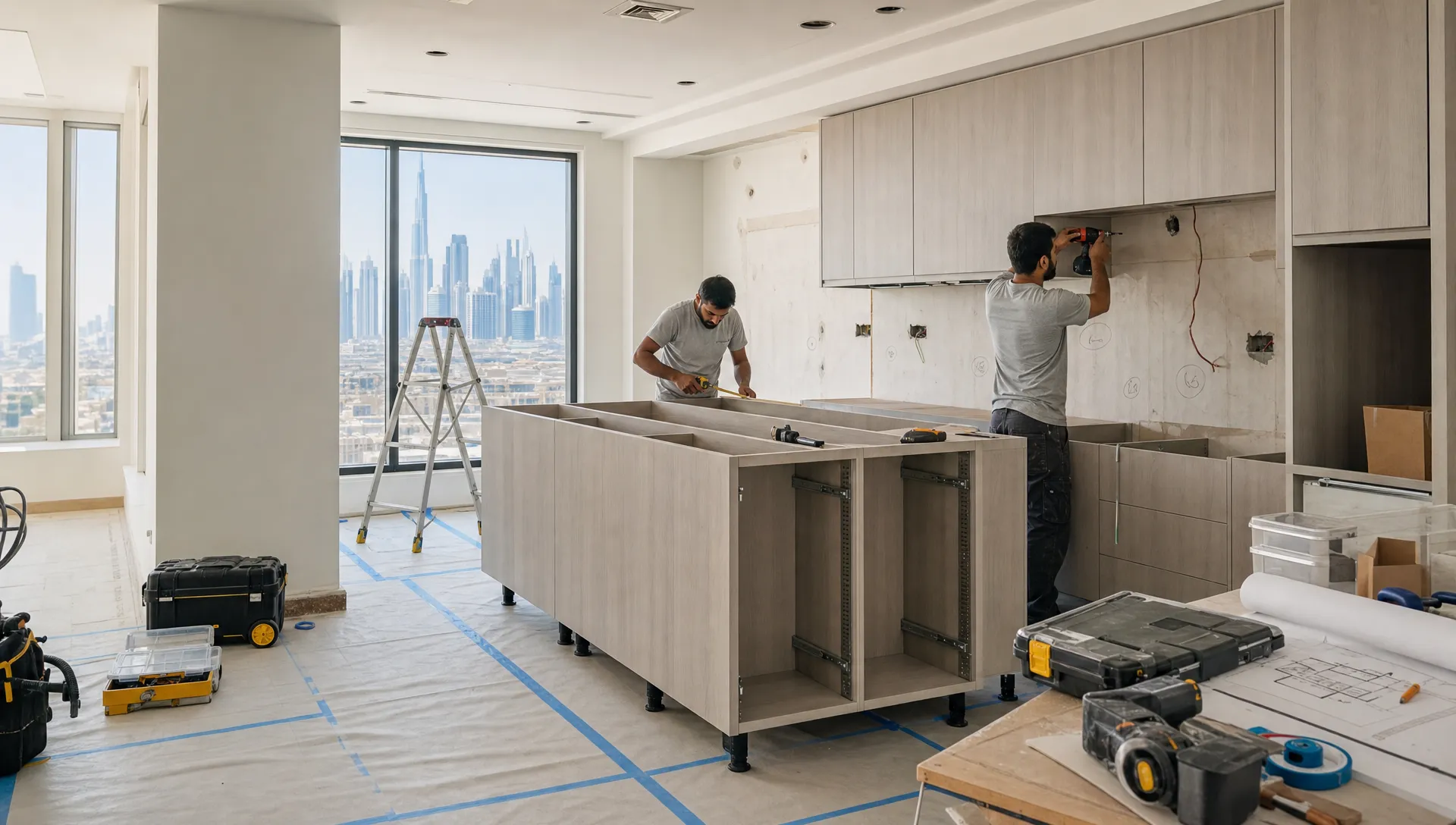
This is especially important in occupied homes. Quality contractors protect floors, furniture, lifts, corridors, neighboring units, and common areas where required. They also keep the site organized because a messy site increases the chance of damage, delays, and safety issues.
Room-by-room examples of real quality
Kitchen
A quality kitchen remodel balances beauty with workflow. The cooking zone, sink, storage, preparation areas, ventilation, and lighting should work together. Cabinet carcasses should be aligned, drawers should move smoothly, counters should be properly supported, and sockets should be placed where appliances are actually used.
A high-end-looking kitchen that lacks storage, overheats, has poor task lighting, or uses impractical surfaces will quickly become frustrating. Quality is the combination of design and everyday usability.
Bathroom
A quality bathroom depends on what lies beneath the tiles. Waterproofing, drainage slopes, ventilation, access to plumbing, and fixture placement are critical. Surface details still matter, including clean grout lines, well-fitted mirrors, balanced lighting, and practical storage, but the hidden work protects the investment.
Living and dining areas
In living spaces, quality is about proportion, comfort, and finish control. Feature walls, TV units, ceiling details, wall finishes, and lighting should feel integrated rather than added randomly. Custom carpentry should account for AC diffusers, curtain tracks, doors, sockets, and cable management.
Bedrooms and wardrobes
Quality bedrooms feel calm and functional. Wardrobes should have the right depth, smooth hardware, ventilation where needed, and internal storage suited to the homeowner. Lighting should support both relaxation and practical use. For family homes, washable finishes, safe socket placement, and durable materials make a major difference.
Red flags that a remodel may not be high quality
Some warning signs are visible before work begins. A contractor does not need to be the most expensive option to be good, but the process should feel professional, specific, and transparent.
Watch for these red flags:
- A quotation that lists generic items without material specifications or clear inclusions
- No detailed site visit before pricing important work
- Reluctance to discuss waterproofing, electrical capacity, plumbing, or wall preparation
- A timeline that sounds fast but does not explain sequencing or curing time
- Portfolio photos with no close-up details or no projects similar to your property type
- Pressure to decide immediately without giving you time to review the scope
- No clear process for changes, snagging, or final handover
The issue is not only whether the project looks good in the first week after handover. The real test is whether it performs well through daily use, cleaning, humidity, AC cycles, and family life.
How to judge quality during the final handover
The final handover should be a proper inspection, not a quick polite walkthrough. Test doors, drawers, switches, sockets, lights, taps, drainage, cabinet alignment, paint finish, tile edges, silicone lines, and appliance clearances. Look at the home in daylight and at night because lighting changes how finishes appear.
Create a snag list and agree on how each item will be corrected. A quality contractor expects this stage and treats it as part of the work, not as an inconvenience. The handover should leave you with a home that feels finished, clean, safe, and ready to use.
Frequently Asked Questions
What does home quality remodeling mean? Home quality remodeling means improving a home through thoughtful planning, durable hidden workmanship, consistent finishing, functional design, and organized project management. It is not just about making a space look new.
How can I tell if a remodel is high quality? Look for a detailed scope, careful site preparation, proper waterproofing and MEP planning, clean finishing, aligned joinery, transparent communication, and a structured snagging process before final handover.
Is quality remodeling always expensive? Not always. Quality depends on smart priorities as much as budget. Keeping a practical layout, choosing durable mid-range materials, upgrading lighting, and improving wall finishes can create a premium result without unnecessary spending.
Which areas of the home need the most attention? Kitchens, bathrooms, and built-in storage often need the most attention because they combine design, daily use, plumbing or electrical work, and long-term durability. Living areas and bedrooms also benefit from better lighting, finishes, and layout planning.
Why is hidden work so important in Dubai renovations? Dubai homes experience heat, humidity, and heavy air conditioning use. Poor waterproofing, weak wall preparation, low-quality joinery, or careless electrical and plumbing work can lead to visible damage later, even if the remodel looks good at first.
Bring quality into your next remodel
If you are planning a renovation in Dubai, do not settle for a project that only looks good in photos. Look for a remodel that improves comfort, flow, durability, and daily life.
Revo Craft Renovations provides bespoke home renovation, kitchen remodeling, interior styling, wall finishing, electrical and plumbing upgrades, custom carpentry, and project management for modern homes and businesses in Dubai. Start with a personalized design consultation and build your renovation around quality from the first site visit to the final handover.