
Your workplace is one of the most visible expressions of your company. The right office renovation design should communicate who you are before a client reaches the meeting room, while also giving your team a space that supports sharper focus, smoother collaboration and day-to-day comfort.
For Dubai businesses, this matters even more. Offices are often used as client-facing showrooms, recruitment tools, collaboration hubs and operational bases at the same time. A generic fit-out can make a premium brand feel ordinary, while a thoughtful renovation turns brand identity into something people can see, touch and experience.
What Brand-Led Office Renovation Design Really Means
Brand-led renovation is not about placing a logo behind reception and matching the sofa to your corporate color palette. It is about translating your company’s values, tone and working style into practical design decisions.
A finance consultancy may need a calm, structured environment with private meeting rooms, acoustic control and refined finishes. A creative agency may need a more flexible space with project zones, informal collaboration areas and surfaces that invite ideas. A wellness brand may lean toward softer textures, natural light, warmer materials and a reception experience that feels restorative.
In each case, office renovation design becomes a bridge between business strategy and daily experience. It makes your workplace feel intentional rather than assembled from unrelated furniture, finishes and lighting choices.
Start With the Brand, Not the Floor Plan
Many office projects begin with a question about capacity: how many desks, rooms and storage units fit into the space? That matters, but it should not be the first question.
Start by clarifying how your business should feel to clients, visitors and employees. Is the brand precise, energetic, discreet, luxurious, approachable or innovative? These words should shape decisions about layout, lighting, joinery, materials, furniture, signage and the way people move through the office.
This early brand work prevents a common renovation problem: a space that functions adequately but says very little about the company using it.
Design the Visitor Journey With Intention
A client’s impression forms quickly. The entrance, reception desk, waiting area, corridor lighting and meeting room doors all communicate something before the first conversation begins.
A strong visitor journey usually has three qualities: it is easy to understand, it feels aligned with your brand and it avoids awkward transitions. Guests should know where to go, where to wait and how the space reflects your level of professionalism.
For businesses that depend on trust, such as consulting, real estate, legal, finance, architecture or luxury services, a coherent visitor experience can strengthen confidence before the meeting starts.
Office Renovation Design Elements That Carry Your Brand
The most effective brand expression comes from a combination of choices rather than one dramatic feature. If every element is shouting for attention, the result feels busy. If every element is plain, the workplace can feel forgettable.
Good office renovation design balances recognition with restraint. It uses key design signals in the areas where they matter most, then supports them with consistent finishes and details across the rest of the office.
Reception and First Impressions
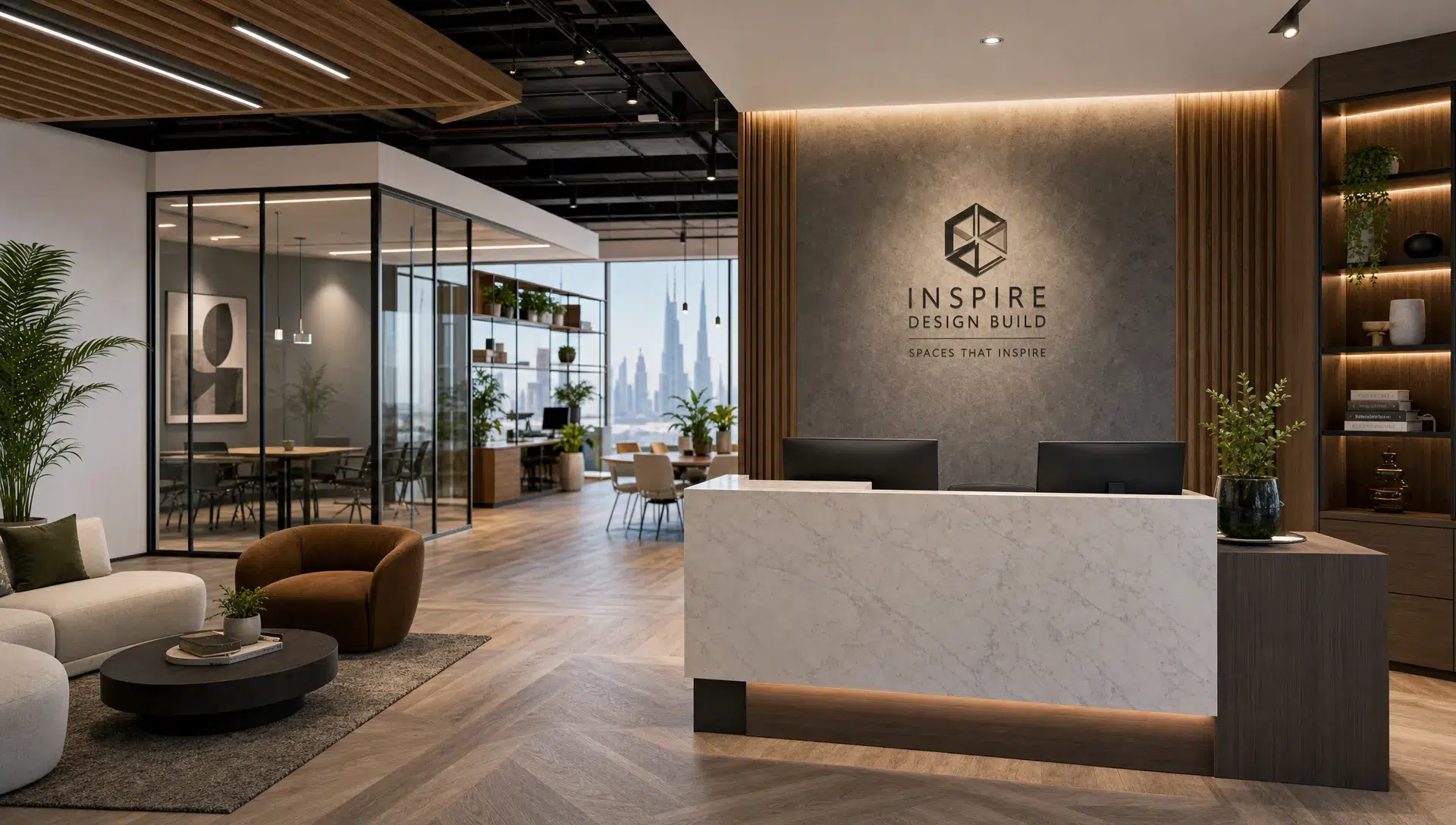
Reception is often the strongest brand moment in an office. It can include a custom desk, feature wall, integrated lighting, signage, artwork, textured finishes or a curated seating area.
The goal is not to make the reception oversized or theatrical. The goal is to make it feel like the natural entry point to your company. For a premium brand, this may mean stone-look finishes, concealed lighting and custom joinery. For a technology company, it may mean clean lines, digital displays, modular seating and a crisp material palette.
Materials, Colors and Finishes
Materials influence how people read a brand. Dark wood can feel established and formal. Light oak can feel warm and modern. Glass can suggest openness, while fluted panels, textured paint or microcement can add depth without visual clutter.
Color works best when used with discipline. Instead of applying brand colors everywhere, use them as accents in upholstery, meeting room details, wall graphics or wayfinding. This keeps the workplace professional and prevents the brand palette from becoming overwhelming.
| Brand quality | Design signals that can support it | Where it may appear |
|---|---|---|
| Premium | Refined joinery, layered lighting, stone textures, quiet detailing | Reception, boardroom, executive offices |
| Creative | Flexible furniture, writable surfaces, bold accents, display walls | Collaboration zones, studios, breakout areas |
| Trustworthy | Clear circulation, acoustic privacy, balanced lighting, durable finishes | Meeting rooms, consultation rooms, waiting areas |
| Innovative | Clean lines, integrated technology, modular layouts, sleek materials | Workstations, presentation rooms, client demos |
| Welcoming | Warm tones, comfortable seating, soft textures, natural elements | Reception, pantry, lounges, team areas |
Lighting as a Brand Tool
Lighting affects both mood and performance. A workplace with harsh, uneven light can make even expensive materials feel flat. A layered lighting plan can make the same office feel polished, calm and more comfortable.
Use general lighting for visibility, task lighting for work areas and accent lighting to highlight brand moments such as a reception wall, product display or feature joinery. In meeting rooms, controllable lighting helps support presentations, video calls and face-to-face discussions.
Build Workflow Into the Brand Experience
A beautiful office that slows people down will not support your business for long. The most effective office renovation design reflects your identity and improves how work happens every day.
This means planning zones around real work patterns. Teams that need focus should not sit beside noisy collaboration areas. Client meeting rooms should be easy to access without pulling guests through private work zones. Storage should be close to the people who use it, not hidden in leftover corners.
If workflow is a major priority, Revo Craft Renovations has also covered how office renovation services that support better workflow can improve circulation, lighting, acoustics and support spaces. Brand expression becomes more convincing when the office also works smoothly.
Balance Open Areas and Privacy
Open-plan offices can support communication, but they can also create noise and distraction if they are not planned carefully. A brand that wants to feel collaborative still needs quiet rooms, phone booths, focus areas or enclosed meeting spaces.
Privacy also affects client perception. If confidential discussions are audible from reception or employees have to improvise private calls in corridors, the office can feel less professional. Acoustic panels, partitions, solid doors, soft furnishings and better space planning can protect both productivity and brand credibility.
Make Support Spaces Feel Considered
Pantries, copy points, storage rooms and staff lounges are often treated as secondary areas. Yet employees interact with these spaces every day. When they are poorly planned, clutter spreads into visible work areas and the whole office feels less organized.
A branded workplace should carry a consistent standard into these support zones. This does not mean every pantry needs luxury finishes, but it should feel clean, durable and aligned with the rest of the interior.
Protect the Brand Assets Behind the Experience
Some workplaces now function as content studios, product showcases, podcast rooms, retail experience centers or influencer meeting spaces. If your office uses campaign videos, music, branded media or social content as part of the environment, the physical renovation should be planned alongside the ownership and licensing of those assets.
For example, a media company, entertainment brand or rights holder may design a space where visitors experience its catalogue through screens, sound or live content creation. In that context, brand protection extends beyond interiors. Platforms like Third Chair help rights holders monitor IP use and unlock licensing revenue, which can support businesses whose workplace experience is closely tied to creative assets.
This kind of thinking is useful because modern offices are no longer just places where work happens. They often become stages for partnerships, sales conversations, social media content and community events.
Plan Renovation Around Dubai Business Realities
Dubai offices often sit within towers, business parks, free zones, retail-linked commercial spaces or mixed-use buildings. Each setting can come with its own rules for access, working hours, noise, waste removal, MEP changes and landlord approvals.
A successful office renovation design should account for these constraints early. The design may look excellent on paper, but if delivery routes, authority requirements, building management procedures or service upgrades are overlooked, the project can face delays.
For businesses that cannot shut down fully, phasing is also essential. Renovation work can be sequenced by department, floor, room type or trading hours. If continuity is your main concern, this guide on how to remodel office space with minimal downtime explains practical ways to keep operations moving during the project.
Coordinate Design, MEP and Joinery Early
Brand features often depend on technical coordination. A backlit logo wall needs electrical planning. A boardroom with video conferencing needs data, power, lighting control and acoustic treatment. Custom joinery may need ventilation gaps, access panels or integrated storage.
When design, electrical, plumbing, HVAC, carpentry and finishing decisions are coordinated from the start, the final space feels cleaner and performs better. This is where experienced project management makes a visible difference.
Common Mistakes That Weaken Brand Impact
Even well-funded office renovations can miss the mark when branding is treated as surface decoration. A few decisions can make the finished workplace feel less coherent than intended.
The most common issues include using too many design themes, copying another company’s office, choosing finishes that photograph well but wear badly, ignoring acoustics, placing branding only at reception or failing to connect the design to employee needs.
Another mistake is making the office too trend-led. Trends can be useful, but your workplace should still make sense for your company in several years. A restrained material palette, flexible layouts and durable custom details usually age better than novelty features.
Before starting, it helps to understand what commercial renovation services should include, from consultation and site assessment to approvals, MEP upgrades, finishes and scheduling.
A Practical Brand-to-Space Checklist
Before approving a concept, review the design through both brand and operational lenses. A strong office should look aligned, feel comfortable and support the way your business actually works.
Use this checklist during early planning:
- Define three to five brand qualities the office must express.
- Identify the most important visitor touchpoints, including reception, meeting rooms and corridors.
- Decide which areas need privacy, quiet work, collaboration or presentation capability.
- Choose materials that match the brand and can handle daily commercial use.
- Plan lighting, signage, storage, MEP and joinery before finalizing finishes.
- Confirm building rules, approvals and phasing requirements before work begins.
This keeps the project grounded. Instead of debating isolated choices, such as paint colors or furniture styles, you can judge every decision against the same brand and performance criteria.
Frequently Asked Questions
How can office renovation design reflect a company’s brand? It can reflect a brand through layout, reception design, materials, lighting, signage, furniture, acoustics and the overall visitor journey. The strongest results come when these choices are based on clear brand values rather than decoration alone.
Should brand colors be used throughout the entire office? Usually, no. Brand colors are most effective as controlled accents in key areas such as reception, meeting rooms, wall graphics or upholstery. Overusing them can make the office feel less refined.
What should Dubai businesses consider before renovating an office? They should consider building management rules, landlord approvals, working-hour restrictions, MEP requirements, material durability, team workflow and how the project will affect daily operations.
Can an office renovation improve employee productivity? Yes, if the renovation improves circulation, lighting, acoustics, storage, privacy and access to collaboration spaces. A branded office should still support practical work needs.
Bring Your Brand Into the Workplace
Your office should do more than house desks and meeting rooms. It should help clients understand your company, help employees do better work and make daily operations feel more organized.
Revo Craft Renovations creates tailored renovation and interior transformation solutions for Dubai businesses, combining modern design, premium finishes, custom carpentry, MEP coordination and project management. If you are ready to turn your workplace into a clearer expression of your brand, start with a personalized design consultation through Revo Craft Renovations.