
Renovation management is the difference between a project that feels controlled and one that slowly becomes expensive, delayed and stressful. In Dubai, where apartment towers, villa communities and commercial spaces often come with building rules, access limits and approval steps, strong coordination matters as much as good design. A beautiful kitchen or interior upgrade still depends on accurate scope, timely materials, clear trade sequencing and fast decisions. Without one person or team managing those moving parts, even simple changes can create avoidable cost overruns. With the right process, your budget becomes a working plan rather than a hopeful estimate, and your timeline becomes something the team actively protects every day.
What renovation management actually controls
A renovation is not one job. It is a chain of decisions and tasks that affect each other: design, measurements, approvals, demolition, carpentry, MEP work, finishes, installation, inspection and handover. If one step is vague, the next step can become harder to price or schedule.
This is why renovation control starts before work begins. A manager or lead contractor should confirm the project goal, inspect site conditions, define the work package and identify what must be decided before procurement starts. For homeowners, that means fewer assumptions. For contractors, it means fewer pauses on site because a material, drawing or instruction is missing.
Good renovation management also keeps communication structured. Instead of separate conversations with a carpenter, electrician, plumber and supplier, updates are gathered into one project view so choices can be made with full context.
How renovation management protects your budget
Most renovation budgets fail for predictable reasons. The initial quote may not include enough detail, site conditions may be missed, finishes may change during the work or trades may lose time waiting for decisions. A managed renovation does not eliminate every unknown, but it reduces how often unknowns become expensive surprises.
It turns a rough idea into a priced scope
A reliable budget starts with scope clarity. “Renovate the kitchen” is not enough. The scope should separate demolition, plumbing changes, electrical points, cabinetry, counters, lighting, painting, appliances and final finishing. Each line gives the client and contractor a shared reference for what is included.
If you are still defining the project, Revo Craft’s guide on how to scope a home renovation project is a useful starting point because scope is where many budget issues begin. Once the work is broken down properly, pricing becomes more transparent and comparisons between options become more meaningful.
It controls changes before they control the project
Changes are normal in renovations. You may open a wall and find old wiring, decide to upgrade the lighting plan or choose a different wall finish after seeing samples. The risk is not the change itself. The risk is approving changes informally without understanding cost, time and knock-on effects.
This is where renovation management protects the number you agreed at the start. Every change should be documented with a reason, price impact, timeline impact and approval before the team proceeds. That simple discipline helps stop small requests from turning into a large final invoice that no one expected.
| Budget risk | How it affects cost | Management response |
|---|---|---|
| Vague scope | Items are added later as “extras” | Create a detailed scope before quoting |
| Late material selection | Urgent buying limits options and raises costs | Confirm finishes before procurement deadlines |
| Hidden site condition | Plumbing, wiring or substrate issues require extra work | Inspect early and keep contingency realistic |
| Informal design changes | Small decisions accumulate without tracking | Use written change approvals |
| Poor trade sequencing | Workers wait or redo completed work | Plan the order of tasks before site work starts |
It makes procurement part of the schedule
Materials are a major source of budget pressure. If tiles, sanitaryware, switches, lighting or custom joinery are chosen too late, the project may face rush charges, substitutions or downtime. A renovation manager treats procurement as part of the project timeline, not as a separate shopping task.
For custom carpentry and joinery, this is especially important. Measurements need to be confirmed after relevant site work is complete, drawings need approval and fabrication time must be built into the plan. When those steps are scheduled early, the project is less likely to pay for avoidable delays.
How renovation management protects your timeline
A renovation timeline is more than a start date and handover date. It is a sequence of dependencies. Demolition must happen before hidden services are exposed. Electrical and plumbing work must be completed before walls are closed. Painting should not happen before dusty cutting work is finished. Joinery installation depends on site readiness and fabrication.
Renovation management keeps the timeline realistic by mapping these dependencies in advance. A good plan also includes decision dates, material order dates, inspection points and buffer time for site realities. This does not mean the project becomes slow. It means the team knows what must happen next and what could block progress.
It prevents trades from working against each other
One of the fastest ways to lose time is poor sequencing. If the painter starts before electrical changes are finished, walls may need patching again. If cabinets arrive before flooring or wall alignment is ready, installation can pause. If plumbing adjustments are left until late, finished surfaces may be disturbed.
Strong scheduling helps every trade understand when they are needed and what must be complete before they arrive. For larger renovations, this coordination is often what separates a smooth project from a site that feels busy but makes little real progress.
It turns updates into decisions
Regular updates only help if they lead to action. A useful project update should explain what was completed, what is next, what decisions are needed and whether budget or timeline has changed. This creates accountability for both the renovation team and the client.
If you want a deeper look at organizing tasks, sequencing trades and keeping homeowners aligned, the article on how a home remodeling planner keeps projects on track covers the planning side in more detail.
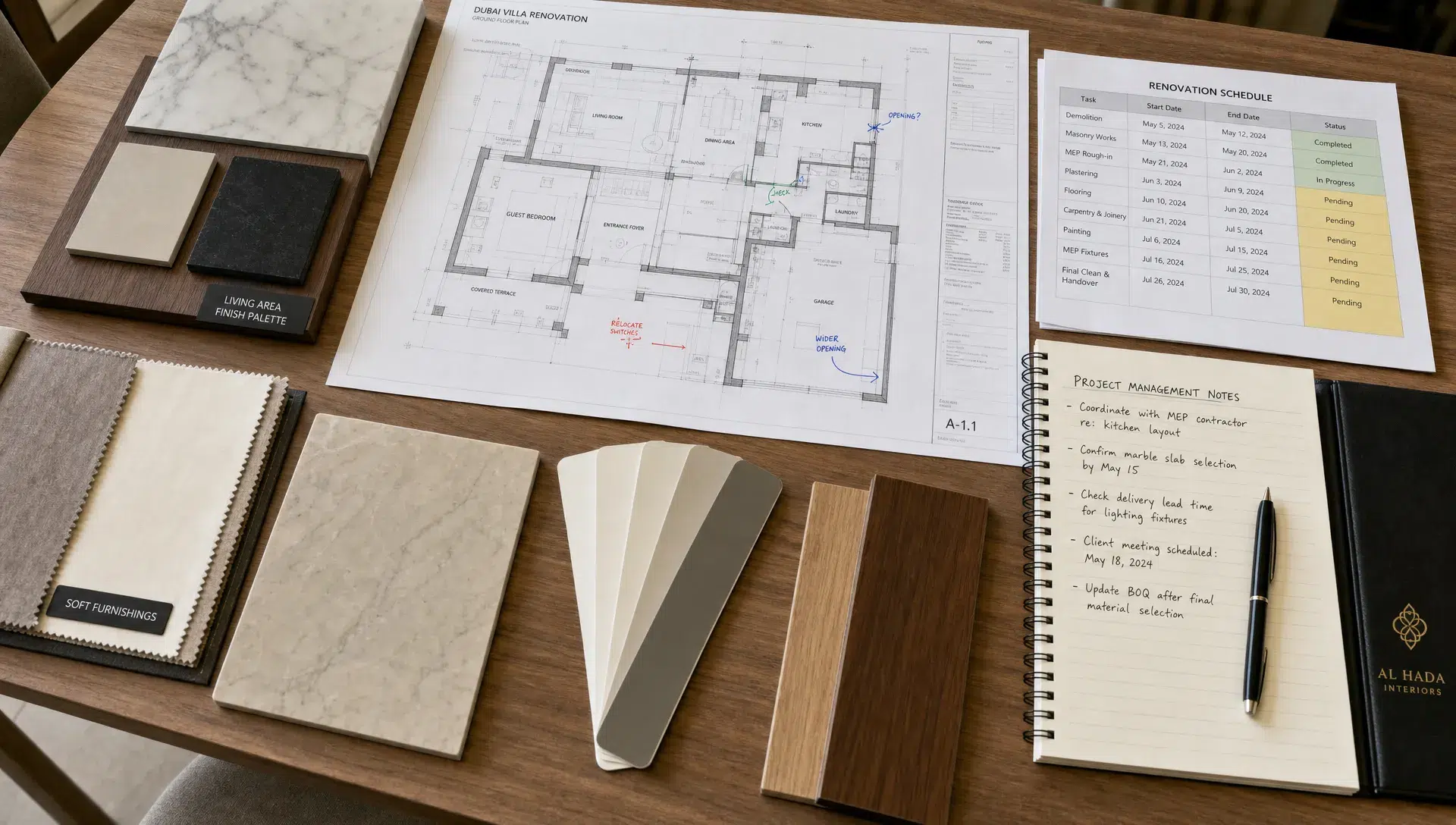
Why Dubai renovations need extra coordination
Dubai projects often involve more than design and construction skill. Depending on the property, there may be building management procedures, community rules, service lift bookings, work-hour limits, contractor access requirements and authority approvals. These steps can affect both the schedule and the order in which work can begin.
In Dubai, renovation management needs to account for those local realities from the start. A villa renovation may have different access, storage and noise considerations than an apartment upgrade in a high-rise tower. Commercial spaces can add another layer of coordination because business downtime has a direct cost.
Site documentation also matters. For some larger exterior or commercial projects, aerial inspection can help record roof areas, facade conditions or access constraints before planning work at height. When drones are used, the operator needs its own safety and compliance workflow, and drone operations management platforms can support flight planning, checklists, risk assessments and logging. The principle is the same for renovation: better records reduce guesswork and make decisions easier to defend.
Signs your project needs professional renovation management
Not every small refresh needs the same level of management. Repainting one room is different from remodeling a kitchen, upgrading bathrooms, changing electrical layouts or renovating an entire villa. The more trades, approvals and custom finishes involved, the more valuable structured oversight becomes.
Professional renovation management is especially useful when your project includes several of these conditions:
- Multiple trades working in the same space
- Kitchen or bathroom plumbing changes
- Electrical upgrades or lighting redesign
- Custom carpentry, joinery or wall finishing
- Imported or long-lead materials
- Work inside a managed building or gated community
- A fixed move-in date or business reopening date
- A budget that needs close tracking from start to finish
If you recognize several of these points, relying on casual coordination can become risky. A managed process gives the project a central plan, a clear reporting rhythm and a documented way to handle changes.
What a well-managed renovation plan should include
A proper renovation plan should be specific enough that everyone understands the work before demolition begins. It should not be so rigid that it ignores real site conditions, but it should be clear enough to guide pricing, scheduling and accountability.
At a minimum, a strong plan should include a written scope, finish selections, budget allowances, payment milestones, procurement dates, site access requirements, trade sequence, decision deadlines and a method for approving changes. These are practical tools, not paperwork for its own sake.
For homeowners and business owners in Dubai, the biggest benefit is confidence. You know what is included, when decisions are due and who is responsible for coordinating the next step. If you want to avoid the common traps that weaken a plan before work starts, Revo Craft’s guide to construction renovation planning mistakes is worth reviewing before you commit to a schedule.
How Revo Craft Renovations approaches controlled delivery
Revo Craft Renovations focuses on tailored renovation and interior transformation services for homes and businesses in Dubai. That means the process needs to balance design, craftsmanship, site coordination and client communication. A premium finish depends on more than selecting attractive materials. It depends on installing them at the right time, in the right conditions and to the agreed specification.
For a kitchen remodeling project, that may involve coordinating cabinetry, plumbing, electrical points, counters, lighting and final finishes. For a broader home renovation, it may involve interior styling, wall finishes, MEP upgrades, custom joinery and project management across several rooms. In both cases, the goal is the same: protect the client’s investment by keeping design intent, budget and timeline aligned.
Frequently Asked Questions
What does renovation management include? Renovation management includes scope planning, budgeting, scheduling, procurement coordination, trade sequencing, site supervision, communication and change control throughout the project.
Can good management guarantee there will be no delays? No renovation team can guarantee that hidden site issues, approval delays or supply problems will never happen. Good management reduces avoidable delays and helps the team respond quickly when issues appear.
How early should I involve a renovation manager or lead contractor? Involve them before finalizing the design and budget. Early input helps confirm what is practical, what approvals may be needed and which choices could affect cost or timing.
Is renovation oversight only for large projects? No. It is most valuable on complex projects, but even a smaller kitchen, bathroom or interior upgrade benefits from clear scope, decision tracking and organized scheduling.
Plan your renovation with fewer surprises
A renovation should improve your space, not drain your time with constant uncertainty. With the right renovation management, your project has clearer pricing, better sequencing and a practical system for handling decisions before they become delays.
If you are planning a home renovation, kitchen remodel, interior upgrade or commercial transformation in Dubai, Revo Craft Renovations can help you shape the work into a coordinated plan built around comfort, style, functionality and dependable delivery.