
Renovating a bathroom in Dubai is not only a design project. The right bathroom renovation requirements affect approvals, waterproofing, plumbing, electrical safety, ventilation, material choices, timeline and final handover. Whether you live in an apartment, townhouse or villa, knowing these requirements before work begins helps you avoid leaks, delays, rejected approvals and costly rework.
Dubai homes often combine high humidity, frequent air conditioning, compact wet areas and building management rules that vary from one community to another. A beautiful bathroom can still fail if the technical details are rushed. The goal is to plan a space that looks refined, functions daily and stands up to long-term moisture exposure.
Key bathroom renovation requirements in Dubai
Every project should start with a clear distinction between cosmetic upgrades and technical renovation. Replacing accessories, repainting walls or changing a mirror is very different from moving drainage lines, replacing tiles, shifting sanitary fixtures or upgrading electrical points.
For Dubai homeowners, the most important early requirement is to confirm who must approve the work. This may include the property owner, landlord, building management, owners association, developer, freehold community manager or relevant authority depending on the property type and scope.
Approvals and NOCs before demolition
In many apartments and managed communities, bathroom works cannot begin until you receive a no objection certificate, access approval or work permit from building management. This is especially common when work involves tile removal, waterproofing, plumbing changes, noisy demolition or service shutoffs.
Approval requirements usually become stricter when a renovation may affect shared systems. These include common drainage stacks, chilled water systems, fire-rated shafts, ceiling voids, ventilation ducts or structural slabs. Even if the bathroom is inside your private unit, some of its services may connect to common building infrastructure.
Before appointing a contractor, ask these questions:
- Is an NOC required for bathroom renovation work?
- Are there allowed working hours for demolition and drilling?
- Does the building require contractor registration or insurance documents?
- Are water shutoffs coordinated by facilities management?
- Are there rules for debris removal, service lifts and corridor protection?
If you are still shaping your scope, Revo Craft Renovations has a helpful guide on bathroom renovation planning tips for a smoother project that explains how early planning reduces site disruption.
Scope clarity is a requirement, not a luxury
One of the most overlooked bathroom renovation requirements is a written scope of work. Without it, homeowners and contractors may have different expectations about tile height, fixture quality, waterproofing coverage, lighting locations, drainage changes and cleanup.
A good scope should separate must-have work from optional upgrades. For example, replacing a vanity and mirror is relatively simple, but relocating a WC or shower drain can affect slab chasing, waterproofing, approvals and drainage performance. Similarly, switching from a bathtub to a walk-in shower may require changes to the floor slope, shower screen layout and water containment.
Your scope should also define what is excluded. If ceiling repainting, water heater relocation, access panels, custom joinery or mirror lighting are not included, you should know before the contract is signed.
Technical requirements that protect your bathroom
The technical side of a bathroom renovation decides whether the space performs well after the visual excitement fades. In Dubai, where bathrooms may be used multiple times a day and indoor humidity can build quickly, waterproofing, plumbing and ventilation deserve careful attention.
Waterproofing must be planned before finishes
Waterproofing is not the part to cut corners on. It sits beneath the visible finish, so defects often appear only after tiles are installed and the bathroom is in use. By then, repairs can mean removing finishes, disturbing neighbors below and repeating several stages of work.
A proper waterproofing plan considers wet zones, wall junctions, floor drains, pipe penetrations, shower curbs, corners and thresholds. The system should be compatible with the substrate, tile adhesive and screed build-up. In shower areas, waterproofing should be detailed carefully around mixers, niches and glass partitions, because these are common weak points.
Homeowners should ask whether a flood test or water ponding test will be done before tiling. Building management may also request proof that waterproofing was completed before allowing the project to move forward. Photos taken during the process are useful for records, especially if you later sell or rent the property.
Plumbing and drainage need more than fixture selection
Plumbing is where many bathroom projects become expensive if early checks are skipped. Bathroom renovation requirements for plumbing should include water supply condition, shutoff valve access, drainage position, pipe routes, water pressure, trap location and the relationship between new fixtures and existing service points.
Moving a shower, WC or basin may seem simple on a drawing, but drainage depends on gravity, pipe diameter, slope and connection points. If the new layout fights the existing drainage route, the result may be slow drainage, odor, gurgling sounds or repeated blockages.
A site inspection should identify whether old pipes need replacement, whether isolation valves work and whether the water heater location is safe and serviceable. It should also check that all future maintenance points remain accessible. A concealed pipe can look neat, but if it cannot be repaired without breaking new tiles, it may create future headaches.
For a deeper look at pre-renovation checks, the article on what bathroom experts inspect before a renovation begins is a useful companion to this requirements-focused guide.
Electrical safety in wet areas
Bathrooms need careful coordination between lighting, sockets, water heaters, exhaust fans, mirrors and smart controls. Electrical points should be positioned with wet zones in mind, using suitable fittings for moisture-prone areas and safe circuit protection.
Common upgrades include brighter ceiling lighting, mirror lighting, shaver sockets, exhaust fan wiring and dedicated connections for water heaters or bidet seats. These details must be decided before wall closure and tiling, because late changes can damage finished surfaces.
Homeowners should avoid improvised wiring, exposed joints or fittings that are not suited for bathroom conditions. The contractor should also coordinate electrical work with plumbing locations so switches, outlets and fixtures do not conflict with pipe routes or shower spray zones.
Ventilation supports health and finish durability
Ventilation is often treated as a small item, but it affects odor control, mold prevention, mirror fogging and the life of paint, grout, sealant and cabinetry. Bathrooms without effective ventilation can develop recurring moisture issues even when the waterproofing is correct.
A renovation should check whether the existing exhaust fan works properly, where it discharges and whether the duct path is clear. If the bathroom has no window, mechanical ventilation becomes even more important. Moisture-resistant ceiling materials, good air gaps around doors and careful fan placement can all improve performance.
A bathroom is part of the wider health environment of a home. The same whole-person mindset behind services like Origin Dental Wellness and its holistic approach to overall well-being is a helpful reminder that finishes, air quality, cleanliness and maintenance all shape daily comfort.
Design and material requirements for Dubai bathrooms
Design decisions should support the technical requirements rather than fight them. Luxury finishes can fail quickly if they are slippery, absorb too much moisture, stain easily or require maintenance that does not suit your lifestyle.
Surface finishes should match wet conditions
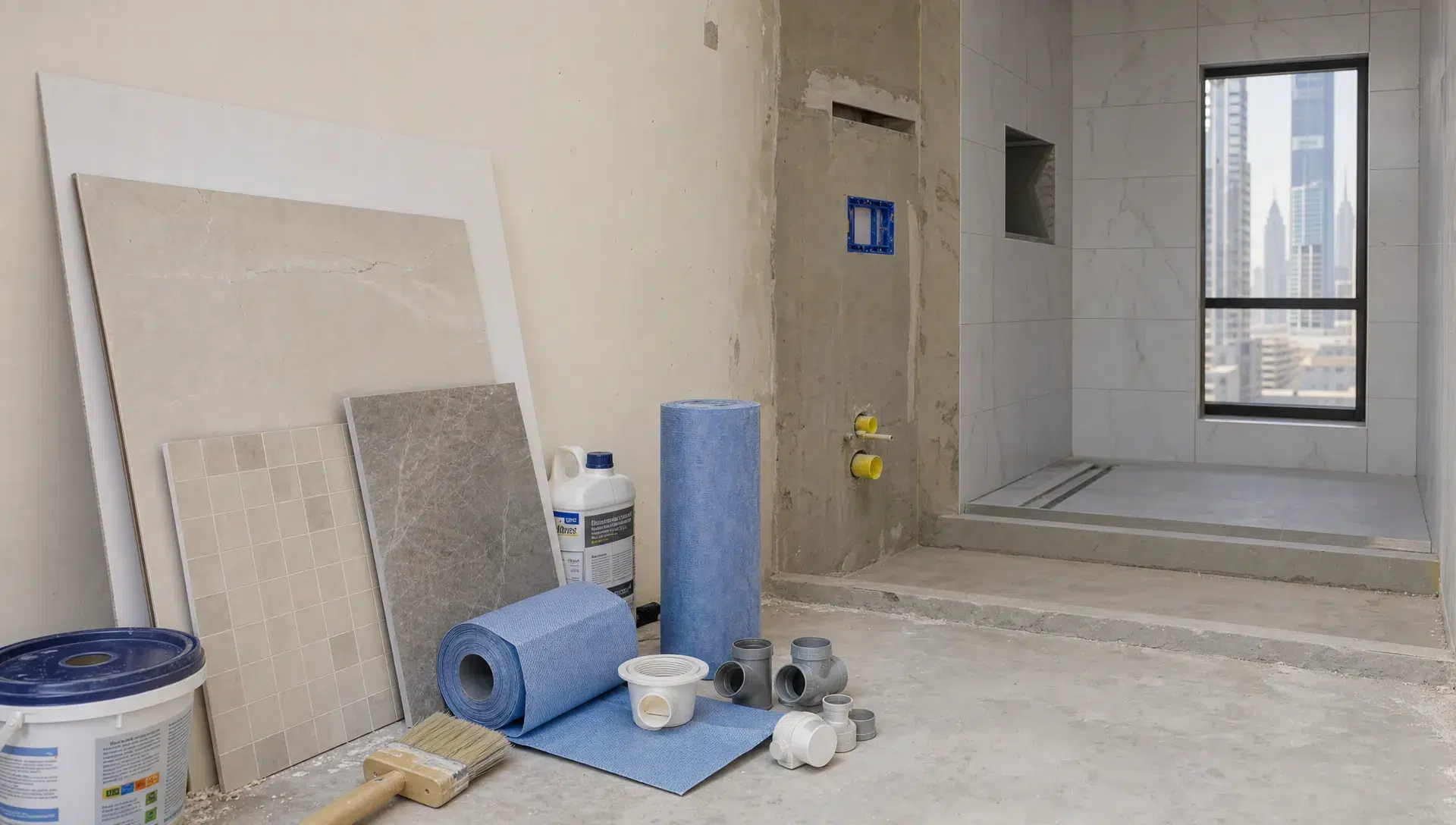
Choosing tiles only by appearance is risky. Bathroom renovation requirements should include tile suitability, slip resistance, grout type, edge finishing, wall substrate condition and cleaning needs. Floor tiles in wet areas should provide enough grip, especially in showers, around tubs and near vanity zones where water may splash.
Large-format tiles can create a clean look, but they require flat surfaces and skilled installation. Small mosaic tiles can help with shower floor slopes, but grout maintenance becomes more important. Natural stone can look premium, but it may need sealing and careful cleaning to avoid staining.
Wall finishes also matter. Moisture-resistant paint may be suitable for dry sections, but shower and splash zones need more robust protection. Vanity materials should tolerate humidity and occasional standing water, especially in homes with children or heavy daily use.
Fixture layout should respect comfort and access
A bathroom that looks good in a rendering may feel cramped in daily use if clearances are ignored. Before buying fixtures, confirm door swing, shower access, vanity depth, WC placement and the relationship between towel rails, mirrors and storage.
Wall-hung toilets and floating vanities can make a compact bathroom feel lighter, but they require proper support and access for concealed systems. Freestanding tubs need enough space around them for cleaning. Walk-in showers require careful planning for splash control, floor slope and glass positioning.
Your contractor should measure the actual site, not rely only on old drawings. In Dubai apartments, small differences in shaft positions or wall thickness can change what is practical. A good layout balances aesthetics with maintenance access, because even the most elegant bathroom needs servicing over time.
Lighting, storage and usability requirements
A renovated bathroom should support daily routines. That means lighting should work for grooming, showering and nighttime use. Storage should hold toiletries without cluttering the basin. Mirrors should be positioned for real users, not just for symmetry on a drawing.
Layered lighting often works best. Ceiling lights provide general brightness, while mirror lighting reduces facial shadows. If you want a calmer atmosphere, warmer accent lighting can be added, but it should not replace practical task lighting.
Storage is also a requirement in functional terms. Recessed niches, mirrored cabinets, vanity drawers and slim tall units can make a bathroom easier to keep clean. The key is to decide these elements early so walls, electrical points and joinery dimensions coordinate properly.
Property type requirements Dubai homeowners should compare
The same bathroom renovation requirements can play out differently depending on whether you live in an apartment, townhouse or villa. The table below summarizes common planning differences.
| Property type | Common requirement | Main risk if ignored | Practical action |
|---|---|---|---|
| Apartment | Building management NOC and work timing approval | Work stoppage, neighbor complaints or rejected access | Confirm rules before demolition |
| Townhouse | Community guidelines and contractor access control | Delays at security or waste removal issues | Register contractor and delivery schedule early |
| Villa | More flexibility, but more service coordination | Hidden pipe routes, drainage distance or water pressure issues | Conduct a detailed site survey |
| Rental property | Landlord approval before permanent changes | Deposit disputes or forced reinstatement | Get written approval for the exact scope |
| Older property | Condition assessment before design finalization | Budget overruns from damaged pipes or substrate | Add contingency and inspect exposed areas |
This is why copied renovation packages rarely work well. A bathroom in Downtown Dubai, Dubai Marina, Arabian Ranches or Jumeirah may have very different constraints even if the desired design style looks similar.
Budget and timeline requirements
A realistic budget is not just a total number. It should connect directly to scope, material quality, labor, approvals, demolition, disposal, waterproofing, MEP work, tiling, fixtures, accessories, cleaning and snagging.
Quotes should be detailed enough to compare
A vague quote makes it hard to compare contractors fairly. Look for line items that explain what is included, what material allowances apply and what conditions may trigger variation costs. A very low quote may exclude waterproofing, disposal, authority paperwork, premium adhesives, access panels or proper handover support.
Ask whether the quote includes:
- Demolition and debris removal
- Plumbing and electrical modifications
- Waterproofing materials and testing
- Tile adhesive, grout and sealant
- Sanitaryware installation
- Ceiling, painting and ventilation work
- Final snagging and cleanup
If you are evaluating several companies, this guide on choosing the right bathroom renovations contractor explains what to check beyond price.
Sequencing affects quality and handover
Good sequencing is one of the practical bathroom renovation requirements that homeowners notice only when it goes wrong. Rushing trades into the same area can cause mistakes, damage new work and create delays.
A typical sequence starts with protection, demolition and inspection. After that come plumbing and electrical rough-ins, waterproofing, testing, screed or surface preparation, tiling, ceiling work, painting, fixture installation, glass, accessories, silicone, cleaning and snagging.
Some stages need drying or curing time. Waterproofing, screed, adhesive, grout and silicone all perform better when installed under suitable conditions and given proper time before heavy use. Compressing the schedule too aggressively may save a few days at first, then cost weeks if defects appear.
Handover documents and snagging
Before accepting the completed bathroom, walk through the space carefully. Check water flow, drainage speed, mixer operation, shower splash, fan performance, lighting, door movement, cabinet alignment, silicone finish and tile edges.
Take photos of hidden work during renovation, especially waterproofing and plumbing. Keep product manuals, warranty information and care instructions for sanitaryware, mixers, glass, tiles and joinery. These records make future maintenance easier and help if you rent or sell the property.
A proper handover should also include practical advice. Homeowners should know when the bathroom can be used fully, how to clean new surfaces and which sealants or stone finishes require special care.
Common mistakes to avoid
Many bathroom problems begin with decisions made too quickly. The most common mistake is starting demolition before approvals, drawings, materials and fixture selections are ready. This can leave the bathroom unusable while the homeowner waits for tiles, mixers or management approval.
Another mistake is focusing only on the visible finishes. Premium tiles and designer mixers cannot compensate for poor drainage, weak waterproofing or unsafe wiring. The hidden layers decide whether the finished bathroom stays beautiful.
Homeowners should also avoid changing the layout midway unless there is a clear reason. Late changes affect plumbing, electrical work, tile quantities, glass dimensions and timelines. If a change is necessary, document the cost and schedule impact before work continues.
Frequently Asked Questions
Do all Dubai bathroom renovations need approval? Not all cosmetic updates need formal approval, but many building-managed properties require permission for demolition, plumbing, waterproofing, noisy work, service lift use and debris removal. Always check with your building or community manager first.
What are the most important bathroom renovation requirements for apartments? Apartment projects usually need building approval, contractor access coordination, neighbor-sensitive working hours, waterproofing protection, careful drainage planning and proper waste removal through approved routes.
Can I move the toilet or shower during renovation? Sometimes, but it depends on drainage position, floor build-up, slab restrictions and building rules. Moving fixtures should be checked on site before the design is finalized.
How long does a bathroom renovation usually take in Dubai? The timeline depends on approvals, scope, material availability and site conditions. A simple refresh may be quick, while a full renovation with demolition, waterproofing, MEP changes and custom finishes takes longer.
Why is waterproofing so critical? Waterproofing protects the structure, neighboring units, ceilings below, cabinetry and finishes. If it fails, repairs are disruptive because the defective layer is hidden beneath tiles and screed.
Plan your bathroom renovation with confidence
Understanding bathroom renovation requirements before work begins helps you make better decisions, compare quotes more accurately and protect your home from avoidable problems. The best results come from combining practical design, proper technical checks, reliable materials and disciplined project management.
If you are renovating a bathroom in Dubai and want a tailored approach, Revo Craft Renovations can help you plan the scope, finishes and site coordination for a smoother project. Explore the team’s renovation services at Revo Craft Renovations and start with a clear, practical brief before demolition begins.