
A beautiful kitchen can still feel frustrating if the fridge blocks the prep counter, pans are stacked in hard-to-reach cabinets, or everyone crosses paths at the same corner during breakfast. The best kitchen home remodeling ideas start with two questions: how should people move through the room, and where should everything live?
For Dubai homeowners, that often means designing for busy mornings, frequent hosting, compact apartment footprints, villa kitchens with separate service areas, and the need for durable finishes that handle heat, humidity, and daily use. Better flow and smarter storage do not always require a larger kitchen. They require a clearer plan.
Start With Movement Before You Choose Materials
Before selecting cabinet colors, worktops, tiles, or handles, map the way your household uses the kitchen. A kitchen that looks perfect on a mood board can still feel awkward if the main walking path cuts through the cooking zone or if the dishwasher opens into the only prep area.
Think about daily traffic first. Where do people enter from the living room, dining area, hallway, balcony, or service door? Where do children stand for snacks? Where do groceries arrive? Where does someone make coffee while another person cooks? These small details have a bigger impact on comfort than many decorative upgrades.
If you want a broader look at how layout changes affect comfort, efficiency, and routines, Revo Craft Renovations has also covered how kitchen remodeling services improve daily living in more detail.
A practical flow plan should reduce unnecessary steps between the sink, hob, fridge, prep counter, pantry, and serving area. It should also leave enough clearance for appliance doors, cabinet drawers, and more than one person moving through the room.
| Kitchen area | Comfortable planning target | Why it matters |
|---|---|---|
| Main walkway | Around 90 to 100 cm | Allows people to pass without interrupting cooking |
| One-cook work aisle | Around 105 cm | Gives enough space to open drawers and work comfortably |
| Two-cook work aisle | Around 120 cm | Prevents crowding in family kitchens |
| Landing space near sink or hob | Around 30 to 45 cm | Creates a safe place for hot pans, rinsed produce, or utensils |
| Island seating overhang | Around 25 to 30 cm | Makes seating more comfortable without blocking circulation |
These measurements are useful guidelines, not rigid rules. The right dimensions depend on your room shape, appliance sizes, building constraints, and how your household uses the kitchen.
Replace the Old Work Triangle With Practical Kitchen Zones
The classic kitchen work triangle, connecting sink, hob, and fridge, still has value. But modern kitchens often need a more flexible approach, especially in open-plan homes where one person may cook, another may clean, and someone else may sit at an island with a laptop or schoolbooks.
Instead of thinking only in triangles, divide your kitchen into zones. Each zone should have the tools, storage, lighting, and counter space needed for that activity.
- Prep zone: Place chopping boards, knives, mixing bowls, spices, and small appliances close to the largest clear counter.
- Cooking zone: Store pots, pans, oils, cooking utensils, and heat-safe tools near the hob and oven.
- Cleaning zone: Keep the sink, dishwasher, waste bins, cleaning supplies, and dish storage close together.
- Food storage zone: Group the fridge, pantry, dry goods, breakfast items, and snack storage logically.
- Serving zone: Keep plates, glasses, trays, napkins, and coffee or tea items near the dining area or island.
This zone-based approach is especially useful for busy homes where several people use the kitchen at once. It also helps prevent one common remodeling mistake: adding more cabinets without deciding what each cabinet is supposed to store.
Use Storage That Matches Real Habits
More storage is helpful only when it is accessible. A kitchen packed with deep, high, or poorly divided cabinets can still feel cluttered because items disappear into the back of shelves. During kitchen home remodeling, storage should be planned around the way you cook, shop, clean, and entertain.
Choose drawers over lower cabinets where possible
Deep drawers are one of the most effective upgrades for better kitchen storage. They bring contents forward, so you can see cookware, plates, containers, and pantry items without bending into dark lower cabinets. Wide drawers under the hob are excellent for pans, lids, and cooking utensils. Shallower drawers near the prep zone work well for knives, peelers, measuring tools, and wraps.
For a clean look, use internal dividers. They stop drawers from becoming large open boxes where everything slides around. In family kitchens, dividers also make it easier for everyone to return items to the correct place.
Take cabinets up to the ceiling
Full-height cabinetry adds valuable storage and makes the kitchen look more finished. The highest sections are ideal for items you use less often, such as large serving dishes, seasonal tableware, baking equipment, or extra appliances.
In Dubai apartments where floor space is limited, vertical storage can be the difference between a kitchen that feels cramped and one that feels organized. To keep the room from feeling heavy, combine tall cabinets with lighter finishes, glass accents, open niches, or under-cabinet lighting.
Make corners useful, not forgotten
Corner cabinets often waste space because items get pushed too far back. Instead of accepting dead zones, consider solutions such as LeMans pull-outs, carousel units, angled drawers, or blind corner pull-out systems. The best option depends on cabinet size and budget, but the goal is the same: make the full depth reachable.
Build a pantry around how you shop
A pantry does not have to be a walk-in room. A tall pull-out pantry, a bank of shallow shelves, or a dedicated breakfast cabinet can work beautifully. The key is to avoid shelves that are too deep. Shallow shelves let you see everything at a glance, which reduces duplicate purchases and expired items.
If your household buys in bulk, include zones for rice, spices, canned goods, snacks, bottled water, and cleaning supplies. If you entertain often, reserve space for platters, glassware, coffee supplies, and serving accessories.
Layout Ideas That Improve Flow and Storage
The best layout depends on your kitchen size, openings, plumbing points, and whether the kitchen is open or closed. In many Dubai homes, the challenge is not simply choosing between an island and no island. It is making sure the chosen layout supports movement, ventilation, storage, and daily routines.
| Layout type | Best for | Flow and storage idea |
|---|---|---|
| Galley kitchen | Apartments and narrow kitchens | Keep sink and hob on one run, use tall storage at one end, and avoid handles that catch in tight aisles |
| L-shaped kitchen | Small to medium open kitchens | Use one side for cooking and prep, then add a pantry wall or breakfast counter if space allows |
| U-shaped kitchen | Larger closed kitchens | Create generous counter space, but keep corners accessible with pull-out fittings |
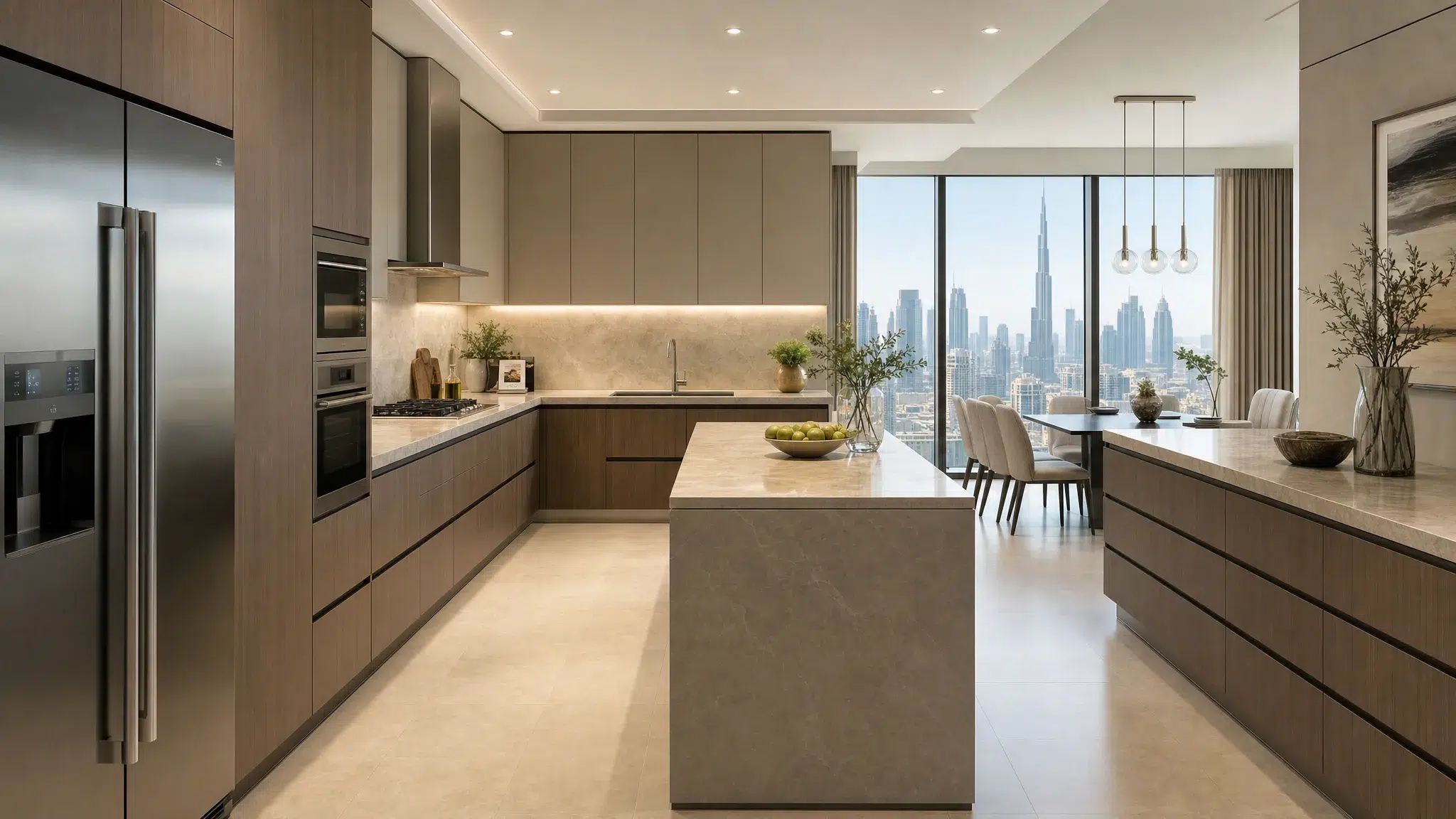
| Island kitchen | Open-plan villas and larger apartments | Use the island for prep, seating, or serving, but preserve wide walkways around all sides |
| Peninsula kitchen | Homes that need separation without a full wall | Add storage and seating while guiding traffic away from the cooking zone |
If your current kitchen feels chaotic, the problem may be that the layout sends people through the wrong path. For example, placing the fridge at the far end of a narrow galley forces everyone looking for a drink or snack to walk through the cooking area. Moving the fridge closer to the entrance can improve flow without expanding the room.
Let Appliances Support the Layout, Not Fight It
Appliance placement can make or break kitchen flow. A large fridge, dishwasher, oven, or washing machine may fit on paper, but still cause problems if its door blocks a walkway or opens against another appliance.
Place the dishwasher close to the sink and near dish storage, so unloading is quick and logical. Keep the fridge accessible from the kitchen entrance, especially in family homes where people frequently grab snacks or drinks. If you use built-in ovens, position them at a comfortable height and leave a landing surface nearby for hot trays.
Small appliances need planning too. Air fryers, coffee machines, mixers, kettles, and toasters often create counter clutter because they were not included in the design. An appliance garage, pull-out shelf, or dedicated breakfast station can keep them accessible without taking over the main prep area.
For households with heavy daily use, Revo Craft Renovations explains similar planning principles in its guide to kitchen renovation services that transform busy homes.
Create Hidden Storage for Cleaning, Waste, and Utilities
A kitchen feels calm when practical items have a proper home. Waste bins, recycling, mops, brooms, cleaning liquids, pet food, water filters, and extra paper products should not be afterthoughts.
A pull-out waste system near the sink and prep zone makes cooking cleaner and faster. A narrow utility cabinet can hold cleaning tools vertically. Under-sink storage should be designed around plumbing, not forced around it, so use pull-out trays, compact baskets, or door-mounted organizers.
If your kitchen includes laundry appliances, plan ventilation, access, and storage carefully. Stacked or concealed laundry zones can work well, but only when service access and moisture management are considered early.
Use Lighting to Improve Both Flow and Storage
Lighting is often treated as decoration, but it is essential to flow. Poor lighting makes counters harder to use, deep cabinets less practical, and open-plan kitchens feel flat. A layered plan works best.
Use ceiling lighting for general brightness, under-cabinet lighting for prep work, pendant lighting for islands or dining counters, and internal cabinet lighting for glass-front or tall storage sections. Motion-sensor lighting inside pantry cabinets can be especially useful at night or in compact kitchens with limited natural light.
Switch placement matters too. Put controls where people naturally enter and work. If you need to cross the kitchen in the dark to turn on a light, the flow has not been fully considered.
Plan Electrical and Plumbing Upgrades Early
Better flow often requires moving or adding power points, water lines, drainage, or appliance connections. These decisions should happen before cabinetry is ordered, because late changes can affect cost, timing, and finish quality.
Common electrical upgrades include extra sockets near prep counters, dedicated outlets for built-in appliances, under-cabinet lighting wiring, charging drawers, and power access on islands or peninsulas. Plumbing updates may involve repositioning the sink, adding a water filter, improving drainage, or preparing for a dishwasher.
This is where professional planning is valuable. A beautiful design should still be serviceable, safe, and realistic for the building. In Dubai apartments and villas, approvals, access routes, and building management rules may also influence what can be changed.
Think About Temporary Storage During the Remodel
During a kitchen remodel, the items removed from cabinets can easily spread through the entire home. Before demolition or installation begins, decide where cookware, dry goods, small appliances, and fragile items will go.
For minor remodels, labeled boxes in a spare room may be enough. For larger renovation projects, homeowners and contractors sometimes explore temporary storage units, off-site storage, or container-based solutions for furniture, appliances, and project materials. If you are researching how container storage can be specified or adapted, container suppliers such as Lease Lane Containers can be a useful reference for understanding container types, inspection standards, and modified unit possibilities. For any Dubai project, your actual storage plan should still account for site access, permissions, climate, and security.
A clear temporary storage plan keeps the project safer and less stressful. It also protects new finishes from being crowded by old items before the kitchen is ready.
Make Storage Feel Custom Without Overcomplicating the Design
Custom storage does not mean every cabinet needs to be unusual. The most successful kitchens often combine simple cabinetry with a few highly tailored details.
Consider a tall breakfast cabinet with pocket doors, a slim spice pull-out beside the hob, a charging drawer for devices, tray dividers above the oven, or a built-in niche for a coffee machine. These features feel personal because they solve real problems.
If you are balancing style and budget, prioritize the items you touch every day: cabinet hardware, drawer runners, hinges, worktops, lighting, and splashback materials. For more cost-conscious planning, the guide to budget kitchen renovation tips for a high-end look shares practical ways to focus spending where it shows most.
Avoid Common Flow and Storage Mistakes
Some kitchen problems are easy to prevent if they are addressed before the design is finalized. The most common mistakes include choosing an island that is too large, leaving too little landing space beside appliances, placing the fridge too far from the entrance, using deep shelves without pull-outs, and forgetting storage for small appliances.
Another common issue is designing for an ideal version of daily life rather than the real one. If your family keeps school bottles, supplements, lunch boxes, delivery menus, pet food, or cleaning products in the kitchen, include them in the plan. A realistic kitchen is easier to keep tidy than a showroom-style kitchen with no place for everyday items.
Ventilation also matters. In open-plan homes, cooking smells can move quickly into dining and living areas. A properly planned extraction system, good appliance placement, and easy-clean finishes help maintain comfort.
A Simple Pre-Remodel Checklist
Before approving your kitchen design, walk through this checklist with your renovation team:
- Can two people pass comfortably through the main working area?
- Does every appliance door open without blocking another key area?
- Is there enough clear counter space beside the sink, hob, fridge, and oven?
- Are everyday items stored close to where they are used?
- Are bins, cleaning supplies, small appliances, and pantry items planned properly?
- Are lighting, sockets, plumbing, and ventilation integrated into the layout?
- Is there a temporary storage plan for the renovation period?
If the answer is unclear for any of these points, refine the plan before work begins. Good kitchen home remodeling is much easier to achieve on paper than after cabinets and worktops are already installed.
Frequently Asked Questions
What is the best kitchen layout for better flow? The best layout depends on your room shape and routine. Galley kitchens suit narrow spaces, L-shaped kitchens work well in open areas, U-shaped kitchens offer strong storage, and islands are best when there is enough clearance on all sides.
How can I add more storage without making my kitchen feel smaller? Use full-height cabinets, deep drawers, pull-out pantry systems, corner solutions, and internal organizers. Choose lighter finishes, integrated lighting, and clean cabinet lines to keep the space visually open.
Is an island always a good idea in kitchen home remodeling? No. An island is useful only when it improves prep, seating, storage, or serving without blocking movement. In smaller kitchens, a peninsula, slim breakfast counter, or better wall storage may work better.
Should I move plumbing during a kitchen remodel? Moving plumbing can improve layout, but it may also increase cost and complexity. It should be considered early with experienced professionals who understand access, drainage, waterproofing, and building requirements.
How do I keep my kitchen organized after remodeling? Assign every item to a zone, use drawer dividers, avoid overfilling cabinets, and keep daily-use items closest to the places where you use them. The remodel should support your habits, not force unrealistic routines.
Design a Kitchen That Works Beautifully Every Day
A better kitchen is not just about premium finishes. It is about movement that feels natural, storage that makes sense, lighting that supports every task, and details that match the way your household actually lives.
Revo Craft Renovations provides tailored kitchen remodeling, interior upgrades, custom carpentry and joinery, electrical and plumbing improvements, and project management for homes and businesses in Dubai. If you are planning a kitchen that needs better flow, smarter storage, and a more refined finish, connect with Revo Craft Renovations to start with a personalized design consultation.