
A home can look beautiful and still feel difficult to live in. The kitchen may be stunning but cramped during breakfast. The living room may be elegant but poorly lit after sunset. Bedrooms may have premium finishes but not enough storage for real family life. That is where thoughtful modern renovations make the biggest difference.
The most livable homes are not designed around trends alone. They are planned around routines, climate, comfort, privacy, maintenance, and the way people actually move through a space. In Dubai, where homes often need to support family gatherings, hybrid work, indoor comfort, and high summer temperatures, livability should be at the center of every renovation decision.
Modern renovations are most successful when they combine three things: better function, durable materials, and a design language that feels calm and personal. Whether you are updating an apartment, villa, townhouse, or commercial living space, the goal is not just to make it newer. The goal is to make daily life easier.
Start With How the Home Is Used Every Day
Before choosing finishes, cabinetry, flooring, or lighting, take time to understand the pressure points in the current home. A good renovation begins with observation. Which areas feel crowded? Where does clutter collect? Which rooms are used least? What routines feel inconvenient?
For many Dubai homeowners, the biggest livability issues are not dramatic structural problems. They are small daily frustrations that repeat over time. A narrow entryway makes school mornings harder. A poorly placed kitchen island disrupts movement. A lack of task lighting makes cooking, reading, or getting ready uncomfortable. A bedroom wardrobe may be large but badly organized.
A lifestyle-first approach helps avoid renovations that look impressive in photos but fail in practice. This is also why customized planning matters. If you want a deeper look at adapting layouts and finishes to local living needs, Revo Craft Renovations has explored how custom home renovations can fit modern Dubai living through property-specific planning and climate-aware choices.
Improve Flow Before Adding More Features
One of the most powerful renovation decisions is improving how people move through the home. Flow affects comfort more than many homeowners realize. A space that is easy to navigate feels calmer, larger, and more intuitive, even if the square footage has not changed.
In living areas, this may mean repositioning partitions, resizing openings, or creating clearer pathways between the entrance, seating, dining, and kitchen zones. In bedrooms, it may involve adjusting furniture placement, wardrobe access, and the relationship between the bed, windows, and bathroom. In villas, flow can also include the transition between indoor and outdoor areas, especially when patios, gardens, or terraces are part of daily life.
Good flow is not always about open-plan living. In some homes, removing too many boundaries can reduce privacy and make spaces feel noisy. A more livable solution may be semi-open planning, such as wide openings, glass partitions, pocket doors, or subtle zoning through ceiling details and flooring transitions.
The key is to create movement that feels natural. You should not have to walk around furniture to reach a balcony, squeeze past a dining table to access the kitchen, or cross a private bedroom zone to reach a shared bathroom.
Build Storage Into the Architecture
Storage is one of the clearest differences between a home that looks finished and a home that feels livable. Freestanding cabinets can help, but built-in storage usually creates a more seamless and efficient result.
Modern renovations often use custom carpentry and joinery to turn unused space into practical storage. This can include full-height wardrobes, entry benches with hidden compartments, under-stair cabinets, window seats, laundry storage, media walls, and pantry systems. The advantage is that storage becomes part of the room rather than an afterthought.
In Dubai homes, where families may need space for shoes, seasonal items, travel bags, hosting essentials, school supplies, and home office equipment, storage planning should be specific. A shallow cabinet for daily items may be more useful near the entrance than a deep closet hidden in a bedroom. A pantry with clear zones can improve kitchen function more than extra countertop space alone.
A livable storage plan answers practical questions. What should be easy to reach every day? What can be stored higher or deeper? Where should cleaning tools, laundry items, chargers, documents, and guest supplies live? When every item has a logical place, the home feels calmer with less effort.
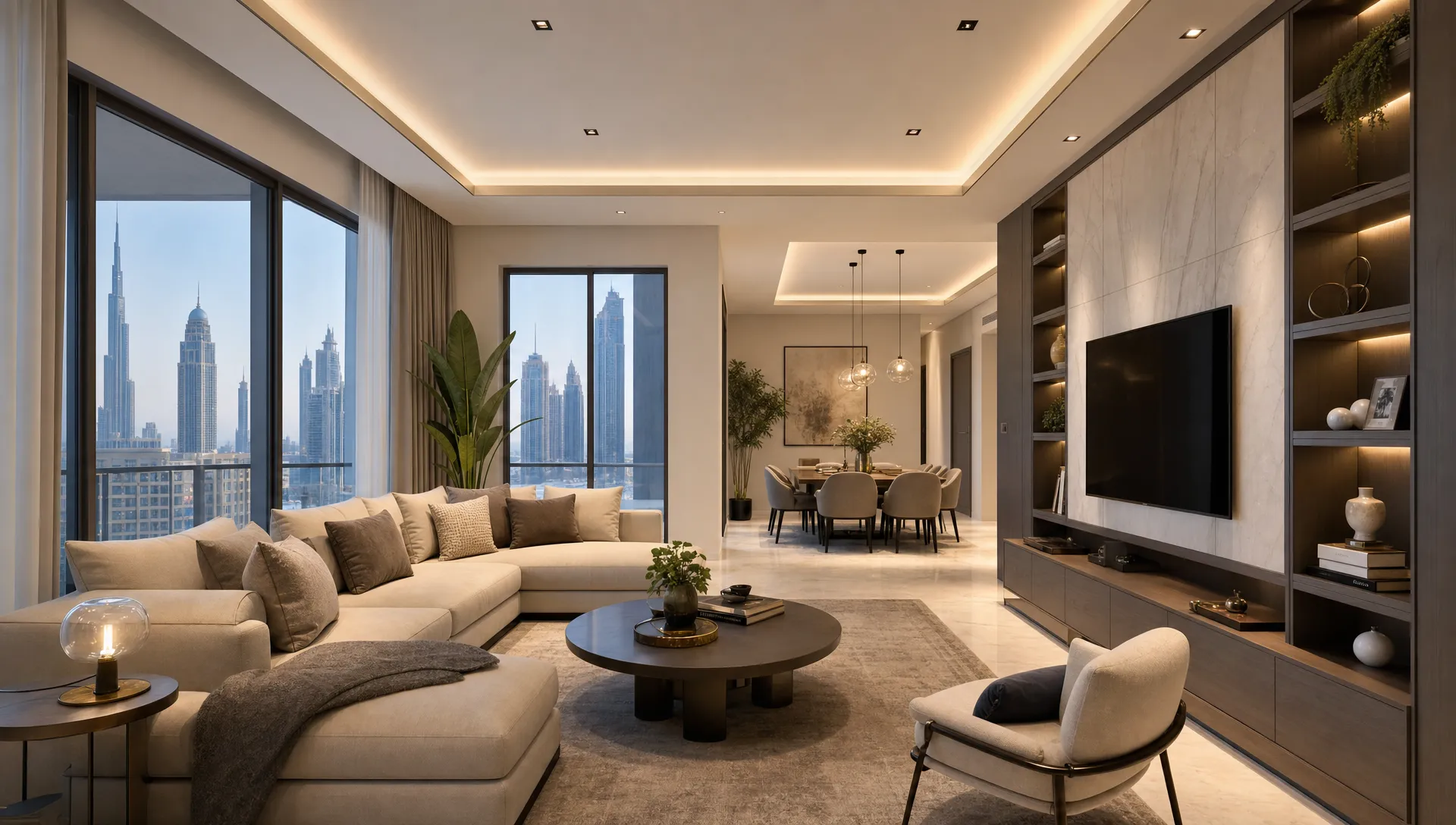
Make Kitchens and Bathrooms Work Harder
Kitchens and bathrooms have an outsized impact on how livable a home feels. These are high-use areas, so small design mistakes become daily annoyances. A beautiful kitchen with poor workflow can feel stressful. A luxurious bathroom without proper storage or ventilation can become difficult to maintain.
In the kitchen, focus on the relationship between cooking, washing, preparation, storage, and serving. The traditional work triangle still matters, but modern families often need more flexible zones. A breakfast station, concealed appliance storage, pull-out pantry, better waste management, and durable worktops can make the space easier to use every day.
Bathrooms benefit from practical upgrades such as wall-mounted vanities, recessed niches, anti-slip flooring, better mirror lighting, improved ventilation, and moisture-resistant finishes. If the home is shared by a family, double sinks, separate wet and dry zones, and more efficient storage can reduce morning congestion.
For homeowners planning these high-impact spaces, this guide to bathroom and kitchen renovations that modernize homes explains how layout, water-resistant materials, lighting, and storage can work together to improve daily comfort.
Use Lighting to Create Comfort, Not Just Brightness
Lighting is one of the most underrated parts of modern renovations. Many homes rely too heavily on a single ceiling light, which can make rooms feel flat, harsh, or impractical. A more livable home uses layered lighting.
Ambient lighting provides general brightness. Task lighting supports activities such as cooking, reading, grooming, studying, or working. Accent lighting adds warmth and highlights textures, shelves, artwork, or architectural features. When these layers work together, rooms become more flexible and comfortable at different times of day.
Warm color temperatures often suit living rooms and bedrooms, while kitchens, bathrooms, and work areas may need clearer, more focused light. Dimmers are especially useful because they allow one room to shift from bright family activity to relaxed evening atmosphere.
Lighting also affects perceived space. Cove lighting can soften ceilings, under-cabinet lighting can improve kitchen safety, and well-placed wall lights can make corridors feel more welcoming. In a climate where indoor life is important for much of the year, lighting should be treated as a core comfort system, not a decorative extra.
Choose Materials That Feel Good and Last
Livability depends on how a home performs after the renovation is complete. Materials need to suit the way the space is used, not just the way it looks on a sample board. Floors, wall finishes, countertops, cabinetry, fixtures, and hardware all influence maintenance, durability, comfort, and long-term value.
In busy family areas, durable flooring and stain-resistant surfaces can reduce stress. In bathrooms and kitchens, moisture resistance is essential. In bedrooms, soft textures and acoustic comfort may matter more than visual drama. For rental or investment properties, finishes should balance appeal with easy upkeep.
Dubai homes also benefit from material choices that respond well to heat, dust, air conditioning, and frequent cleaning. Matte or lightly textured finishes can hide minor marks better than high-gloss surfaces. Quality hardware can make cabinetry feel better for years. Wall finishes can add depth without overwhelming the room.
Here is a simple way to think about renovation choices from a livability perspective:
| Renovation area | What improves livability | What to avoid |
|---|---|---|
| Flooring | Durable, easy-clean surfaces suited to each room | Slippery materials in wet or high-traffic zones |
| Lighting | Layered ambient, task, and accent lighting | One harsh ceiling light for every activity |
| Storage | Built-in solutions based on daily routines | Generic cabinets with no clear purpose |
| Kitchens | Efficient workflow, ventilation, and practical surfaces | Oversized islands that block movement |
| Bathrooms | Moisture-resistant finishes and smart storage | Beautiful materials that are hard to maintain |
| Living areas | Flexible zoning for relaxing, hosting, and family time | Furniture layouts that interrupt circulation |
Add Smart Features Only Where They Improve Daily Life
Smart home upgrades can make a renovation feel more modern, but technology should serve comfort rather than complicate it. The best smart features are the ones that make everyday tasks easier, save energy, or improve convenience without requiring constant management.
Useful options may include smart lighting controls, automated curtains, integrated climate control, video door systems, discreet charging points, and planned wiring for entertainment or work areas. The most important step is infrastructure planning. Even if you do not install every smart feature immediately, preparing wiring, outlets, and control locations during renovation can prevent expensive changes later.
Smart upgrades are especially valuable when they are integrated cleanly into the design. Visible wires, awkward switch locations, and mismatched devices can make a space feel less refined. If you are considering technology as part of your renovation, these smart home remodeling ideas for modern Dubai living offer a useful framework for comfort-focused planning.
Design Flexible Rooms for Changing Needs
A livable home is not fixed around one version of life. Families grow, work routines change, guests visit, children need study areas, and hobbies evolve. Modern renovations should create rooms that can adapt without another major remodel.
A guest room can double as a home office with the right built-in desk and storage. A family room can support movie nights, children’s play, and quiet reading if zoning and lighting are planned carefully. A dining area can become more useful with integrated storage for serving pieces, books, or work materials.
For homeowners who run a business from home or meet clients in a renovated studio space, the physical environment should feel aligned with the brand experience. The same attention given to interiors can extend to digital presence through a specialist such as boutique web design agency Studio XL, especially when a polished online impression matters as much as the space itself.
Flexibility is not about making every room multipurpose in a chaotic way. It is about creating intentional overlap. A room should have a primary purpose, but with enough planning, it can support secondary uses gracefully.
Do Not Ignore Acoustics, Privacy, and Temperature
Many renovation plans focus on visible upgrades, yet some of the most meaningful comfort improvements are felt rather than seen. Acoustics, privacy, and temperature control can transform how a home feels.
Acoustic comfort matters in open-plan homes, apartments, villas with large hard surfaces, and households where multiple people work or study at once. Rugs, curtains, upholstered furniture, acoustic wall treatments, solid-core doors, and better sealing can reduce echo and improve privacy.
Temperature comfort is equally important in Dubai. Renovations should consider airflow, AC placement, insulation where applicable, shading, curtain choices, and the impact of large glass surfaces. A room that looks beautiful but feels too hot in the afternoon will not be used as intended.
Privacy can be improved through layout adjustments, screens, sliding partitions, window treatments, and thoughtful lighting. This is particularly valuable in homes that host guests often or include multigenerational family living.
Common Mistakes That Make Renovations Less Livable
Even well-funded renovations can fall short if decisions are made in the wrong order. Choosing finishes before solving layout problems is one common issue. Another is copying a trend without considering the home’s size, light, maintenance needs, or family routines.
Some homeowners also underestimate the importance of project coordination. Electrical, plumbing, carpentry, wall finishes, lighting, and furniture planning are connected. If one trade works without reference to the others, the final result can feel disjointed.
A few mistakes to avoid include:
- Prioritizing visual impact over practical movement and storage
- Installing too few outlets or placing switches in inconvenient locations
- Choosing delicate finishes for high-use family areas
- Forgetting ventilation in kitchens, bathrooms, and laundry zones
- Oversizing furniture or islands in rooms with limited circulation
- Treating lighting as a final decorative choice instead of an early design decision
The most livable renovations feel effortless because the complex decisions were handled early. That means planning technical systems, finishes, furniture, storage, and daily routines together.
Frequently Asked Questions
What are the best modern renovations for a more livable home? The best modern renovations usually improve layout, storage, lighting, kitchen workflow, bathroom comfort, temperature control, and flexible room use. These upgrades make the home easier to maintain and more comfortable for everyday life.
How do I know which renovation to prioritize first? Start with the area that causes the most daily frustration. If cooking is stressful, begin with the kitchen. If clutter is constant, prioritize storage. If the home feels dark or uncomfortable, lighting and climate improvements may offer the fastest impact.
Are open-plan layouts always more livable? Not always. Open-plan layouts can improve connection and movement, but they may reduce privacy and increase noise. Semi-open layouts, sliding partitions, and clear zoning often create a better balance for modern family living.
Do modern renovations add value to a Dubai home? Well-planned renovations can improve appeal, comfort, and long-term usability. Kitchens, bathrooms, storage, lighting, and durable finishes are especially valuable because they affect both daily living and buyer perception.
How can I keep a renovation practical without losing style? Choose materials, layouts, and features that support your routines first, then refine the look through finishes, lighting, color, and detailing. Practical design does not have to feel plain when it is planned with care.
Make Your Home Feel Better to Live In
Modern renovations should do more than refresh the appearance of a property. They should make mornings smoother, evenings calmer, rooms easier to use, and spaces more enjoyable for the people who live there.
Revo Craft Renovations helps homeowners and businesses in Dubai create tailored renovation solutions with a focus on modern design, premium finishes, expert craftsmanship, and clear project communication. If you are ready to improve comfort, style, and functionality, visit Revo Craft Renovations to start planning a more livable space.