
Home remodeling sites can be incredibly useful, but only if you use them as planning tools rather than endless inspiration feeds. A beautiful kitchen photo, a clever storage idea, or a dramatic before-and-after can help you imagine what is possible. The real value comes when you turn those ideas into measurements, priorities, budgets, materials, and a clear brief for your renovation team.
For homeowners in Dubai, this matters even more. Apartments, villas, and townhouses often come with building rules, service access limitations, air-conditioning considerations, and material performance needs shaped by the local climate. The right online research can make your renovation smoother, but the wrong kind can create unrealistic expectations.
Here is how to use home remodeling sites strategically so your project starts with clarity instead of confusion.
Start with a planning goal before you browse
Before opening any remodeling website, define what you are trying to solve. Browsing without a goal often leads to a folder full of attractive images that do not fit your home, budget, or lifestyle.
A better approach is to choose one planning question at a time. For example, you might ask, “How can we improve kitchen storage without moving plumbing?” or “What finishes make a small apartment feel brighter?” This keeps your research focused and makes it easier to compare ideas.
Think of your renovation in terms of outcomes, not just style. A good plan should improve how the space works every day. That could mean better circulation, more concealed storage, easier maintenance, upgraded lighting, or a layout that supports family routines. If functionality is your main priority, you may find it helpful to explore practical custom remodeling ideas for a more functional home before finalizing your inspiration board.
Know which home remodeling sites to use for each decision
Not every remodeling website is designed for the same purpose. Some are great for visual ideas, while others are better for products, budgeting, regulations, or contractor comparisons. Using each type correctly saves time and reduces planning mistakes.
| Type of site | Best use | What to be careful about |
|---|---|---|
| Inspiration galleries | Discover styles, layouts, color palettes, and before-and-after ideas | Photos may show homes with different dimensions, climates, or budgets |
| Product and material websites | Compare finishes, fixtures, appliances, flooring, and technical specifications | Online colors and textures may look different in real light |
| Renovation blogs | Learn planning tips, common mistakes, and room-by-room strategies | Advice may need local adaptation for Dubai homes and building rules |
| Contractor websites | Review services, project approach, portfolios, and communication style | A polished website should still be backed by a detailed site visit and proposal |
| Cost calculator sites | Get rough budget awareness before speaking with professionals | Generic estimates rarely reflect exact scope, material choices, or local site conditions |
| Regulation and community resources | Understand approvals, permits, and building management requirements | Rules vary by property type, community, and building authority |
The goal is not to find one perfect website. It is to collect the right information from several sources and then validate it with professionals who understand your property.
Build a visual brief, not just a mood board
A mood board is useful, but a visual brief is better. A mood board says, “I like this.” A visual brief explains why an idea matters and how it should influence the renovation.
When saving images from home remodeling sites, add short notes. Do you like the warm wood tone, the handleless cabinetry, the lighting placement, the open shelving, or the way the dining area connects to the kitchen? These notes help your designer or contractor understand your priorities instead of guessing.
Try to organize saved ideas by room and decision type:
- Layout ideas for circulation, seating, and storage
- Finish ideas for flooring, walls, cabinetry, and countertops
- Lighting ideas for task areas, ambient light, and accent features
- Built-in storage ideas for wardrobes, TV walls, entryways, and kitchens
- Detail ideas such as handles, trims, niches, mirrors, and shelving
This structure makes your inspiration actionable. It also helps you spot conflicts early. For example, you may discover that you like minimalist kitchens but also want many appliances on the counter. That is not a problem, but it means the plan needs enough hidden storage and accessible power points.
Translate inspiration into a room-by-room scope
Once you have a collection of ideas, turn them into a scope. The scope is the bridge between “what we like” and “what needs to be done.” Without it, renovation conversations can become vague, and quotes can be difficult to compare.
Walk through each room and define what will change. Separate cosmetic upgrades from structural, technical, or custom work. Painting a wall is very different from relocating plumbing, building custom joinery, upgrading lighting circuits, or changing a kitchen layout.
| Planning area | What online research can show you | What your renovation team should confirm |
|---|---|---|
| Kitchen layout | Storage configurations, island ideas, appliance zones, cabinet styles | Plumbing feasibility, electrical points, ventilation, workflow, measurements |
| Bathroom upgrades | Tile combinations, vanity styles, lighting, shower screens | Waterproofing, drainage, fixture locations, building restrictions |
| Living room design | TV wall concepts, ceiling details, lighting layers, wall finishes | Load-bearing limits, cable routing, AC impact, material suitability |
| Bedrooms | Wardrobe layouts, headboard walls, lighting, space-saving furniture | Exact dimensions, joinery depth, door swings, storage capacity |
| Entryways and corridors | Built-in shoe storage, mirrors, console areas, wall treatments | Circulation width, access points, durable finishes, maintenance needs |
This step prevents one of the most common renovation problems: choosing the look before understanding the work behind it. A photo may show a seamless wall panel, but the real project might require carpentry, electrical coordination, wall preparation, and precise finishing.
Use remodeling websites to budget with more realism
Home remodeling sites can help you understand cost drivers, but they should not be treated as final price sources. Online budget ranges are often based on broad assumptions. Your actual cost depends on your property condition, finish level, labor scope, access, approvals, and whether custom work is involved.
Instead of looking for a single number, use online research to identify what affects the budget. For example, a kitchen remodel becomes more complex when you move plumbing, change appliance locations, add custom cabinets, install premium countertops, or upgrade lighting. A living room refresh may stay more budget-friendly if you keep the layout and focus on wall finishes, lighting, and joinery details.
A practical planning method is to divide your budget into three groups. First, list must-have work such as repairs, safety upgrades, plumbing, electrical improvements, and essential storage. Second, list high-impact design upgrades such as feature walls, lighting, cabinetry, flooring, or countertops. Third, list nice-to-have extras that can be added if the budget allows.
This helps you protect the core of the renovation while still leaving room for style.
Check material performance, not just appearance
Online photos can make almost any material look beautiful. In real homes, materials must handle heat, humidity, dust, cleaning routines, children, pets, guests, and daily wear. This is especially important in Dubai, where bright sunlight, air-conditioning, and frequent indoor-outdoor movement can affect how finishes perform.
When researching materials on home remodeling sites, look beyond color and pattern. Check whether the finish is easy to clean, suitable for wet areas, resistant to scratches, and compatible with the mood you want. Glossy finishes can reflect light beautifully, but they may show fingerprints. Natural textures add warmth, but they may need more maintenance. Dark flooring can feel elegant, but it may show dust more easily.
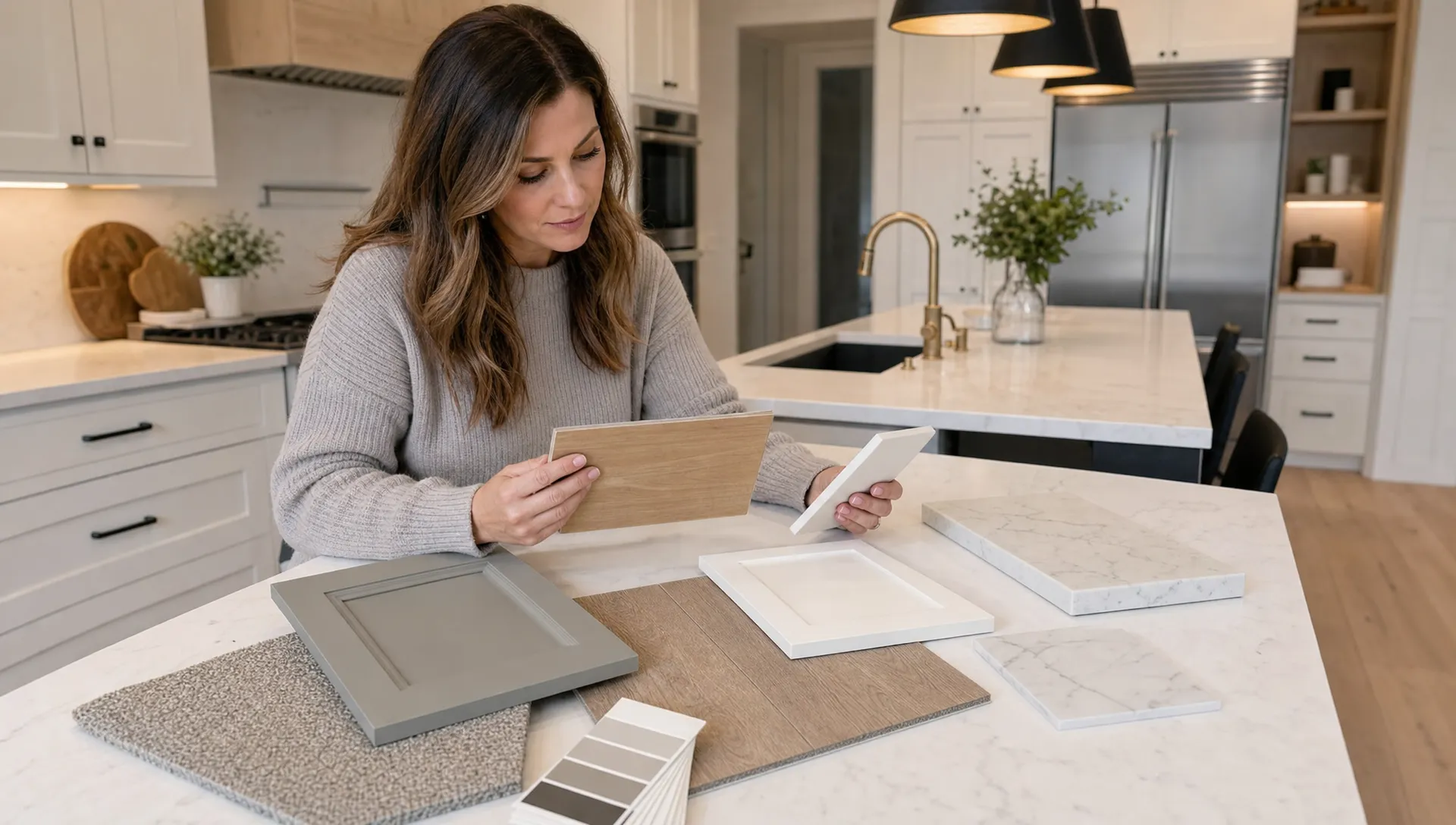
Ask for physical samples before finalizing major finishes. View them in your actual home at different times of day. A cabinet color that looks soft online may appear much warmer under indoor lighting, while a wall finish may change dramatically near a window.
Use sites to plan the renovation sequence
A renovation is not just a collection of design choices. It is a sequence of decisions, orders, approvals, and site work. Home remodeling sites can help you understand what usually comes first, but your project timeline should be customized.
In general, planning starts with goals, measurements, design direction, and scope. Then come technical checks, quotations, material selections, approvals where needed, procurement, demolition or preparation, rough electrical and plumbing work, carpentry, finishing, installation, inspection, and handover.
The exact order depends on the project. A kitchen remodel with custom cabinetry needs early measurements and production planning. A bathroom renovation may require careful waterproofing and drainage checks before finishes are installed. A full home renovation needs stronger coordination because one delay can affect multiple trades.
If you are trying to organize decisions, orders, and site work, this guide on how a home remodeling planner keeps projects on track explains why sequencing matters so much.
Prepare better questions for contractors
One of the best ways to use home remodeling sites is to improve the quality of your contractor conversations. Instead of saying, “Can you make it look like this photo?” you can ask specific questions about feasibility, cost, timeline, and alternatives.
Good questions include:
- Can this layout work with our existing plumbing and electrical points?
- What changes would make this idea more practical for our space?
- Which materials give a similar look with easier maintenance?
- What parts of this design are custom-made and what parts are standard?
- What needs approval from the building, community, or authority?
- What is included in the quotation, and what is excluded?
These questions make it easier to compare proposals fairly. A lower quote may exclude preparation, disposal, waterproofing, project management, or finishing details. A higher quote may include a more complete scope. If you are shortlisting renovation providers, use online research alongside a structured comparison process. This article on how to compare home remodeling companies in Dubai can help you evaluate experience, communication, site surveys, and quotations more confidently.
Do not ignore contracts, approvals, and responsibilities
Renovation planning is not only about design. It also involves contracts, payment terms, liability, warranties, access rules, and sometimes landlord or building management approvals. Homeowners should use online resources to understand what questions to ask, but not as a replacement for qualified local advice when legal issues arise.
For example, the way Janssen Van den Biezenbos Advocaten presents legal practice areas, rates, terms, and client procedures is a useful reminder to look for clarity from any professional involved in important agreements. In a renovation context, that same mindset helps you ask for written scopes, transparent exclusions, documented timelines, and clear responsibility for approvals or variations.
For Dubai projects, always confirm requirements based on your property type. Villas, apartments, rented homes, and community-managed properties may have different rules. Some works may require building management approval, authority coordination, noise-hour compliance, access permits, or technical inspections.
Filter trends through your actual lifestyle
Home remodeling sites are full of trends. Some are worth considering, while others may not suit your day-to-day routine. A beautiful open kitchen may be perfect for entertaining, but less ideal if you cook heavily and want to contain smells. A dramatic dark bathroom may feel luxurious, but it may need stronger lighting and more frequent cleaning. Open shelving can look stylish, but it works best when you are comfortable keeping items neatly arranged.
Before committing to a trend, ask how it will function six months after the renovation. Will it be easy to clean? Will it support your storage needs? Will it still feel comfortable during busy mornings? Will it suit your family, guests, work-from-home habits, or rental plans?
The best renovations are not copied from the internet. They are adapted from online inspiration to fit your space, budget, and lifestyle.
Create a final planning pack before work begins
After researching, organizing, and validating ideas, bring everything together in one planning pack. This does not need to be complicated. It simply needs to make the project easier to discuss and execute.
Your planning pack should include a room-by-room scope, priority list, inspiration images with notes, preferred materials, known constraints, budget range, timeline expectations, and questions for the renovation team. If you have floor plans, measurements, appliance dimensions, or building guidelines, include those too.
A clear planning pack helps professionals provide more accurate advice. It reduces misunderstandings and makes it easier to identify missing details before work starts. It also gives you a reference point if choices change during the project.
Common mistakes when using home remodeling sites
The biggest mistake is assuming every idea can be copied exactly. Online images are often photographed in ideal lighting, with carefully styled furniture and hidden practical constraints. Your home has its own dimensions, structure, systems, and usage patterns.
Another mistake is comparing quotes based only on the final price after collecting ideas online. Renovation quotes are only comparable when the scope is comparable. If one contractor includes full preparation and another does not, the numbers may not mean what they seem to mean.
Homeowners also sometimes choose finishes too early. It is tempting to select tiles, cabinets, and lighting before the layout is confirmed, but this can lead to rework. Decide the functional plan first, then refine the finishes.
Finally, avoid overloading the project with too many ideas. A home with ten different feature elements can feel busy. A better result often comes from choosing a few strong design moves and executing them well.
Frequently Asked Questions
Are home remodeling sites reliable for planning a renovation? They are reliable for inspiration, education, and early planning, but they should not replace a site survey or professional advice. Use them to clarify your goals, then validate feasibility, cost, and approvals with renovation experts.
How many inspiration images should I collect before speaking to a contractor? Aim for a focused selection rather than hundreds of images. Around five to ten images per room is usually enough if each one includes notes about what you like, such as layout, lighting, storage, materials, or color.
Can online remodeling cost estimates be trusted? Online estimates can help you understand broad cost factors, but they are rarely accurate enough for final budgeting. Your actual cost depends on scope, site condition, material selection, custom work, and local requirements.
What should I prepare before a design consultation? Prepare your goals, pain points, room photos, rough measurements, inspiration images, budget expectations, timeline preferences, and any building or community rules you already have. This helps the consultation become more practical and productive.
How do I avoid choosing ideas that will not work in my home? Focus on the reason behind each idea, then ask whether it fits your dimensions, routine, maintenance expectations, and technical constraints. A renovation professional can help adapt the concept instead of copying it exactly.
Turn online research into a renovation plan that works
Home remodeling sites are most powerful when they help you make better decisions, not just collect attractive images. Use them to define your goals, understand materials, compare layouts, prepare questions, and build a clear brief for your renovation team.
If you are planning a home renovation, kitchen remodel, interior upgrade, or custom finishing project in Dubai, Revo Craft Renovations can help turn your online inspiration into a practical, well-managed plan with tailored design guidance, skilled craftsmanship, and clear communication from start to finish.