
A good interior renovation before and after should do more than make a room look new. It should show that the space now works better, feels more comfortable and supports the way people actually live or work in it.
For Dubai homeowners, that difference matters. Apartments, villas and commercial interiors often face the same recurring issues: awkward layouts, harsh lighting, limited storage, dated finishes, visible AC bulkheads, tired kitchens or bathrooms and technical systems that no longer match modern use. A strong renovation turns those limitations into practical improvements you can see and feel every day.
The most valuable transformations are not always the most dramatic ones. Sometimes the change that matters is a better traffic flow through the living room, a kitchen island that finally fits the family routine or wall finishes that make a compact apartment feel calm rather than cluttered.
What an interior renovation before and after should prove
Before-and-after photos are useful, but they can be misleading if they only focus on styling. Fresh paint, new furniture and better photography can make almost any room look improved. A renovation, however, should solve deeper problems.
The “before” stage should identify what is holding the space back. Is the room too dark? Does furniture block movement? Are there too few sockets? Does the kitchen look fine but lack practical prep space? Are bathroom fittings hiding plumbing issues? These questions shape a renovation that improves function, not just appearance.
The “after” stage should prove that each design choice had a reason. A dropped ceiling might conceal services and improve lighting. Built-in joinery might remove visual clutter. A new wall finish might protect high-traffic areas while adding texture. Better zoning might make one open room serve dining, lounging and working without feeling chaotic.
If you are still gathering inspiration, this guide to interior renovation ideas that instantly elevate a home is a useful companion because it focuses on upgrades that create a noticeable lift without losing practicality.
Start by reading the “before” properly
Every strong interior renovation begins with an honest assessment. The visible problems are only part of the story. A dated villa living room may need new flooring and furniture, but it may also need updated lighting circuits, repaired wall surfaces or better storage planning. A compact apartment kitchen may look old, but the main problem might be inefficient workflow between the sink, hob and refrigerator.
Before choosing finishes, look at how the space performs during a normal day. Notice where bags pile up, where cables are exposed, where glare hits the television, where cleaning is difficult and where people naturally walk. These patterns reveal the changes that will matter most once the renovation is complete.
In Dubai homes, comfort also depends on technical coordination. AC vents, access panels, humidity-prone areas, plumbing points and electrical load should be considered early. A beautiful after photo loses value if maintenance becomes harder or if new materials do not suit the local climate and daily use.
This is where renovation and design need to work together. Planning layout, lighting, materials and technical upgrades as one process helps avoid expensive changes later. Revo Craft Renovations covers this idea in more depth in its article on why home renovation and design work better together.
The before-and-after changes that usually matter most
Not every renovation choice has the same impact. Some changes are cosmetic, while others improve how the home functions for years. The best results usually combine both.
| Renovation area | Cosmetic change | Change that matters more |
|---|---|---|
| Walls | New paint color | Proper surface preparation, durable finishes and texture where needed |
| Lighting | Decorative pendant | Layered lighting with task, ambient and accent zones |
| Kitchen | New cabinet handles | Better storage, workflow, ventilation and counter space |
| Living room | New sofa | Improved layout, circulation and built-in storage |
| Bathroom | New tiles | Waterproofing, drainage, plumbing quality and ventilation |
| Bedrooms | New bedding | Wardrobe planning, lighting control and quiet finishes |
| Commercial interiors | New reception desk | Customer flow, brand consistency, accessibility and service efficiency |
This does not mean cosmetic changes are unimportant. A renovated home should look beautiful. The point is that the most satisfying before-and-after transformations are the ones where beauty is supported by better planning.
Layout changes that improve daily movement
A layout change is often the clearest difference between before and after. In older interiors, furniture may have been added over time without a clear plan. The result is a room that feels crowded even when it is large.
A renovation can correct this by defining zones. In a living area, that might mean creating a comfortable seating area, a dining zone and a concealed storage wall. In a bedroom, it may mean repositioning wardrobes so the bed area feels calmer. In a kitchen, it could mean removing unused corners and improving the relationship between storage, appliances and work surfaces.
Open-plan spaces need extra care. Removing visual barriers can make a home feel larger, but only if the zones remain clear. Flooring transitions, ceiling details, lighting placement and furniture scale can separate functions without adding walls.
Lighting upgrades that change the mood instantly
Lighting is one of the biggest reasons a renovated interior feels dramatically different. Many “before” spaces rely on one central ceiling light, which creates shadows and makes the room feel flat. The “after” should use layers.
Ambient lighting gives the room general brightness. Task lighting supports cooking, reading, grooming or working. Accent lighting highlights wall textures, artwork, shelving or architectural details. When these layers are planned together, the space becomes flexible. The same living room can feel bright for family use and calm in the evening.
Switching and dimming also matter. A well-renovated room should not require every light to be on at once. Separate controls allow homeowners to adjust the atmosphere without wasting energy or overlighting the space.
Storage and joinery that remove visual clutter
Many interiors feel outdated because clutter is always visible. Shoes near the entrance, appliances on the counter, toys in the living room, documents on a dining table or laundry items in the bedroom can make even a premium space look unfinished.
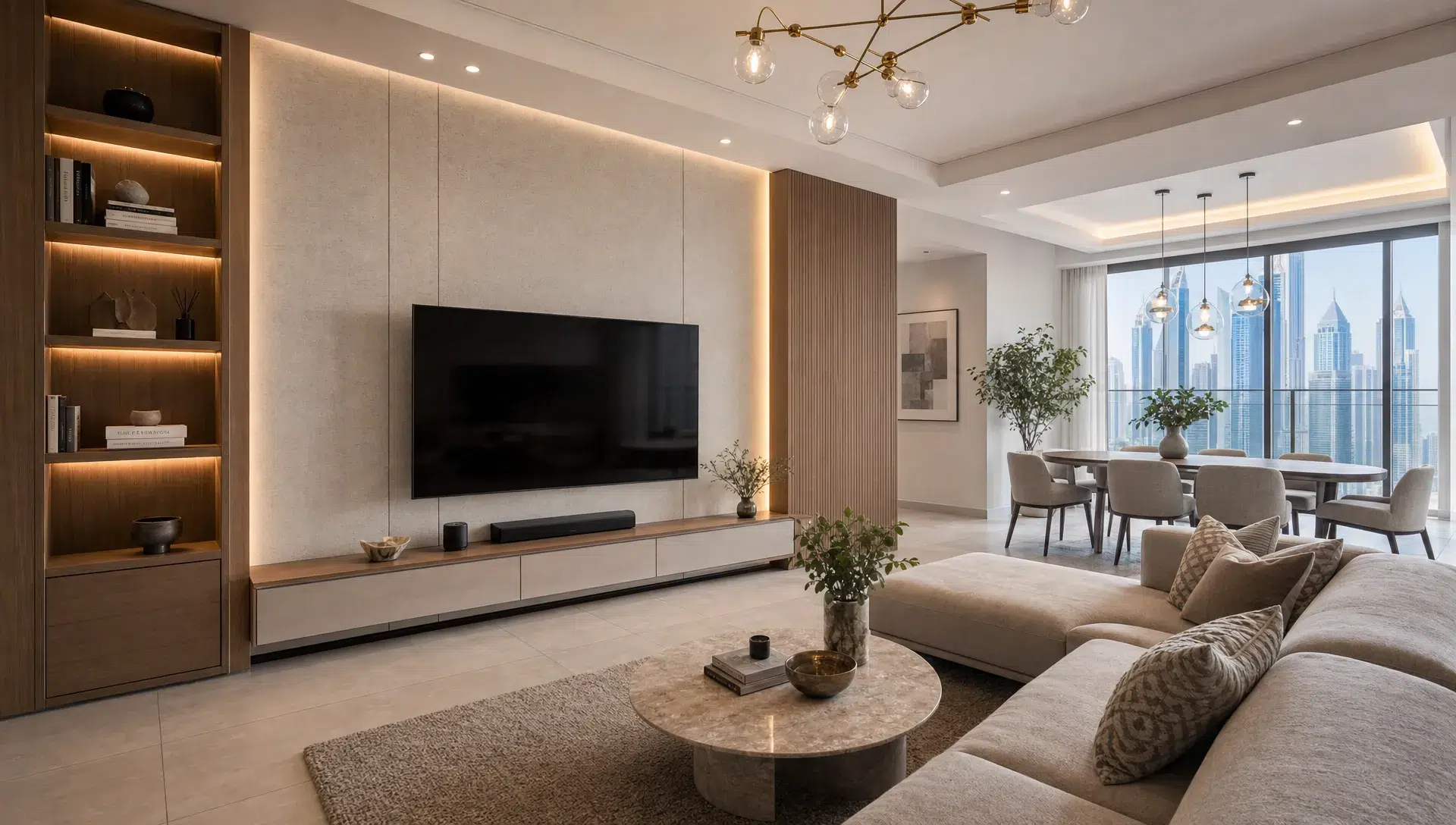
Custom carpentry and joinery can transform the after result because they create a specific place for daily items. Built-in TV units, wardrobe systems, vanity storage, kitchen organizers and entryway cabinets can make rooms calmer without reducing usability.
The best joinery does not simply fill empty walls. It responds to the homeowner’s routine. A family with children may need durable low storage. A couple working from home may need hidden desk space. A villa owner may need tall storage that blends with wall finishes. The before-and-after difference is strongest when storage is designed around real habits.
Finishes that look premium and last
Finishes shape the visible transformation, but they also affect maintenance. The right flooring, wall treatment, countertop, hardware and paint system can make a renovated interior feel refined while standing up to daily wear.
In high-traffic homes, durability should guide the selection. Matte walls may look soft and elegant, but busy corridors may need finishes that are easier to clean. Natural stone may feel luxurious, but it should be selected with care for kitchens and bathrooms. Wood-look surfaces can add warmth, but the quality of installation matters as much as the product itself.
A good before-and-after transformation often uses fewer materials, not more. Repeating tones and textures across rooms makes the home feel cohesive. Too many statement surfaces can make the “after” feel busy within months.
Kitchen and bathroom changes that carry extra value
Kitchens and bathrooms usually show the strongest transformation because they combine design, plumbing, electrical planning and daily function. A kitchen before-and-after might include new cabinetry and counters, but the meaningful change is how cooking, storage and cleaning improve.
Look for changes such as deeper drawers, better corner solutions, improved lighting under cabinets, cleaner appliance integration and surfaces that can handle frequent use. In bathrooms, prioritize waterproofing, drainage, ventilation, safe electrical planning and easy-to-clean details before focusing on decorative finishes.
These rooms also influence property perception. If you are renovating with future resale or rental appeal in mind, practical upgrades often matter more than trend-heavy styling. A clean, durable and well-lit kitchen or bathroom usually feels more valuable than a dramatic design that is hard to maintain.
Commercial interiors: before and after should support the customer journey
For offices, clinics, salons, retail spaces and hospitality interiors, the after result must support both brand image and operations. A beautiful reception area is not enough if customers are confused about where to go or staff do not have enough storage behind the scenes.
Commercial renovation should consider arrival, waiting, service flow, privacy, lighting comfort, signage, durability and maintenance access. For digital-first businesses, the physical renovation may also need to align with booking systems, loyalty tools or customer apps. If that is part of the wider business plan, working with a mobile app developer who can support customer-facing digital tools can help connect the renovated space with the online experience customers use before and after they visit.
This is a reminder that meaningful renovation is not limited to walls and finishes. It should support the full experience of the people using the space.
How to judge whether the “after” is truly better
The final reveal should be judged by more than appearance. Ask whether the renovation solved the original frustrations. Does the room feel easier to move through? Is storage more intuitive? Are the lights placed where tasks happen? Can surfaces be maintained without constant effort? Are technical points, such as sockets, plumbing access and AC coordination, handled cleanly?
It helps to document the project from the beginning. Take photos from the same angles before, during and after the renovation. Record the main issues in each room, then compare them with the final result. This makes the value of the transformation easier to see, especially when several upgrades are subtle.
Professional coordination also affects the outcome. The most polished interiors usually come from clear communication between designers, contractors, carpenters, electricians, plumbers and finishing teams. If you want to understand that process, Revo Craft Renovations explains how interior renovation contractors bring designs to life from concept to completion.
Common mistakes that weaken a before-and-after renovation
Some projects look promising at the start but lose impact because the planning is too surface-level. The most common mistake is spending heavily on visible finishes before fixing layout, lighting or technical issues. Another is copying a reference image without adjusting it to room dimensions, daylight, ceiling height or lifestyle needs.
Rushing material choices can also create problems. Finishes should be selected together, not one at a time. Flooring, cabinetry, wall colors, hardware and lighting temperature need to work as a complete palette. When each item is chosen separately, the final room can feel mismatched even if every individual product is high quality.
Another mistake is ignoring the transition between rooms. A stunning living room renovation may feel disconnected if the hallway, kitchen and bedrooms still carry completely different tones. A strong before-and-after result should make the home feel more coherent, not just improve one isolated corner.
FAQ
What makes an interior renovation before and after successful? A successful transformation improves both appearance and function. The space should look better, feel more comfortable and solve the issues identified before work began, such as poor lighting, weak storage or awkward movement.
Which rooms show the biggest before-and-after difference? Kitchens, bathrooms and living rooms often show the most visible change because they combine layout, finishes, lighting and daily use. Bedrooms and hallways can also transform significantly with better wardrobes, lighting and wall treatments.
Should I renovate for style or function first? Function should come first, then style should support it. A beautiful finish will not compensate for poor storage, uncomfortable lighting or an impractical layout. The best renovations combine both from the planning stage.
How can I prepare for a before-and-after renovation? Start by listing what does not work in each room. Take photos, note daily frustrations and define your priorities before choosing materials. This helps your renovation team recommend changes that match your lifestyle and budget.
Do small interior changes still matter? Yes. Better lighting, upgraded hardware, refined wall finishes, custom storage and improved furniture placement can create a strong before-and-after effect without changing the entire structure of the home.
Create a before-and-after result that feels as good as it looks
An interior renovation before and after should not be a quick visual refresh. It should make your home or business more comfortable, practical and aligned with the way you use it every day.
Revo Craft Renovations helps Dubai homeowners and businesses plan bespoke interior transformations with modern design, premium finishes, custom solutions and coordinated project management. If you want a renovation that improves layout, lighting, storage, finishes and functionality, start with a personalized consultation and a clear plan for the changes that matter most.