
A bathroom remodeling project feels far less stressful when you treat it like a managed process rather than a series of trades turning up at your door. The goal is not only to choose tiles and fixtures, but to control decisions, protect your home, monitor workmanship and keep the work moving without surprises. In Dubai homes, where bathrooms often combine compact layouts, heavy daily use, humidity and high expectations for finishes, confidence comes from structure. With the right scope, budget discipline, communication habits and inspection points, you can stay involved without feeling like you have to become a contractor yourself.
Build your bathroom remodeling project around a clear scope
Confidence starts with a written scope that explains what is changing, what is staying and what standard of finish you expect. A vague brief such as update the bathroom can mean anything from replacing taps to moving drainage lines. A useful scope defines the room, the style direction, the fixtures, the storage requirements, the lighting mood and any technical upgrades.
Start with the reason for the renovation. A guest powder room may prioritize visual impact. A family bathroom needs durability, storage and easy cleaning. A master ensuite might focus on comfort, lighting and a more refined material palette. Those priorities shape every later decision.
Your scope should also separate must-haves from preferences. For example, a walk-in shower may be essential, while a backlit mirror may be optional if the budget tightens. If you are still shaping the brief, Revo Craft Renovations has a practical guide to bathroom renovation planning tips that helps homeowners organize design, budget and site details before work begins.
When the scope is this clear, a bathroom remodeling project stops depending on memory and starts running from a shared document.
Confirm site conditions before approving the final plan
Bathrooms hide problems better than almost any other room. Tiles may look acceptable while waterproofing, drainage slopes or old pipework are already causing trouble behind the surface. Before you approve the final layout, ask for a proper site assessment.
The contractor should check water supply points, waste lines, floor levels, wall condition, waterproofing risks, ventilation, electrical safety and access for materials. In apartments, building rules and working-hour restrictions can also affect the schedule. In villas, drainage runs, slab conditions and existing water pressure may influence what can be changed.
This stage is where design ambition meets technical reality. Moving a vanity a short distance may be simple, but relocating a toilet usually requires more serious plumbing work. Replacing a bathtub with a walk-in shower can improve usability, yet the floor slope and waterproofing must be handled correctly.
For a deeper look at the technical review that should happen before demolition, see what bathroom experts check before a renovation begins. A careful inspection protects your budget from assumptions that only become visible after tiles are removed.
Set a budget that reflects how bathrooms actually fail
A beautiful finish is only one part of the cost. Bathrooms also involve plumbing, waterproofing, electrical work, ventilation, tiling accuracy and sealing. If the budget only accounts for visible materials, it will feel under pressure as soon as the contractor finds a weak pipe or uneven floor.
In a bathroom remodeling project, a contingency is not a sign of poor planning. It is a practical buffer for hidden issues. For most homeowners, the safest approach is to define the base scope, confirm allowances for finishes and keep a separate reserve for discoveries during demolition.
| Budget area | What it usually covers | Why it matters |
|---|---|---|
| Demolition and preparation | Removal, disposal, surface preparation | Poor preparation affects every finish installed later |
| Plumbing and drainage | Pipework, valves, traps, water pressure checks | Failures here can damage walls, ceilings and joinery |
| Waterproofing and tiling | Membranes, adhesives, grout, tile installation | These details protect the bathroom from moisture problems |
| Fixtures and finishes | Vanity, shower fittings, WC, mirror, lighting | This is where style, comfort and usability become visible |
| Contingency | Hidden repairs, small changes, added protection | It prevents rushed decisions when surprises appear |
Ask your contractor to identify allowances clearly. If the quote includes a vanity allowance, for example, confirm whether it covers supply only or supply and installation. Small wording differences can create large cost differences later.
Turn the timeline into a working plan
A renovation timeline should be more than a start date and a handover date. It should show the order of work, the key inspection points and the decisions required from you before each stage can proceed. Bathrooms need proper sequencing because many tasks depend on the previous layer being correct.
A typical flow includes protection, demolition, plumbing and electrical rough-in, wall and floor preparation, waterproofing, tiling, fixture installation, joinery, lighting, sealing, testing and snagging. Some stages require curing or drying time. If those periods are ignored, the project may finish faster on paper but perform worse in daily use.
Your bathroom remodeling project will run more smoothly if materials are approved and ordered before demolition starts. Tiles, mixers, drains, sanitaryware, mirrors and lighting should be checked for availability. If one important fixture is delayed, the entire sequence may need to change.
Agree how schedule changes will be communicated. A one-day delay is not always a problem, but silence creates anxiety. Ask for updates when milestones are completed, when inspections happen and when a decision is needed from you.
Prepare your household and protect valuables
The pre-demolition week matters more than many homeowners expect. Clear the bathroom completely, remove items from nearby cabinets and protect adjacent rooms from dust. If the bathroom is connected to a bedroom, plan how the household will manage privacy, shower access and storage during construction.
The most stressful part of a bathroom remodeling project is often the disruption around the work, not the work itself. A simple preparation list can reduce that disruption. Move toiletries, medicines, towels, documents, watches and sentimental items before contractors arrive. Pieces with personal or replacement value, such as wedding bands or diamond engagement rings and fine jewellery, should be stored in a locked cabinet outside the work zone or another secure location.
Clarify access rules with the contractor. Confirm where workers can enter, where materials can be placed and which areas are off limits. If you live in an apartment tower, check elevator booking requirements, loading access and building management procedures. These details may feel administrative, but they prevent avoidable friction once the project is active.
Use communication rules that prevent drift
Renovation stress often comes from unclear communication. Decide who is responsible for daily updates, who approves changes and how decisions will be recorded. A short message thread can help, but important approvals should still be documented in writing with clear costs and schedule impact.
Your bathroom remodeling project needs one decision-maker on the homeowner side. If several family members give separate instructions, the contractor can end up managing conflicting preferences instead of the build. Discuss preferences internally first, then send one clear instruction.
Use milestone meetings rather than constant interruption. A quick review after demolition, before tile installation and before final fixture placement can prevent mistakes without slowing the team down. If you notice something concerning, raise it early and specifically. Instead of saying the wall looks wrong, ask whether the niche height matches the approved drawing.
Good contractors welcome organized questions. If you are still selecting a team, this guide to choosing the right bathroom renovations contractor explains how to evaluate experience, communication and accountability before signing.
Inspect work at the right milestones
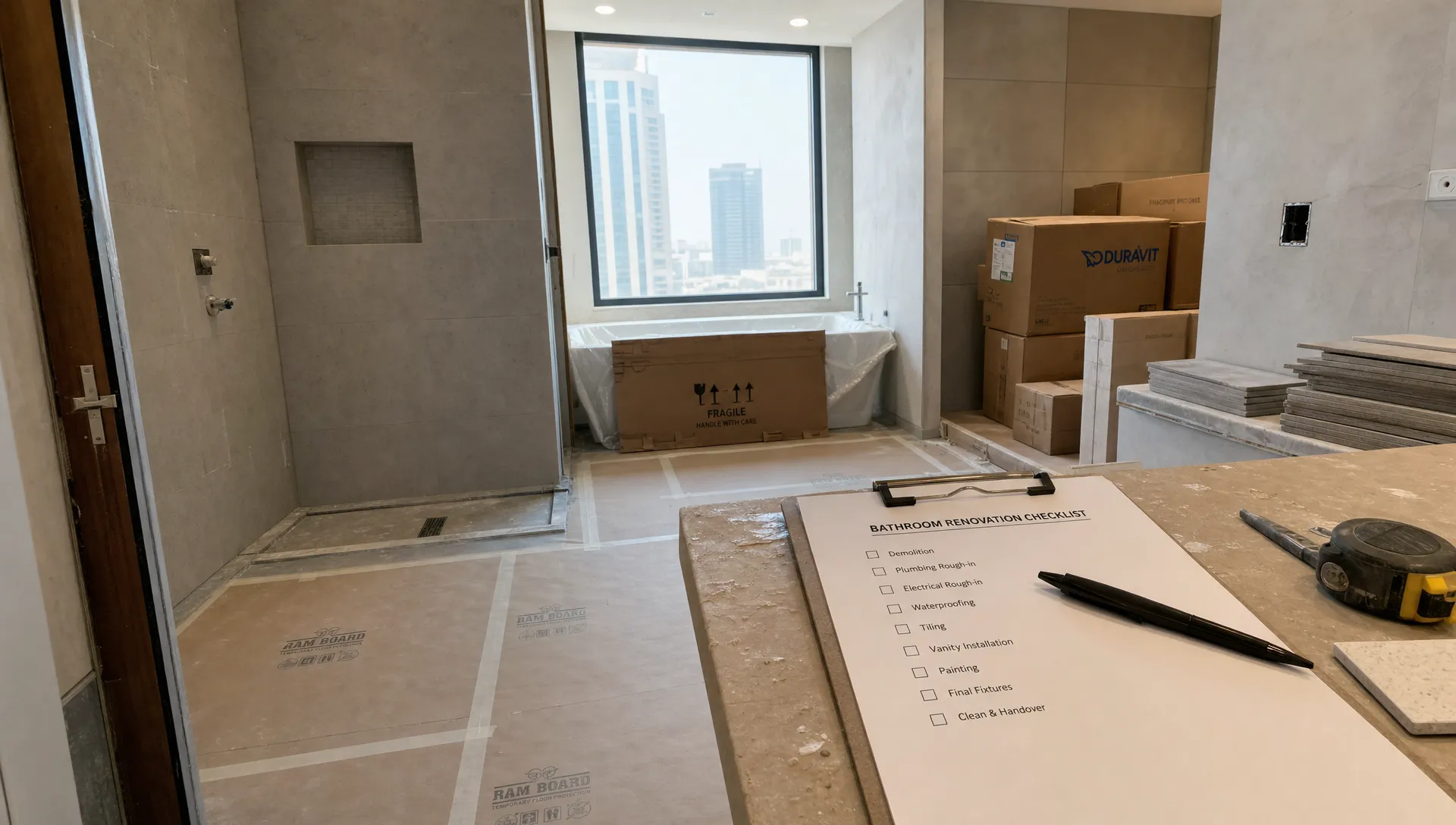
Quality control is easier before finishes cover the work. Once tiles are installed, it becomes harder and more expensive to correct pipe positions, waterproofing gaps or uneven surfaces. Build inspection points into the schedule so you can check progress without micromanaging every task.
During a bathroom remodeling project, the most important inspections usually happen before closing walls, before tiling and before final handover. You do not need to judge every technical detail yourself, but you should know what the contractor is checking and ask for confirmation when critical stages are complete.
| Milestone | What to review | Homeowner question to ask |
|---|---|---|
| After demolition | Hidden damage, pipe condition, wall and floor levels | Did anything change the approved scope or budget? |
| After rough-in | Plumbing positions, electrical points, drainage locations | Do all fixtures align with the plan? |
| Before tiling | Waterproofing, slopes, surface preparation | Has the wet area been prepared and checked? |
| Before handover | Leaks, drainage, lights, grout, silicone, alignment | What items remain on the snag list? |
Do not wait until the final day to mention concerns. Early questions are easier to resolve and usually less expensive.
Make decisions quickly without rushing quality
Every renovation reaches moments where the homeowner must decide. A tile may be out of stock. A mirror size may need adjustment. A wall condition may require a different fixing method. The key is to respond quickly, but not casually.
During a bathroom remodeling project, decision speed affects the schedule, yet decision quality affects the result for years. Ask three questions before approving a change: What will it cost? Will it affect the timeline? Will it change the look, function or maintenance of the bathroom?
Keep a decision log. It can be as simple as a shared note with the date, the decision, the reason and the approved cost. This prevents confusion later when several small changes accumulate. It also helps you separate necessary technical adjustments from optional upgrades.
Be careful with last-minute design additions. Adding a niche, changing tile direction or upgrading a vanity may sound simple, but it can affect waterproofing, material quantities, labor time and alignment. A confident project manager does not reject every change. They approve changes with full visibility.
Manage handover, snagging and maintenance
The final week should not feel like a rushed reveal. A proper handover includes testing, cleaning, checking and documenting. Run taps, test hot and cold water, flush the toilet, check drainage speed, inspect grout lines, look at silicone joints and confirm that lighting and ventilation work as expected.
A bathroom remodeling project is not truly complete until the snag list is closed. Snags are small items that need correction, such as a misaligned accessory, minor grout touch-up or cabinet adjustment. Record them in one list, agree who will fix them and confirm the expected completion date.
Ask for care instructions for new materials. Natural stone, matte tiles, glass screens, brushed metal finishes and custom joinery may need different cleaning methods. Harsh chemicals can damage grout, discolor metal coatings or shorten the life of sealants.
Keep copies of fixture details, warranties, paint references and product information. If you need a replacement part later, you will not have to guess the model or finish. Good documentation turns the renovation from a one-time project into a well-maintained upgrade.
Frequently Asked Questions
How long does a bathroom remodeling project usually take? The timeline depends on the bathroom size, scope, material availability, building access and technical changes. A simple refresh can move faster than a full strip-out with plumbing, waterproofing, tiling and custom joinery. Ask for a phase-based schedule rather than relying only on a final completion date.
What is the biggest mistake homeowners make during bathroom remodeling? The biggest mistake is approving work from an unclear scope. If layout, fixtures, materials, lighting, storage and technical responsibilities are not defined early, decisions become reactive during construction. That usually increases stress and can increase cost.
Should I stay at home during the renovation? You can often stay at home if another bathroom is available and dust protection is planned well. For a single-bathroom home or a project affecting water supply for long periods, temporary accommodation may be more comfortable. Confirm disruption before work starts.
How can I avoid budget surprises? Get a detailed scope, inspect site conditions early, clarify allowances and keep a contingency for hidden issues. Ask for written approval before any variation is carried out. This keeps your bathroom remodeling project financially controlled even when adjustments are needed.
Renovate with a process you can trust
Managing a bathroom remodel with confidence does not mean doing the contractor's job. It means setting a clear brief, choosing the right team, staying organized and checking the work at meaningful moments. When the process is transparent, you can focus on the final result instead of worrying about every hidden detail.
Revo Craft Renovations helps Dubai homeowners and businesses create tailored bathrooms with modern design, premium finishes, skilled workmanship and structured project management. If you want a renovation that feels as organized as it looks, start with a clear consultation and a team that communicates from planning to handover.