
Luxury renovations are most successful when beauty and function are planned together from the beginning. A room can look impressive in photos, but if the lighting is harsh, the storage is awkward or the materials cannot handle daily use, the sense of luxury fades quickly. In Dubai homes, where family routines, entertaining, climate control and premium finishes often meet in one space, the best renovation decisions are the ones that make life easier without compromising elegance.
A balanced renovation does not mean choosing practicality over design. It means shaping every detail, from room flow to joinery depth, around the way the home is actually used. The result is a space that feels calm, refined and effortless, not staged or fragile.
Luxury renovations should begin with real life, not finishes
Many homeowners start with marble samples, mood boards and furniture references. Those choices matter, but luxury renovations need a more grounded first step: understanding the daily rhythm of the property. Who cooks, who hosts, where children do homework, how often guests stay and what areas become cluttered are all design information.
In a villa, the priority may be a generous family kitchen, better storage near the entrance and a majlis or living area that can shift from formal hosting to relaxed evenings. In an apartment, the priorities may be sound control, space-saving joinery and layered lighting that makes compact rooms feel more generous.
This early planning stage also helps prevent expensive compromises later. Moving a wall, changing plumbing routes or redesigning cabinetry after finishes are ordered can add cost and delay. A functional brief keeps the design beautiful and buildable.
Define what the space must solve
Before choosing a visual direction, list the problems the renovation must fix. These are often simple but important issues: not enough pantry space, a bathroom that feels cramped, poor task lighting, visible cables, noisy bedrooms or AC flow that never feels comfortable.
Once those pain points are clear, every design choice can be tested against them. A sleek kitchen island only works if circulation remains comfortable. A full-height wardrobe looks elegant only if it stores the items the household actually owns. Beauty becomes stronger when it removes friction from everyday life.
Function sets the framework for elegant design
In luxury renovations, layout is the hidden structure behind every beautiful finish. A room with poor proportions or confusing movement will rarely feel refined, even with expensive materials. Good planning considers sightlines, walking paths, furniture scale and the relationship between connected spaces.
For example, an open-plan living area should still have zones. Seating, dining and kitchen functions need visual connection without becoming one noisy, undefined space. This can be achieved through ceiling details, rugs, lighting groups, joinery screens or subtle floor transitions rather than heavy partitions.
The same principle applies to private areas. Bedrooms should feel restful because storage is planned, lighting is soft where needed and switches are placed logically. Bathrooms should support movement around the vanity, shower and WC without making the room feel squeezed.
A useful test is to imagine the home at its busiest time of day. If the design still feels easy to move through, easy to maintain and easy to enjoy, the renovation is on the right track.
Choose materials that look refined and perform well
Material selection is where many luxury renovations either gain lasting value or become difficult to live with. A finish should not be chosen only for its showroom appeal. It should suit the climate, cleaning routine, level of traffic and maintenance expectations of the household.
Natural stone, for instance, can be stunning, but some varieties require sealing and careful cleaning. Porcelain slabs can offer a similar large-format effect with lower maintenance in busy kitchens and bathrooms. Wood veneer brings warmth, but high-quality laminate or engineered finishes may be more stable in humid or high-use areas when specified correctly.
The goal is not to avoid delicate materials entirely. It is to place them intelligently. A dramatic stone feature wall in a formal sitting room may age beautifully, while a stain-prone countertop in a family kitchen may create daily stress.
| Design area | Beauty consideration | Functional consideration |
|---|---|---|
| Flooring | Seamless visual flow and premium texture | Slip resistance, durability and easy cleaning |
| Kitchen worktops | Elegant veining or refined matte surfaces | Heat, stain and scratch resistance |
| Bathroom walls | Spa-like atmosphere and clean lines | Moisture performance and grout maintenance |
| Joinery | Bespoke proportions and concealed details | Internal storage, hinges and long-term alignment |
| Lighting | Warm ambience and architectural focus | Task visibility, dimming and control zones |
A renovation feels more luxurious when materials hold up gracefully. That usually comes from selecting finishes as part of a system, not as isolated statement pieces.
Lighting is both mood and utility
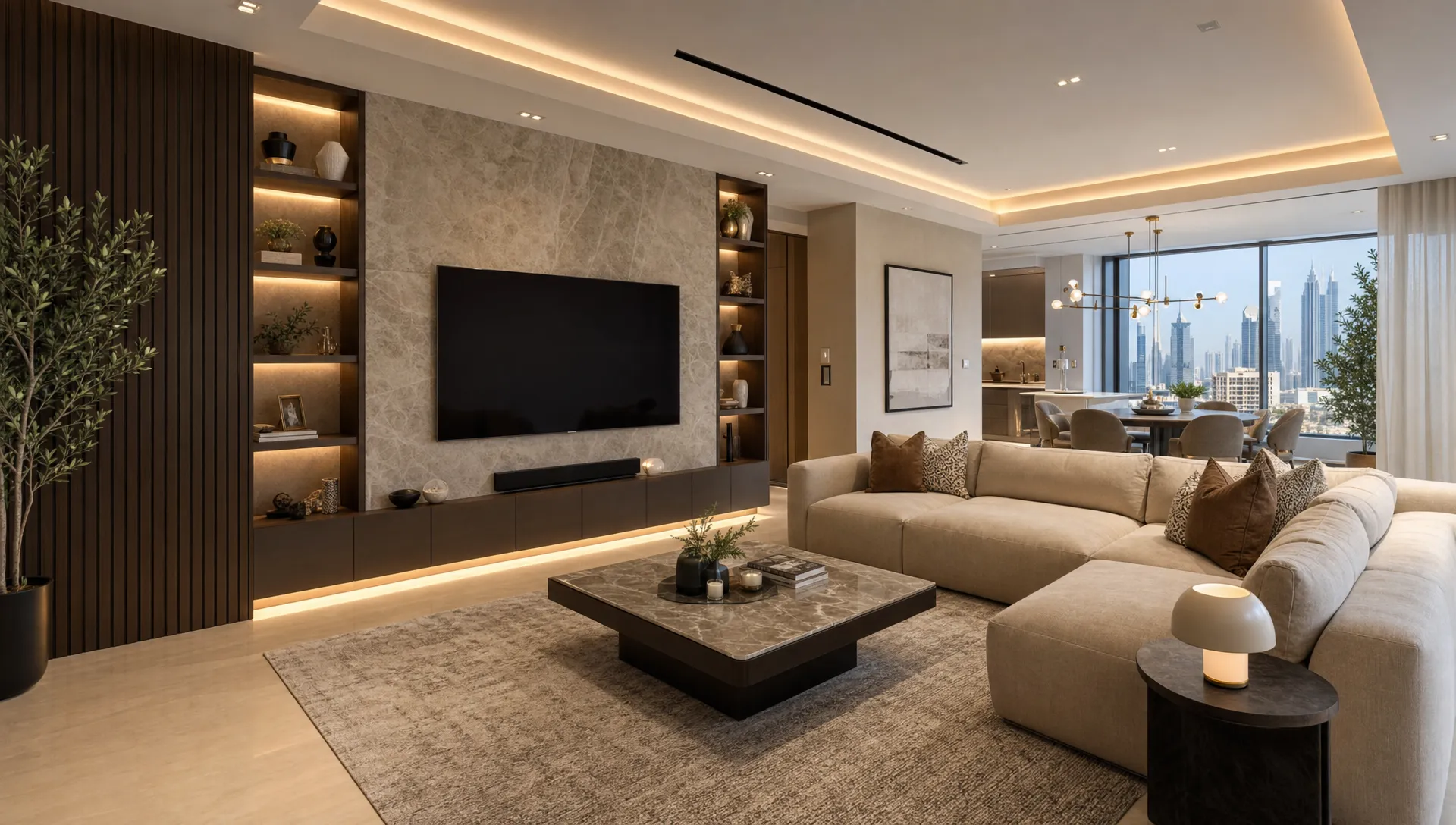
Lighting is one of the clearest ways to balance beauty and function. A single ceiling light can flatten even the most expensive interior, while a layered plan adds depth, comfort and flexibility. The strongest schemes include ambient, task and accent lighting, each controlled separately.
Ambient lighting gives the room an even base. Task lighting supports cooking, grooming, reading or working. Accent lighting highlights artwork, wall textures, shelving or architectural features. Dimmers help the same space shift from bright morning routines to relaxed evening hosting.
In Dubai homes, lighting also needs to work with daylight. Large windows can be beautiful, but glare and heat may affect comfort. Curtains, sheers, blinds and lighting temperature should be planned together so rooms feel bright without becoming harsh.
Switch placement is just as important as fixture choice. Bedside controls, two-way switching in corridors and separate controls for decorative lighting all make a premium home feel intuitive. When lighting is easy to use, it becomes part of the comfort rather than a feature that needs constant adjustment.
Storage should be designed, not added later
Clutter can weaken the effect of luxury renovations faster than almost any design mistake. A beautiful room needs places for the objects of real life: shoes, school bags, cleaning supplies, linens, appliances, chargers and seasonal items.
Custom carpentry and joinery solve this elegantly because they turn storage into architecture. Full-height cabinets, hidden utility zones, recessed shelving and integrated media walls can make a home feel cleaner and more spacious without reducing its warmth.
The most effective storage is specific. A wardrobe should not only look symmetrical from the outside. It should include hanging space, drawers, shelves, accessory trays and lighting that match the owner's habits. A kitchen pantry should account for bulk groceries, small appliances and daily items that need quick access.
Good storage also supports maintenance. When everything has a clear place, the home is easier to reset after hosting, cooking or family routines. That sense of order is a practical form of luxury.
Kitchens and bathrooms carry the daily value
Kitchens and bathrooms deserve special attention because they combine heavy daily use with high visual impact. In these rooms, beauty has to earn its place every day. A kitchen that photographs well but lacks prep space, ventilation or practical storage will not feel luxurious for long.
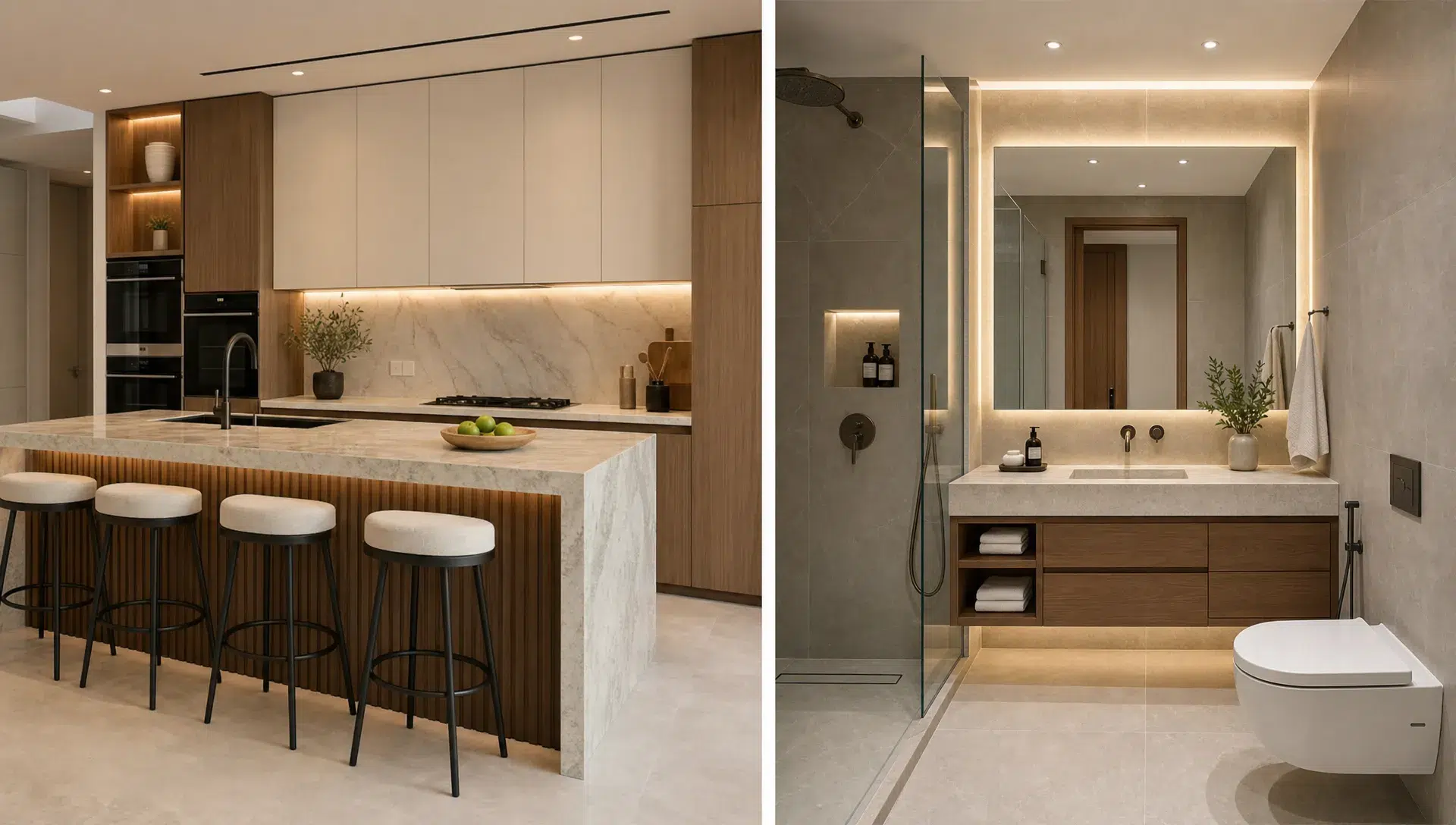
For kitchens, start with workflow. The relationship between cooking, washing, refrigeration and serving should feel natural. Then consider worktop depth, appliance placement, island clearance, pantry access and lighting over key surfaces. A timeless material palette can still feel custom through details such as fluted panels, integrated handles, concealed appliances or a refined backsplash.
Bathrooms need the same discipline. A spa-like bathroom is not only about stone, mirrors and brassware. It also depends on waterproofing, drainage, ventilation, vanity storage and lighting that works for grooming. If daily comfort is a priority, this guide to kitchen and bath renovations that add daily comfort explores practical planning decisions in more detail.
For homeowners weighing where to spend, kitchens and bathrooms often justify a larger share of the budget because they affect routine, comfort and resale perception. Revo Craft Renovations also covers broader investment thinking in its article on luxury home renovations worth the investment in Dubai.
Craftsmanship is what makes refinement visible
The difference between a good-looking renovation and a truly premium one often appears in the details. Alignment, shadow gaps, door reveals, tile edges, silicone lines, cabinetry junctions and paint finish all affect how a space feels up close.
Luxury renovations depend on craftsmanship because high-end materials expose poor execution. Large-format tiles need proper substrate preparation. Veneered panels need precise edge finishing. Concealed doors need accurate framing. Cove lighting needs clean channels and consistent installation.
This is where design documentation and site coordination matter. Drawings, samples, finish schedules and clear installation details reduce guesswork. They also help homeowners understand what is being built before work begins.
Premium craftsmanship does not always mean adding ornate details. Often, it means making simple details look intentional. A flush skirting line, a perfectly centered pendant or a cabinet door that opens smoothly can do more for the feeling of quality than an oversized decorative feature.
Project management protects the design vision
A renovation can have an excellent concept and still become stressful if coordination is weak. Electrical work, plumbing, AC adjustments, carpentry, tiling, painting and finishing trades all affect one another. When sequencing is poor, finished work may need to be reopened or corrected.
In luxury renovations, project management is part of the luxury itself. Clear timelines, transparent communication and organized decision-making help preserve both the budget and the design intent. Homeowners should know when approvals, material selections, site access and milestone checks are required.
This matters especially in occupied homes, where dust control, working hours, temporary utilities and family routines need planning. A smooth process does not happen by accident. It comes from defining responsibilities early and keeping communication consistent throughout the project.
If you want a broader design perspective that avoids short-lived trends, the article on high-end renovations that stay timeless in Dubai offers useful guidance on restraint, durability and long-term elegance.
Balance the budget by spending where it matters most
A balanced renovation budget should not spread money evenly across every surface. Some areas deserve investment because they affect structure, safety, durability or daily comfort. Others can be simplified without reducing the overall sense of quality.
Spend first on the bones of the project: layout improvements, MEP upgrades, waterproofing, flooring preparation, cabinetry quality and lighting infrastructure. These elements are hard to change later and have a major effect on how the home performs.
Decorative elements can then be layered with more flexibility. Wall finishes, loose furniture, accessories and some decorative lighting can be upgraded over time if needed. This approach keeps the renovation focused on lasting value rather than short-term visual impact.
For luxury renovations that feel both beautiful and sensible, the best budgets are honest about priorities. A restrained finish installed beautifully will often look more premium than an expensive finish used without discipline.
Frequently Asked Questions
What makes a renovation feel luxurious instead of simply expensive? A renovation feels luxurious when the layout, materials, lighting, storage and craftsmanship work together. Expensive finishes alone are not enough if the space is uncomfortable or difficult to maintain.
How do I balance beauty and practicality in luxury renovations? Start with daily needs, then choose finishes and details that support those needs. The design should solve problems such as storage, lighting, circulation and maintenance while still expressing a refined visual style.
Which rooms should I prioritize first? Kitchens, bathrooms and main living areas usually have the strongest effect on comfort and visual impact. Entry areas, wardrobes and utility spaces also deserve attention because they influence how organized the home feels.
Are timeless designs better than trend-led interiors? Timeless design is often safer for major renovation decisions because fixed elements are costly to replace. Trends can still be used through furniture, styling, paint accents and decorative details that are easier to update.
Create a home that feels as good as it looks
The best luxury renovations do more than upgrade finishes. They improve how a home moves, stores, lights, hosts and supports everyday life. When beauty and function are planned together, the final space feels polished without becoming impractical.
If you are planning a renovation in Dubai, Revo Craft Renovations can help shape a tailored approach through design consultation, renovation planning, craftsmanship and project coordination. The right process turns a beautiful idea into a home that works beautifully every day.